Growing up is an important part of life that brings change, learning, and personal development. It describes how people mature and gain new experiences over time.
The phrase “growing up” is commonly used when talking about childhood memories, becoming an adult, developing responsibility, and learning valuable life lessons. However, using the same expression repeatedly can make writing and conversations sound less engaging. Exploring different ways to say “growing up” can help you express ideas more naturally and clearly. Whether you are writing a personal story, sharing memories, or discussing someone’s journey toward adulthood, choosing the right words can make your message more meaningful. Each alternative can communicate a slightly different feeling, depending on the situation and context.
In everyday conversations and professional writing, having several alternatives to “growing up” can make your language more expressive and interesting. Expressions such as maturing, coming of age, developing, becoming an adult, and growing older can help describe different stages of life. Some phrases focus on emotional growth, while others highlight physical development, increased independence, or life experiences. Understanding these differences allows you to choose words that accurately match your intended meaning. Whether you are writing a blog post, describing childhood experiences, or talking about personal growth, these 15 other ways to say “growing up” will help you communicate with greater confidence and variety.
What Does “Growing Up” Mean?
Growing up refers to the process of becoming older, developing physically and mentally, and gradually gaining the maturity needed to handle different aspects of life. It commonly describes the journey from childhood to adulthood, when a person learns important lessons, builds relationships, develops independence, and takes on greater responsibilities. However, the expression is not limited to physical age. It can also describe emotional growth, improved judgment, greater self-awareness, and changes in someone’s personality. For example, when someone learns to manage difficult situations calmly, they may be described as growing up. The phrase can therefore communicate both the natural process of aging and the personal development that happens throughout life.
Common Situations Where “Growing Up” Is Used
People use the expression growing up in several everyday situations. Parents may use it when talking about their children’s development, while friends might use it to discuss how their personalities and priorities have changed over time. It is also common in personal conversations, social media posts, family discussions, and stories about childhood memories.
In relationships, the phrase can describe someone becoming more emotionally responsible and understanding. At school, it may refer to children learning new skills and becoming more independent. In professional communication, people may prefer expressions such as personal development or gaining maturity because they sound more specific and polished. Choosing a suitable alternative helps communicate whether you mean physical development, emotional maturity, independence, or life experience.
Is It Professional or Polite to Say “Growing Up”?
Yes, growing up is generally a polite and natural expression, but its suitability depends on the context. It works particularly well in casual conversations, family discussions, personal messages, and storytelling. For example, saying that someone is growing up can be a warm way to recognize their progress or increasing maturity.
In professional writing, however, more specific expressions such as developing professionally, gaining experience, or demonstrating maturity may communicate the intended meaning more clearly. The phrase can sometimes sound critical if someone says, “It’s time you grew up,” because it suggests that the listener is behaving immaturely. Therefore, consider the relationship, situation, and intended tone before using it. A thoughtful alternative can make the message sound more respectful, encouraging, and professional.
Advantages and Disadvantages of Saying “Growing Up”
Advantages
The expression growing up is simple, familiar, and easy to understand. It can describe several stages of human development, from childhood to adulthood, as well as emotional and personal changes. Its meaning is flexible, making it useful in conversations about family, relationships, education, and life experiences. It can also communicate positive feelings about someone’s progress without requiring complicated vocabulary.
Disadvantages
Although the phrase is versatile, it can sometimes be too general. It does not always explain whether someone is becoming physically older, emotionally mature, or more independent. In certain situations, it may also sound judgmental, particularly when used to criticize someone’s behavior. Formal communication may benefit from more precise wording, such as professional development or increasing maturity. Choosing a more specific expression helps readers understand the exact kind of growth being discussed.
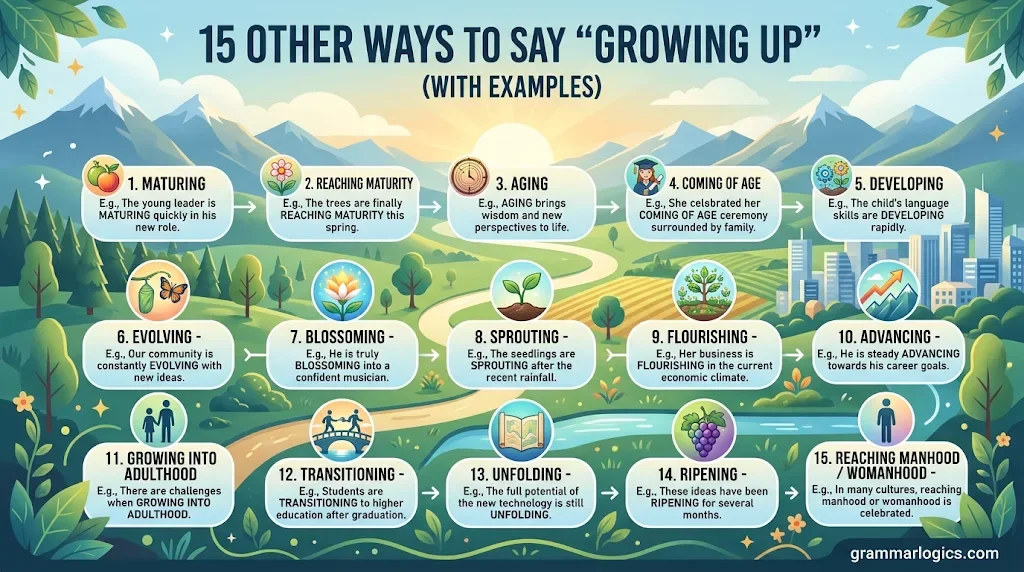
15 Synonyms and Alternatives for “Growing Up”
- Maturing
- Coming of Age
- Getting Older
- Reaching Adulthood
- Growing Into Adulthood
- Becoming More Mature
- Developing as a Person
- Gaining Independence
- Entering Adulthood
- Transitioning to Adulthood
- Reaching Maturity
- Becoming an Adult
- Personal Development
- Evolving
- Growing Older and Wiser
1. Maturing
Meaning
Maturing means gradually developing the emotional, mental, and behavioral qualities associated with being mature. It describes becoming more responsible, thoughtful, and capable of making sensible decisions.
Definition
Maturing is the process of developing greater emotional stability, judgment, responsibility, and understanding.
Detailed Explanation
This expression focuses more on personal and emotional development than physical age. Someone who is maturing may become better at handling disagreements, accepting mistakes, and understanding other people’s feelings. It is particularly useful when describing positive changes in someone’s behavior. Unlike simply getting older, maturing suggests that a person is also developing greater wisdom and self-control.
Scenario Examples
Scenario: A friend has started handling disagreements calmly.
Example: “I can see that you are maturing and learning to handle difficult situations.”
Scenario: Parents notice positive changes in their teenager’s behavior.
Example: “She is maturing and becoming more responsible every year.”
Best Use
Use maturing when discussing emotional growth, improved behavior, personal responsibility, and developing better judgment.
Tone
Tone: Thoughtful, positive, and encouraging. It recognizes meaningful improvements in someone’s personality and behavior.
2. Coming of Age
Meaning
Coming of age describes the transition from childhood into adulthood. It can also refer to the experiences and lessons that help someone understand their identity and responsibilities.
Definition
Coming of age is the process or experience of reaching adulthood and developing a more mature understanding of life.
Detailed Explanation
This expression is especially useful when discussing important life transitions. It often carries an emotional or cultural meaning because it represents a significant stage in someone’s journey. Unlike general personal development, coming of age specifically emphasizes the movement toward adulthood. It is also commonly used in literature and films that explore identity, responsibility, and growing awareness.
Scenario Examples
Scenario: A family celebrates a teenager’s eighteenth birthday.
Example: “Her eighteenth birthday marks an important coming-of-age moment.”
Scenario: Someone discusses a film about teenage experiences.
Example: “The movie tells a beautiful coming-of-age story about friendship and self-discovery.”
Best Use
Use coming of age in conversations about adolescence, adulthood, milestone birthdays, literature, films, and major life transitions.
Tone
Tone: Reflective, meaningful, and emotional. It highlights an important stage of personal development.
3. Getting Older
Meaning
Getting older means increasing in age as time passes. It is a straightforward expression that describes the natural process of aging.
Definition
Getting older is the gradual passage of time that results in an increase in a person’s age.
Detailed Explanation
This phrase is one of the simplest alternatives when the main focus is physical age rather than emotional maturity. It can describe children becoming teenagers, adults reaching middle age, or older people experiencing later stages of life. Unlike maturing, it does not necessarily suggest improved behavior or wisdom. It simply acknowledges that time is passing and people are aging.
Scenario Examples
Scenario: Someone notices that their younger brother is no longer a small child.
Example: “You’re getting older so quickly; it feels like yesterday you started school.”
Scenario: Friends discuss their changing priorities.
Example: “As we’re getting older, we appreciate spending more time with family.”
Best Use
Use getting older in everyday conversations, family discussions, birthday messages, and situations involving age or the passage of time.
Tone
Tone: Casual, natural, and conversational. It is simple and suitable for ordinary communication.
4. Reaching Adulthood
Meaning
Reaching adulthood means arriving at the stage of life when someone is considered an adult. It often involves greater responsibility, independence, and decision-making.
Definition
Reaching adulthood is the transition into the adult stage of life.
Detailed Explanation
This expression emphasizes the milestone of becoming an adult rather than the entire process of development. It is useful when discussing age-related transitions, education, employment, and new responsibilities. Unlike growing up, which can describe development throughout life, reaching adulthood identifies a particular stage. It is a clear option when you want to communicate that someone is moving beyond childhood.
Scenario Examples
Scenario: Parents talk about their child’s future.
Example: “Our daughter is reaching adulthood and preparing to make her own decisions.”
Scenario: A teacher discusses life after secondary school.
Example: “Reaching adulthood brings new opportunities and responsibilities.”
Best Use
Use reaching adulthood in educational writing, family discussions, personal reflections, and conversations about adult responsibilities.
Tone
Tone: Informative, respectful, and slightly formal. It focuses on an important life milestone.
5. Growing Into Adulthood
Meaning
Growing into adulthood describes the gradual journey of moving from childhood or adolescence toward adult life.
Definition
Growing into adulthood is the process of developing the maturity, knowledge, and abilities associated with adult life.
Detailed Explanation
This expression emphasizes the gradual nature of development rather than a single moment of becoming an adult. It includes learning to manage responsibilities, understand relationships, and make independent choices. It is particularly suitable when describing teenagers and young adults who are discovering their identities. Compared with reaching adulthood, it places greater emphasis on the experiences and lessons along the way.
Scenario Examples
Scenario: A parent reflects on their teenager’s progress.
Example: “He is growing into adulthood and becoming more confident in his choices.”
Scenario: Someone writes about their university years.
Example: “Those college experiences helped me while growing into adulthood.”
Best Use
Use growing into adulthood in personal essays, family conversations, educational discussions, and reflections about adolescence.
Tone
Tone: Warm, reflective, and encouraging. It highlights gradual progress and new experiences.
6. Becoming More Mature
Meaning
Becoming more mature means developing better judgment, emotional control, and a greater sense of responsibility.
Definition
Becoming more mature is the process of improving one’s ability to think, behave, and respond responsibly.
Detailed Explanation
This expression directly focuses on the development of mature qualities. It is particularly helpful when someone’s attitude or behavior is changing positively. For example, a person may become more patient, accept constructive criticism, or think carefully before reacting. Unlike getting older, becoming more mature does not depend on a person’s age. It describes a change in how someone approaches life and other people.
Scenario Examples
Scenario: A friend apologizes after recognizing a mistake.
Example: “You’re becoming more mature by taking responsibility for your actions.”
Scenario: A manager notices improvement in an employee.
Example: “She is becoming more mature in the way she handles workplace challenges.”
Best Use
Use becoming more mature when discussing improved behavior, emotional development, responsibility, and better decision-making.
Tone
Tone: Supportive, positive, and constructive. It recognizes a person’s growing ability to handle situations wisely.
7. Developing as a Person
Meaning
Developing as a person means improving different aspects of your personality, knowledge, emotional understanding, and abilities.
Definition
Developing as a person is the ongoing process of learning, improving, and becoming more self-aware.
Detailed Explanation
This expression is broader than simply becoming older or reaching adulthood. It can describe changes in someone’s confidence, communication skills, values, and understanding of the world. It is particularly useful when talking about experiences that shape someone’s character. The phrase also suggests that personal development continues throughout life, rather than ending when someone becomes an adult.
Scenario Examples
Scenario: A person reflects on lessons learned from difficult experiences.
Example: “Every challenge has helped me develop as a person.”
Scenario: A student discusses personal progress.
Example: “University has given me opportunities to develop as a person.”
Best Use
Use developing as a person in personal essays, reflective writing, conversations about self-improvement, and discussions about life experiences.
Tone
Tone: Reflective, positive, and personal. It communicates continuous improvement and self-awareness.
8. Gaining Independence
Meaning
Gaining independence means becoming increasingly capable of making your own decisions and managing your responsibilities without relying heavily on others.
Definition
Gaining independence is the process of developing the ability to manage your life and make personal decisions independently.
Detailed Explanation
This expression focuses on one important part of growing up: learning to take care of yourself. It may involve managing money, making decisions, handling daily tasks, or living independently. However, independence does not automatically mean emotional maturity or increased age. It describes the development of self-reliance and personal responsibility, making it especially useful when discussing young adults.
Scenario Examples
Scenario: A young adult moves into their first apartment.
Example: “Moving away from home helped me gain independence.”
Scenario: Parents encourage their child to complete daily tasks.
Example: “Learning to prepare your own meals is one way of gaining independence.”
Best Use
Use gaining independence when discussing self-reliance, moving away from home, financial responsibility, and learning to manage everyday life.
Tone
Tone: Empowering, practical, and encouraging. It emphasizes confidence and the ability to make independent choices.
9. Entering Adulthood
Meaning
Entering adulthood describes the stage when someone begins moving from adolescence into adult life.
Definition
Entering adulthood is the beginning of the adult stage, often accompanied by new responsibilities and opportunities.
Detailed Explanation
This phrase is particularly useful when describing the beginning of adult life. It can refer to completing school, starting a career, making independent decisions, or taking responsibility for personal goals. Unlike growing up, it points toward a specific transition rather than continuous development. It is also appropriate in formal and educational discussions about young people’s changing roles in society.
Scenario Examples
Scenario: A student prepares to graduate from high school.
Example: “Entering adulthood can feel exciting because so many opportunities are ahead.”
Scenario: A family discusses a young person’s future.
Example: “As he enters adulthood, he will need to make more independent decisions.”
Best Use
Use entering adulthood in educational writing, graduation messages, family conversations, and discussions about young people’s futures.
Tone
Tone: Hopeful, informative, and respectful. It communicates the beginning of a significant life stage.
10. Transitioning to Adulthood
Meaning
Transitioning to adulthood means gradually moving from the responsibilities and experiences of adolescence toward adult life.
Definition
Transitioning to adulthood is the period of adjustment during which a young person develops adult responsibilities and independence.
Detailed Explanation
This expression highlights the changes and adjustments that happen while someone moves into adult life. These changes may include further education, employment, financial planning, and managing personal relationships. It is more specific and slightly more formal than the everyday phrase growing up. It works especially well when discussing the practical and social challenges young people experience during this period.
Scenario Examples
Scenario: A school counselor discusses life after graduation.
Example: “Students need guidance when transitioning to adulthood.”
Scenario: A young person begins working while studying.
Example: “Balancing work and education is an important part of transitioning to adulthood.”
Best Use
Use transitioning to adulthood in educational articles, professional discussions, guidance materials, and conversations about life changes.
Tone
Tone: Professional, informative, and thoughtful. It emphasizes adjustment and preparation.
11. Reaching Maturity
Meaning
Reaching maturity means developing the level of emotional understanding, responsibility, and judgment expected from a mature person.
Definition
Reaching maturity is achieving a greater level of personal, emotional, or mental development.
Detailed Explanation
This phrase emphasizes the development of mature qualities rather than the simple passage of time. It can describe someone learning to control their emotions, understand consequences, and make thoughtful decisions. Unlike reaching adulthood, it does not necessarily refer to a particular age. Someone can reach greater maturity at different stages of life through experience, reflection, and learning.
Scenario Examples
Scenario: Two friends discuss resolving disagreements.
Example: “Learning to listen without getting angry is part of reaching maturity.”
Scenario: A parent notices a teenager handling responsibilities.
Example: “He is reaching maturity and taking his commitments more seriously.”
Best Use
Use reaching maturity in personal reflections, educational discussions, family conversations, and writing about emotional development.
Tone
Tone: Thoughtful, respectful, and reflective. It suggests meaningful progress in judgment and behavior.
12. Becoming an Adult
Meaning
Becoming an adult means moving from childhood or adolescence into the adult stage of life.
Definition
Becoming an adult is the process of developing into a person who has adult responsibilities and greater independence.
Detailed Explanation
This is a direct and easy-to-understand expression that works in both spoken and written English. It can describe someone approaching legal adulthood or beginning to take responsibility for their own decisions. However, becoming an adult does not automatically mean someone has developed complete emotional maturity. The phrase is most useful when the focus is on the broader transition from being a child or teenager to living as an adult.
Scenario Examples
Scenario: A parent talks about their child’s future.
Example: “Becoming an adult means learning to make responsible choices.”
Scenario: Friends discuss their experiences after graduation.
Example: “Becoming an adult was more challenging than I expected.”
Best Use
Use becoming an adult in everyday conversations, personal writing, family messages, and discussions about adult responsibilities.
Tone
Tone: Natural, straightforward, and conversational. It communicates a recognizable life transition.
13. Personal Development
Meaning
Personal development refers to the ongoing process of improving your abilities, mindset, confidence, knowledge, and understanding of yourself.
Definition
Personal development is the continuous improvement of an individual’s skills, character, and personal qualities.
Detailed Explanation
This expression is broader and more purposeful than growing up. It often describes intentional efforts to become a better version of yourself through learning, practice, and self-reflection. It can involve improving communication, developing leadership skills, building confidence, or managing emotions more effectively. Unlike physical growth, personal development can happen at any age and in almost every area of life.
Scenario Examples
Scenario: Someone creates goals for the new year.
Example: “Reading regularly has become an important part of my personal development.”
Scenario: An employee attends a training program.
Example: “The company encourages personal development through workshops and mentoring.”
Best Use
Use personal development in professional writing, self-improvement discussions, educational settings, career conversations, and goal-setting.
Tone
Tone: Professional, constructive, and motivational. It suggests intentional improvement and lifelong learning.
14. Evolving
Meaning
Evolving means gradually changing, developing, or becoming different over time.
Definition
Evolving is the ongoing process of gradual change and development in a person, idea, or situation.
Detailed Explanation
This expression is useful when describing changes in someone’s personality, beliefs, habits, or understanding of life. It does not necessarily mean becoming older or more mature; instead, it focuses on how someone changes through experiences. It can also communicate that personal development is continuous and that people may change their priorities as they learn more about themselves. This makes it a flexible alternative in reflective and creative writing.
Scenario Examples
Scenario: Someone reflects on changes in their priorities.
Example: “I’m evolving and learning to focus on what truly matters.”
Scenario: A person discusses a long friendship.
Example: “We’ve both evolved over the years, but our friendship remains strong.”
Best Use
Use evolving in personal reflections, social media captions, creative writing, and conversations about changing beliefs or lifestyles.
Tone
Tone: Reflective, modern, and optimistic. It highlights ongoing change and personal transformation.
15. Growing Older and Wiser
Meaning
Growing older and wiser means gaining age and developing greater knowledge, experience, and understanding of life.
Definition
Growing older and wiser describes the combination of increasing age and gaining wisdom through life experiences.
Detailed Explanation
This expression connects the passage of time with the lessons people learn along the way. It suggests that experiences can improve someone’s judgment and help them make better decisions. However, growing older does not automatically make everyone wiser; the expression is most appropriate when age is accompanied by meaningful learning. Compared with getting older, it has a more positive and reflective feeling because it recognizes both age and personal insight.
Scenario Examples
Scenario: A person celebrates a birthday and reflects on life.
Example: “Another birthday means growing older and wiser, with more memories to treasure.”
Scenario: Friends discuss lessons learned from past mistakes.
Example: “We’re growing older and wiser, and we now understand what matters most.”
Best Use
Use growing older and wiser in birthday messages, inspirational captions, personal reflections, and conversations about life lessons.
Tone
Tone: Warm, positive, thoughtful, and inspirational. It celebrates experience and the wisdom that can come with age.
FAQs
1. What is another way to say “Growing Up”?
Some natural alternatives include maturing, coming of age, getting older, reaching adulthood, and becoming more mature. The best expression depends on your intended meaning. For emotional development, maturing is suitable, while coming of age works well when describing the transition from childhood to adulthood.
2. What does “Growing Up” mean?
Growing up means gradually becoming older and developing physically, mentally, and emotionally. It often describes the journey from childhood to adulthood, including learning responsibilities, gaining independence, and developing a better understanding of life.
3. Is “Growing Up” a professional expression?
Yes, growing up is a polite and understandable expression, but it is generally more conversational than formal. In professional communication, alternatives such as personal development, gaining maturity, and professional growth may be more appropriate depending on the subject.
4. What is a more polite way to say “Growing Up”?
Maturing, developing as a person, and becoming more mature are thoughtful alternatives. These expressions are particularly useful when discussing someone’s progress without making the conversation sound critical or judgmental.
5. Which alternative works best in formal communication?
Personal development and transitioning to adulthood are useful choices in formal writing. Personal development works well for discussing continuous improvement, while transitioning to adulthood is more suitable for describing the move from adolescence into adult life.
Conclusion
Choosing the right expression can make conversations about growing up more meaningful and specific. While phrases such as getting older describe the passage of time, alternatives like maturing, gaining independence, and developing as a person highlight different aspects of personal growth. Each expression has its own meaning, tone, and appropriate context, so it is important to consider what you want to communicate.
Whether you are writing a personal message, sharing childhood memories, preparing an article, or discussing emotional development, the right vocabulary can help express your thoughts naturally. Remember that growing up is not just about age; it is also about learning, changing, and becoming more responsible throughout life’s journey.
Latest Posts:
- 15 Other Ways to Say “Poop” (With Examples)
 Talking about poop is a normal part of everyday life, … Read more
- 15 Other Ways to Say “Finally” (With Examples)
 Finally is a common English word used to express the … Read more
- 15 Other Ways to Say “I Love You Too” (With Examples)
 Responding with “I love you too” is a simple way … Read more