Sometimes, the way we speak or behave can affect how others feel about us. The word “rude” describes actions or words that show a lack of respect, kindness, or consideration toward others.
Using the word “rude” repeatedly can make your writing sound less expressive, especially when describing different situations, attitudes, or behaviors. Learning alternative expressions can help you communicate more clearly and choose words that better match the situation. Whether you are writing an email, having a conversation, or describing someone’s behavior, the right words can make a meaningful difference. Some alternatives sound more polite, while others express stronger disapproval. Understanding these differences helps you communicate your thoughts naturally without sounding unnecessarily harsh or offensive.
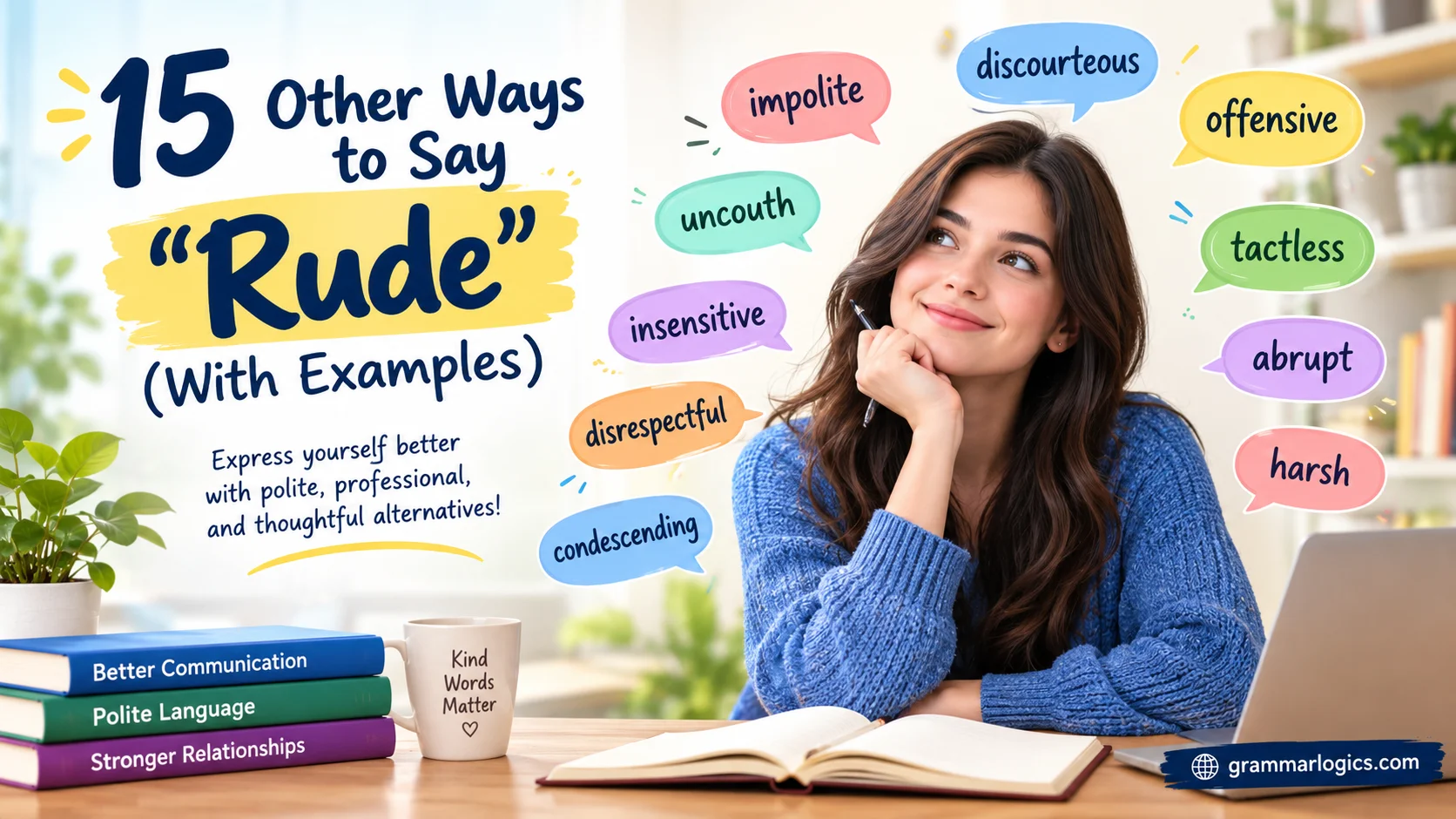
In this article, we will explore 15 other ways to say “rude”, along with clear meanings and practical examples to help you understand how each expression works. You will discover alternatives such as impolite, disrespectful, offensive, inconsiderate, and ill-mannered, which can make your vocabulary more varied and effective. Each alternative has a slightly different meaning and tone, making it suitable for particular conversations and writing situations. Whether you want to describe someone’s unpleasant behavior, express disappointment, or choose a more professional expression, these alternatives will help you communicate with greater confidence, clarity, and precision.
What Does “Rude” Mean?
The word rude describes someone who behaves or speaks in a way that shows a lack of respect, politeness, or consideration for others. It can refer to hurtful comments, interrupting someone, using offensive language, ignoring social manners, or treating people disrespectfully. In everyday English, calling someone rude usually means that their words or actions are unpleasant, discourteous, or inappropriate. The word can describe a person’s attitude, a particular comment, or an entire interaction. However, the exact meaning depends on the situation. For example, interrupting someone may seem rude because it ignores their opportunity to speak, while making an insulting comment can be rude because it hurts someone’s feelings.
Common Situations Where “Rude” Is Used
People commonly use the word rude when describing unpleasant behavior in everyday life. It can appear in conversations, text messages, social media discussions, workplace communication, and personal relationships.
Some common situations include:
- Everyday conversations: Describing someone who interrupts others, speaks disrespectfully, or refuses to use basic manners.
- Workplace communication: Explaining an employee’s inappropriate comments, dismissive attitude, or disrespectful behavior toward colleagues.
- Personal relationships: Expressing disappointment when a friend, partner, or family member speaks in a hurtful way.
- Social media: Responding to insulting comments, unnecessary criticism, or disrespectful online discussions.
- Customer communication: Describing an unpleasant interaction with a customer or service representative.
Using a more specific alternative can help explain exactly what happened. For example, discourteous emphasizes poor manners, while inconsiderate focuses on someone’s failure to think about other people’s feelings.
Is It Professional or Polite to Say “Rude”?
The word rude is commonly understood and is appropriate in everyday conversations, but it can sound direct or judgmental in professional situations. When discussing someone’s behavior at work, it may be better to use expressions such as discourteous, unprofessional, or disrespectful. These alternatives can communicate concerns without making the conversation unnecessarily personal. In friendly conversations, calling a comment rude may be perfectly natural, especially when explaining why something was upsetting. However, when writing formal emails, workplace feedback, or professional complaints, choosing more precise and respectful wording can make your message sound thoughtful and constructive.
Advantages and Disadvantages of Saying “Rude”
Advantages
The word rude is short, familiar, and easy to understand. It communicates that someone’s behavior or language has crossed a boundary of politeness or respect. It also works in many situations, from casual conversations to discussions about workplace behavior. Because most English speakers understand its meaning, it is a convenient way to express disapproval without needing a lengthy explanation.
Disadvantages
Although useful, rude can sometimes sound judgmental because it directly criticizes someone’s behavior. It may also be too general when you want to describe a specific problem. For instance, someone who ignores another person’s feelings is not necessarily behaving in the same way as someone who deliberately insults them. Using more precise vocabulary, such as inconsiderate, offensive, or tactless, can communicate the situation more accurately.
15 Other Ways to Say “Rude”
- Impolite
- Disrespectful
- Discourteous
- Inconsiderate
- Offensive
- Tactless
- Abrasive
- Ill-mannered
- Insolent
- Uncivil
- Obnoxious
- Boorish
- Impertinent
- Unkind
- Vulgar
1. Impolite
Meaning
Impolite describes behavior that does not follow accepted standards of good manners. It is one of the closest and most natural alternatives to rude, especially when someone fails to show basic courtesy.
Definition
Impolite means not showing proper manners or consideration in social interactions.
Detailed Explanation
This expression is useful when someone’s behavior is inappropriate or lacking in courtesy. It is generally softer than words that suggest deliberate insults or hostility. For example, failing to say thank you, interrupting a conversation, or speaking without acknowledging another person’s feelings may be considered impolite. It focuses more on manners than on someone’s overall personality.
Scenario Examples
Scenario 1: Someone interrupts a colleague during a meeting.
Example: It was impolite of him to interrupt her before she finished explaining the idea.
Scenario 2: A guest leaves without thanking the host.
Example: Leaving without saying thank you was rather impolite.
Best Use
Use impolite when discussing poor manners in everyday conversations, social situations, school environments, or professional communication. It is especially suitable when you want to criticize behavior without sounding overly aggressive.
Tone
Tone: Polite, neutral, mildly critical.
It communicates disapproval without sounding particularly harsh or insulting.
2. Disrespectful
Meaning
Disrespectful describes words or actions that show a lack of respect for another person, their feelings, opinions, or position.
Definition
Disrespectful means failing to treat someone with the respect they deserve.
Detailed Explanation
This expression is stronger than simply describing someone as impolite because it emphasizes a lack of respect. It is appropriate when someone dismisses another person’s opinion, makes insulting remarks, or deliberately ignores their boundaries. In professional and personal relationships, it can communicate that behavior has crossed an important line. Unlike impolite, it focuses on respect rather than ordinary social manners.
Scenario Examples
Scenario 1: An employee dismisses a coworker’s contribution.
Example: His disrespectful response made the team discussion uncomfortable.
Scenario 2: A teenager speaks harshly to a parent.
Example: It is disrespectful to speak to your parents that way.
Best Use
Use disrespectful when discussing workplace disagreements, personal boundaries, family conversations, or situations where someone has been treated unfairly.
Tone
Tone: Serious, direct, firm.
The word expresses a clear concern about how someone treats other people.
3. Discourteous
Meaning
Discourteous refers to behavior that lacks courtesy, consideration, or respectful manners.
Definition
Discourteous means showing a lack of politeness or proper social consideration.
Detailed Explanation
This word is a slightly more formal alternative to rude. It is useful when describing behavior that does not meet expected standards of courtesy, particularly in professional or public settings. For example, ignoring a customer’s question, interrupting a speaker, or refusing to acknowledge someone can be described as discourteous. It sounds more measured and formal than impolite, making it suitable for written complaints.
Scenario Examples
Scenario 1: A customer receives an unpleasant response from a service representative.
Example: I found the representative’s response discourteous and unhelpful.
Scenario 2: Someone repeatedly interrupts a public speaker.
Example: It was discourteous to interrupt the presentation several times.
Best Use
Use discourteous in formal emails, business communication, customer complaints, and situations where professional manners matter.
Tone
Tone: Formal, respectful, disapproving.
It allows you to criticize poor manners without using unnecessarily emotional language.
4. Inconsiderate
Meaning
Inconsiderate describes someone who does not think about other people’s feelings, needs, comfort, or circumstances.
Definition
Inconsiderate means failing to consider how your behavior affects other people.
Detailed Explanation
This alternative focuses on a person’s lack of thoughtfulness rather than simply their manners. Someone may be inconsiderate when they make excessive noise, cancel plans without warning, or ignore another person’s difficulties. The word is particularly useful when the problem involves a lack of empathy or awareness. It is not always a direct synonym for rude, but it works well when someone’s behavior makes life difficult or uncomfortable for others.
Scenario Examples
Scenario 1: A neighbor plays loud music late at night.
Example: Playing music that loudly after midnight is inconsiderate.
Scenario 2: A friend cancels an important plan at the last minute without explanation.
Example: It was inconsiderate of her to cancel without letting me know earlier.
Best Use
Use inconsiderate when discussing friendships, relationships, neighbors, family situations, and behavior that affects other people’s comfort.
Tone
Tone: Thoughtful, mildly critical, personal.
It highlights a lack of consideration rather than directly attacking someone’s character.
5. Offensive
Meaning
Offensive describes words, comments, or actions that upset, insult, or hurt someone.
Definition
Offensive means causing someone to feel insulted, upset, or disrespected.
Detailed Explanation
This expression is particularly useful when someone’s language or behavior causes emotional discomfort. It can describe insulting jokes, inappropriate remarks, discriminatory comments, or statements that cross personal boundaries. Unlike impolite, which mainly concerns manners, offensive focuses on the effect something has on another person. Not every rude comment is necessarily offensive, but particularly hurtful or insulting comments often are.
Scenario Examples
Scenario 1: Someone makes an inappropriate joke about another person’s appearance.
Example: That joke about her appearance was offensive and unnecessary.
Scenario 2: A person makes an insulting comment during an online discussion.
Example: I reported the offensive comment because it targeted another user.
Best Use
Use offensive when describing insulting language, inappropriate jokes, hurtful remarks, or behavior that causes genuine discomfort.
Tone
Tone: Strong, serious, critical.
It communicates that someone’s words or actions have crossed a boundary.
6. Tactless
Meaning
Tactless describes someone who says or does something without considering whether it is appropriate or emotionally sensitive.
Definition
Tactless means lacking sensitivity when communicating with other people.
Detailed Explanation
This expression is useful when someone makes an inappropriate comment without thinking about how it might affect others. A tactless person may ask an embarrassing question, mention a sensitive subject, or make a poorly timed remark. The behavior can be hurtful even when the speaker does not intend to cause harm. Compared with rude, tactless places more emphasis on poor judgment and a lack of social sensitivity.
Scenario Examples
Scenario 1: Someone asks a personal question during a public gathering.
Example: Asking about her private life in front of everyone was tactless.
Scenario 2: A colleague criticizes someone’s work during an already stressful meeting.
Example: His tactless comment made an uncomfortable situation even worse.
Best Use
Use tactless when discussing sensitive conversations, personal questions, workplace feedback, or comments that show poor judgment.
Tone
Tone: Refined, critical, slightly formal.
It describes a lack of sensitivity without necessarily suggesting deliberate cruelty.
7. Abrasive
Meaning
Abrasive describes a person’s harsh, unpleasant, or confrontational manner of speaking or behaving.
Definition
Abrasive means having a rough or unpleasant communication style that can upset others.
Detailed Explanation
This word is especially useful when someone regularly communicates in a harsh or aggressive manner. An abrasive person may criticize others bluntly, respond impatiently, or make conversations feel uncomfortable. Unlike impolite, which can describe a single action, abrasive often describes someone’s overall communication style. It does not always mean that a person intends to hurt others, but their manner can still create tension.
Scenario Examples
Scenario 1: A manager speaks harshly to employees during meetings.
Example: His abrasive communication style has made the office environment uncomfortable.
Scenario 2: Someone responds aggressively to a simple question.
Example: She sounded abrasive when I asked whether she needed any help.
Best Use
Use abrasive when describing communication styles, workplace relationships, difficult personalities, or repeated confrontational behavior.
Tone
Tone: Strong, descriptive, critical.
It emphasizes harshness and friction in someone’s interactions with others.
8. Ill-Mannered
Meaning
Ill-mannered describes someone who regularly behaves without proper manners or social courtesy.
Definition
Ill-mannered means having poor manners or behaving in an impolite way.
Detailed Explanation
This expression is commonly used to describe behavior that ignores basic social expectations. It may refer to speaking with one’s mouth full, interrupting people, using inappropriate language, or treating guests disrespectfully. It is similar to impolite but can sound more judgmental, especially when describing someone’s general behavior. It is often used in conversations about social etiquette and upbringing.
Scenario Examples
Scenario 1: A child interrupts adults throughout a dinner conversation.
Example: The child was being ill-mannered by constantly interrupting everyone.
Scenario 2: A guest behaves disrespectfully at a formal event.
Example: His ill-mannered behavior embarrassed the other guests.
Best Use
Use ill-mannered when discussing social etiquette, family gatherings, public behavior, or situations involving poor manners.
Tone
Tone: Traditional, critical, moderately formal.
It focuses on someone’s failure to follow accepted standards of behavior.
9. Insolent
Meaning
Insolent describes someone who speaks or behaves in a disrespectful and boldly defiant manner, particularly toward someone in authority.
Definition
Insolent means showing disrespect through bold, rude, or defiant behavior.
Detailed Explanation
This is a stronger alternative to rude and often suggests deliberate disrespect. It is commonly used when someone responds disrespectfully to a teacher, supervisor, parent, or another authority figure. An insolent response may involve mocking someone’s instructions or answering with an openly disrespectful attitude. Unlike impolite, this word suggests a more challenging or rebellious manner.
Scenario Examples
Scenario 1: A student responds disrespectfully to a teacher.
Example: The teacher was disappointed by the student’s insolent reply.
Scenario 2: An employee openly mocks a supervisor’s instructions.
Example: His insolent attitude was inappropriate during the meeting.
Best Use
Use insolent in situations involving authority, discipline, workplace conduct, or openly defiant responses.
Tone
Tone: Strong, formal, disapproving.
It communicates deliberate disrespect and a challenging attitude.
10. Uncivil
Meaning
Uncivil describes behavior that is unfriendly, disrespectful, or inconsistent with basic standards of courtesy.
Definition
Uncivil means not showing the politeness and respect expected in social interactions.
Detailed Explanation
This word is useful when describing unpleasant interactions, especially when conversations become hostile or disrespectful. It can refer to insulting remarks, aggressive arguments, or a lack of basic courtesy during disagreements. Uncivil is often used in discussions about public behavior, social debates, and professional communication. It is slightly more formal than rude and focuses on the breakdown of respectful interaction.
Scenario Examples
Scenario 1: Two people argue during a community meeting.
Example: The discussion became uncivil when both sides started making personal attacks.
Scenario 2: Someone responds aggressively to a reasonable question.
Example: There is no need to become uncivil just because we disagree.
Best Use
Use uncivil when discussing arguments, public discussions, disagreements, social behavior, and professional interactions.
Tone
Tone: Formal, firm, disapproving.
It emphasizes a lack of respect and civility during communication.
11. Obnoxious
Meaning
Obnoxious describes someone or something that is extremely unpleasant, irritating, or offensive to others.
Definition
Obnoxious means very unpleasant or offensive in a way that annoys other people.
Detailed Explanation
This expression is stronger and more emotional than rude. It can describe someone who constantly interrupts conversations, makes irritating comments, behaves arrogantly, or deliberately annoys others. It may also refer to an unpleasant habit or attitude rather than one specific act of poor manners. Because it is quite judgmental, it is better suited to casual conversations than formal workplace feedback.
Scenario Examples
Scenario 1: Someone repeatedly makes loud comments to attract attention.
Example: His obnoxious behavior made it difficult for everyone to enjoy dinner.
Scenario 2: A person constantly makes insulting jokes in a group chat.
Example: Those obnoxious jokes are making the conversation unpleasant.
Best Use
Use obnoxious in casual conversations, personal discussions, and situations involving particularly irritating or unpleasant behavior.
Tone
Tone: Strong, emotional, informal.
It expresses considerable annoyance or disapproval.
12. Boorish
Meaning
Boorish describes someone who behaves in a socially awkward, insensitive, or unpleasant way because they lack good manners.
Definition
Boorish means rough, socially inappropriate, or lacking basic manners and consideration.
Detailed Explanation
This word is useful when someone’s behavior is socially unacceptable or embarrassing. A boorish person may dominate conversations, make inappropriate remarks, or behave disrespectfully in public. It often suggests a lack of social refinement rather than deliberate hostility. Unlike ordinary rude behavior, boorish conduct can make an entire social gathering uncomfortable.
Scenario Examples
Scenario 1: Someone talks loudly and interrupts everyone at a dinner party.
Example: His boorish behavior made the evening uncomfortable for the guests.
Scenario 2: A guest makes inappropriate remarks during a formal celebration.
Example: Making those comments at the wedding was incredibly boorish.
Best Use
Use boorish in descriptive writing, social commentary, and conversations about embarrassing or socially unacceptable behavior.
Tone
Tone: Formal, critical, somewhat literary.
It describes poor social manners in a stronger and more distinctive way.
13. Impertinent
Meaning
Impertinent describes someone who speaks or behaves in a way that is disrespectfully bold or unnecessarily intrusive.
Definition
Impertinent means showing disrespect by making inappropriate remarks or asking improper questions.
Detailed Explanation
This expression is particularly useful when someone crosses social boundaries through their words or questions. For example, asking an overly personal question or making a disrespectful comment to someone in authority may be considered impertinent. It is more formal than rude and often carries a sense of inappropriate boldness. However, it is not always interchangeable with tactless because impertinent behavior can suggest a more openly disrespectful attitude.
Scenario Examples
Scenario 1: Someone asks an unnecessarily personal question at work.
Example: That was an impertinent question to ask during a professional meeting.
Scenario 2: A student responds disrespectfully to a school principal.
Example: The principal considered the student’s response impertinent.
Best Use
Use impertinent in formal writing, literary descriptions, and situations involving inappropriate questions or disrespectful remarks.
Tone
Tone: Formal, sharp, critical.
It suggests that someone has crossed an acceptable social or conversational boundary.
14. Unkind
Meaning
Unkind describes words or actions that hurt someone’s feelings or show a lack of compassion.
Definition
Unkind means not being caring, considerate, or sympathetic toward another person.
Detailed Explanation
This is a softer and more emotionally focused alternative to rude. It is particularly appropriate when someone’s words are hurtful, insensitive, or lacking compassion. For example, mocking someone’s mistake or making a negative comment about their appearance may be described as unkind. Unlike disrespectful, it focuses more on emotional harm than on authority or social status. It is also useful when you want to express disappointment without sounding confrontational.
Scenario Examples
Scenario 1: A friend makes fun of someone’s personal struggles.
Example: It was unkind of him to laugh at something she was struggling with.
Scenario 2: Someone makes a hurtful comment about another person’s appearance.
Example: That was an unkind thing to say, even if you did not mean to hurt her.
Best Use
Use unkind in personal conversations, friendships, family relationships, and situations where someone’s words have hurt another person’s feelings.
Tone
Tone: Gentle, emotional, compassionate.
It expresses disapproval while leaving room for understanding and forgiveness.
15. Vulgar
Meaning
Vulgar describes language, behavior, or expressions that are crude, offensive, or socially inappropriate.
Definition
Vulgar means using crude or offensive language or behaving in a way considered inappropriate or lacking refinement.
Detailed Explanation
This word is more specific than rude because it often refers to offensive language, inappropriate jokes, or crude behavior. Someone who frequently uses profanity in an unsuitable setting may be described as vulgar. It can also refer to gestures or comments that violate accepted standards of decency. Not all rude behavior is vulgar, but vulgar language or actions are often considered rude in formal or respectful environments.
Scenario Examples
Scenario 1: Someone uses offensive language during a formal event.
Example: His vulgar language was inappropriate for such a professional gathering.
Scenario 2: A person makes a crude joke in a family conversation.
Example: Nobody appreciated the vulgar joke he made at dinner.
Best Use
Use vulgar when discussing crude language, inappropriate humor, offensive expressions, or behavior that violates standards of decency.
Tone
Tone: Strong, judgmental, formal.
It emphasizes crudeness and a lack of appropriate social standards.
FAQs
What is another way to say “rude”?
Some common alternatives to rude include impolite, disrespectful, discourteous, inconsiderate, and tactless. Each expression describes a slightly different type of unpleasant behavior. For example, impolite focuses on poor manners, while disrespectful emphasizes a lack of respect. The best choice depends on the situation and the message you want to communicate.
What does “rude” mean in simple English?
Rude means behaving or speaking without showing proper respect or good manners. It can describe someone who interrupts others, makes insulting comments, ignores social rules, or speaks in an unpleasant way. The word is commonly used when someone’s behavior makes another person feel uncomfortable or disrespected.
Is “rude” a professional word?
Yes, rude is a standard English word and can be used in professional communication. However, it may sound too direct or personal when criticizing a colleague or employee. Alternatives such as discourteous, unprofessional, or disrespectful may be more appropriate in formal feedback or workplace complaints.
What is a more polite way to say “rude”?
A more polite way to express the idea is to use impolite, discourteous, or inconsiderate, depending on the situation. You can also soften your message by describing the behavior instead of labeling the person. For example, saying “That comment seemed a little inappropriate” sounds more diplomatic than directly calling someone rude.
Which alternative to “rude” works best in formal communication?
Discourteous is an excellent choice for formal communication when discussing poor manners. Disrespectful works better when someone’s actions show a lack of respect, while inappropriate can describe behavior that does not fit a particular professional setting. Choose the expression that accurately describes the issue rather than using a stronger word than necessary.
Conclusion
Choosing the right words helps you describe unpleasant behavior without creating unnecessary misunderstandings. Although rude is a familiar and useful expression, alternatives such as impolite, disrespectful, discourteous, and tactless can communicate more specific meanings. Some expressions focus on poor manners, while others describe hurtful comments, a lack of consideration, or openly disrespectful attitudes.
The best choice depends on the situation, your relationship with the other person, and the tone you want to maintain. Whether you are writing an email, discussing a personal experience, or improving your English vocabulary, understanding these differences can make your communication clearer and more effective. Always choose words that express your message accurately while maintaining respect for others.
Latest posts please come now:
- 15 Other Ways to Say “Poop” (With Examples)
 Talking about poop is a normal part of everyday life, … Read more
- 15 Other Ways to Say “Finally” (With Examples)
 Finally is a common English word used to express the … Read more
- 15 Other Ways to Say “I Love You Too” (With Examples)
 Responding with “I love you too” is a simple way … Read more