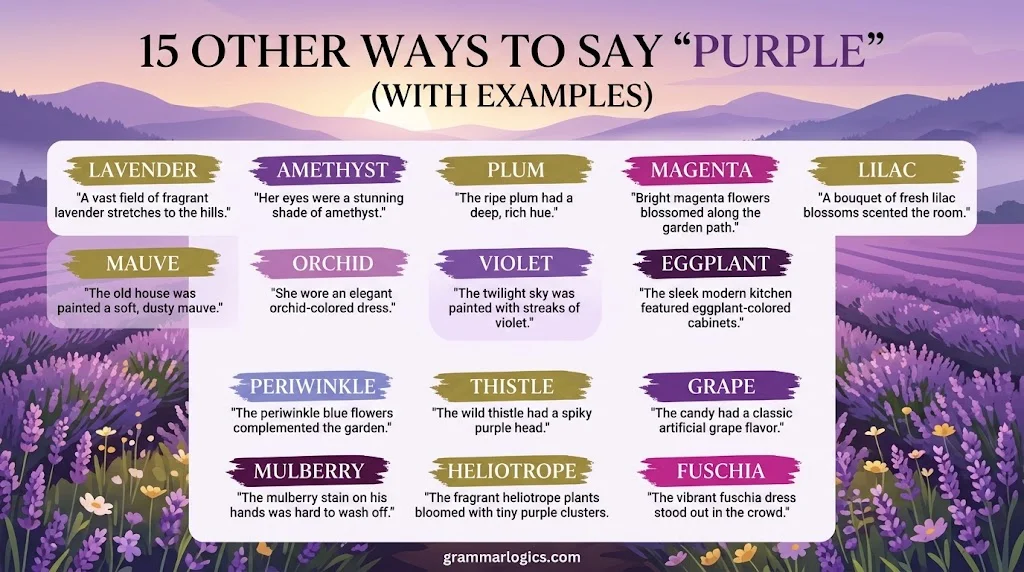
Purple is a beautiful color that represents creativity, elegance, mystery, and royalty. Exploring different words for purple can make your writing more colorful, expressive, and engaging.
When describing colors, choosing the right words can help readers imagine a scene more clearly. Purple appears in flowers, sunsets, clothing, decorations, and many other parts of everyday life. However, not every shade of purple looks the same. Some shades are soft and gentle, while others are deep, rich, or vibrant. Learning other ways to say purple can help you describe these differences naturally. Whether you are writing a blog post, a story, a product description, or a school assignment, using varied color vocabulary can make your sentences more interesting and memorable.
From lavender and lilac to violet and plum, there are many words that describe purple shades beautifully. Each word creates a slightly different impression and works best in particular situations. For example, lavender often suggests softness and calmness, while violet can sound rich and vivid. Plum is useful for describing deeper, darker shades, especially in fashion and interior design. Understanding these alternatives helps you choose more precise words instead of repeating the same color name. In this guide, you will discover useful alternatives to purple, their meanings, and practical examples to improve your vocabulary and make your writing more descriptive.
What Does “Purple” Mean?
Purple is a color created by combining red and blue in varying proportions. Depending on the mixture, it can appear light and delicate, deep and dramatic, or rich and vibrant. Purple is commonly associated with creativity, imagination, luxury, mystery, and elegance, although its meaning can change according to culture and context.
In everyday English, people use the word purple to describe many things, including flowers, clothing, paint, decorations, and natural scenery. The term also covers a broad range of shades, from pale lavender to dark plum. More specific color names help communicate these differences. For example, lavender suggests a light, soft purple, while eggplant usually describes a much darker shade. Understanding these distinctions makes color descriptions more accurate and interesting.
Common Situations Where “Purple” Is Used
People use the word purple in many everyday situations. In fashion, it describes clothing, accessories, shoes, and makeup. In home decoration, it helps people discuss paint colors, furniture, curtains, and decorative accents.
Purple is also common in nature writing because it describes flowers such as violets and lavender, as well as certain fruits and sunsets. Artists and designers often choose more precise color names to explain the exact shade they want. For example, an interior designer might recommend mauve for a muted room palette, while an artist may prefer amethyst for a rich, jewel-like effect.
In creative writing, color alternatives help avoid repetition and create stronger visual imagery. Instead of describing every object as purple, writers can select a more specific shade that suits the subject.
Is It Professional or Polite to Say “Purple”?
Yes, purple is appropriate in both professional and casual communication. It is a standard English color name and works well in conversations, emails, product descriptions, design briefs, school assignments, and formal writing. There is nothing inherently impolite or unprofessional about using it.
However, a more precise shade name can be useful when accuracy matters. For instance, a graphic designer may need to distinguish between violet, indigo, and lavender. Similarly, a clothing description may use plum or mauve to help customers understand the product’s appearance. The best choice depends on the color itself and the reader’s needs. In professional communication, clarity and accuracy matter more than choosing an elaborate color word.
Advantages and Disadvantages of Saying “Purple”
Advantages
The word purple is simple, familiar, and widely understood. It describes a broad color family without requiring readers to know specialized vocabulary. It is suitable for everyday conversation and works in both informal and professional writing. Its broad meaning also makes it useful when the exact shade is unknown or unimportant.
Disadvantages
Purple can sometimes be too general when a precise shade matters. A pale lilac and a deep plum look noticeably different, yet both may be described as purple. Repeating the same word throughout a descriptive passage can also make the writing feel less vivid. Using specific shade names helps readers visualize the intended color more accurately, provided the names genuinely match the color being described.
15 Synonyms and Alternatives for Purple
- Violet
- Lavender
- Lilac
- Mauve
- Plum
- Amethyst
- Orchid
- Periwinkle
- Indigo
- Eggplant
- Mulberry
- Magenta
- Grape
- Heliotrope
- Royal Purple
Note: These alternatives describe different shades or closely related colors. They are not all exact synonyms, so choose the term that best matches the actual color.
1. Violet
Meaning
Violet is a color closely related to purple, often appearing cooler and more blue-toned than reddish purple.
Definition
Violet is a blue-purple color associated with the violet end of the visible light spectrum.
Detailed Explanation
Violet is useful when a description needs to sound more specific than purple. It often suggests a cool, vivid, or slightly bluish shade. Although violet and purple are closely related, they are not identical in every color system or context. Choosing violet can make descriptions of flowers, artwork, and clothing more precise.
Scenario Examples
Scenario: Describing a flower.
Example: The garden was filled with delicate violet blossoms.
Scenario: Discussing an art project.
Example: Try adding a little more violet to the blue mixture.
Scenario: Describing an accessory.
Example: She carried a violet handbag with silver details.
Best Use
Use violet in nature writing, art, fashion, and color descriptions when the shade has a noticeable blue-purple appearance.
Tone
Tone: Elegant, cool, descriptive.
Violet creates a refined visual impression without sounding overly complicated.
2. Lavender
Meaning
Lavender describes a light, soft purple that often has a pale, slightly bluish appearance.
Definition
Lavender is a pale purple shade named after the lavender plant.
Detailed Explanation
Lavender is lighter and generally softer than ordinary medium or dark purple. It can make a description feel peaceful, delicate, and fresh. The word is especially useful for clothing, flowers, bedroom decor, and gentle color palettes. It should not be used for a very dark purple because the shade would be misleading.
Scenario Examples
Scenario: Describing a bedroom.
Example: We painted the walls a calming lavender.
Scenario: Talking about a dress.
Example: Her lavender dress looked lovely in the afternoon sunlight.
Scenario: Writing about a garden.
Example: Rows of lavender flowers swayed in the breeze.
Best Use
Lavender works best in interior design, fashion, gardening, invitations, and descriptions of soft colors.
Tone
Tone: Gentle, peaceful, delicate.
The name suggests a light and soothing color rather than a bold or dramatic one.
3. Lilac
Meaning
Lilac is a pale purple shade that often carries a soft pinkish or slightly cool undertone.
Definition
Lilac is a light purple color named after the flowers of the lilac shrub.
Detailed Explanation
Lilac resembles lavender, but the two can differ depending on the color palette. Lilac often feels slightly pinker, while lavender may appear cooler or bluer. The word works well when describing spring flowers, light fabrics, stationery, and romantic designs. It gives readers a more specific picture than the broad term purple.
Scenario Examples
Scenario: Describing spring flowers.
Example: The lilac blossoms filled the yard with color.
Scenario: Choosing an outfit.
Example: I bought a lilac sweater for the spring season.
Scenario: Planning a celebration.
Example: They decorated the tables with lilac napkins and white roses.
Best Use
Use lilac for springtime imagery, floral descriptions, clothing, and soft decorative color schemes.
Tone
Tone: Fresh, delicate, romantic.
Lilac suggests lightness and softness, making it useful for gentle, inviting descriptions.
4. Mauve
Meaning
Mauve is a muted purple shade with noticeable gray or pink undertones.
Definition
Mauve is a subdued purple color that often appears between dusty pink and soft violet.
Detailed Explanation
Mauve is less vivid than many shades of purple and tends to have a restrained, understated appearance. It is especially useful when describing sophisticated clothing, cosmetics, and interior color schemes. Unlike bright violet or magenta, mauve does not usually demand attention. Its exact appearance can vary between products and color palettes.
Scenario Examples
Scenario: Shopping for clothes.
Example: She chose a mauve blouse for the office.
Scenario: Decorating a living room.
Example: The mauve cushions complemented the cream-colored sofa.
Scenario: Describing makeup.
Example: This mauve lipstick has a subtle, dusty finish.
Best Use
Mauve is ideal for fashion, cosmetics, interior design, and muted color palettes.
Tone
Tone: Understated, sophisticated, refined.
Its muted appearance gives descriptions a polished feel without relying on a bright or dramatic color.
5. Plum
Meaning
Plum describes a deep purple that often contains reddish or burgundy undertones.
Definition
Plum is a rich, dark purple color named after the skin of certain plums.
Detailed Explanation
Plum is darker and generally warmer than lavender or lilac. It can make a color description feel rich, bold, and luxurious. The term is common in clothing, furniture, cosmetics, and graphic design. It is particularly appropriate when the intended color has a deep, reddish-purple appearance rather than a light or bluish one.
Scenario Examples
Scenario: Describing an evening outfit.
Example: He wore a plum jacket with a black shirt.
Scenario: Decorating a dining room.
Example: Plum curtains added depth to the neutral room.
Scenario: Choosing lipstick.
Example: She selected a plum shade for the evening event.
Best Use
Use plum for dark fabrics, dramatic interiors, cosmetics, and rich decorative accents.
Tone
Tone: Rich, dramatic, luxurious.
Plum suggests depth and warmth, making it useful when a lighter shade would not capture the intended effect.
6. Amethyst
Meaning
Amethyst describes a purple shade associated with the purple gemstone of the same name.
Definition
Amethyst is a jewel-inspired purple that can range from light violet to deep, saturated purple.
Detailed Explanation
Amethyst is especially useful when a color has a gemstone-like richness or sparkle. Depending on the particular shade, it may look cool and violet-toned or more intensely purple. The word adds a decorative quality to descriptions of jewelry, accessories, artwork, and luxury products. Because gemstones vary in color, amethyst does not refer to one single exact shade.
Scenario Examples
Scenario: Describing jewelry.
Example: The necklace featured a bright amethyst pendant.
Scenario: Discussing a design palette.
Example: We chose amethyst accents to make the invitation feel elegant.
Scenario: Describing a decorative object.
Example: An amethyst glass vase stood beside the window.
Best Use
Amethyst works well in jewelry descriptions, luxury branding, decorative writing, and gemstone-inspired designs.
Tone
Tone: Jewel-like, elegant, luxurious.
The word draws attention to the richness and visual appeal of the shade.
7. Orchid
Meaning
Orchid describes a purple color that often has noticeable pink undertones and a bright, floral appearance.
Definition
Orchid is a pinkish-purple shade named after the flowers of the orchid family.
Detailed Explanation
Orchid is generally more colorful and pink-toned than a typical cool violet. Depending on the palette, it can appear soft and delicate or vivid and saturated. The word works particularly well for floral arrangements, fashion, beauty products, and creative designs. It is most accurate when the color resembles a pinkish or floral purple rather than a dark plum.
Scenario Examples
Scenario: Describing a bouquet.
Example: Orchid flowers added a bright accent to the arrangement.
Scenario: Choosing a party outfit.
Example: She wore an orchid-colored dress with simple silver earrings.
Scenario: Planning a visual design.
Example: The designer used orchid details against a pale background.
Best Use
Choose orchid for floral descriptions, fashion, beauty products, and colorful decorative designs.
Tone
Tone: Vibrant, floral, expressive.
Orchid creates a livelier impression than muted shades such as mauve.
8. Periwinkle
Meaning
Periwinkle is a light blue-purple shade that often appears closer to blue than many traditional purples.
Definition
Periwinkle is a pale color that combines blue with a small amount of purple.
Detailed Explanation
Periwinkle is a useful alternative when the color sits between blue and purple. It is usually lighter and cooler than plum, magenta, or royal purple. The term appears in descriptions of clothing, flowers, stationery, and pastel color palettes. Since it has a strong blue component, it should not be used for a distinctly reddish or deep purple shade.
Scenario Examples
Scenario: Choosing a paint color.
Example: We selected periwinkle for the small reading nook.
Scenario: Describing stationery.
Example: The periwinkle envelope matched the silver invitation.
Scenario: Talking about clothing.
Example: His periwinkle shirt looked bright against the white jacket.
Best Use
Periwinkle is best for pastel designs, light clothing, stationery, and blue-purple color combinations.
Tone
Tone: Airy, cool, gentle.
Its pale, blue-leaning appearance creates a light and relaxed visual effect.
9. Indigo
Meaning
Indigo is a deep blue-violet color that can appear more blue than purple.
Definition
Indigo is a dark color between blue and violet, commonly associated with deep blue-purple shades.
Detailed Explanation
Indigo is darker and cooler than lavender and usually less red-toned than plum. It is useful when describing a deep, blue-dominant color in clothing, artwork, and design. In different color systems, indigo may be classified closer to blue or violet, so its exact appearance can vary. Choose it when the blue component is an important part of the intended shade.
Scenario Examples
Scenario: Describing a piece of clothing.
Example: She paired an indigo scarf with a gray coat.
Scenario: Talking about a painting.
Example: The artist used indigo to create shadows in the evening sky.
Scenario: Choosing a room accent.
Example: Indigo cushions added contrast to the pale walls.
Best Use
Use indigo for deep blue-purple clothing, artwork, evening scenes, and contrasting design accents.
Tone
Tone: Deep, cool, composed.
Indigo conveys depth and a cooler color impression than warmer purples.
10. Eggplant
Meaning
Eggplant describes a very dark purple that often appears almost black in low light.
Definition
Eggplant is a deep, rich purple named after the dark skin of the eggplant vegetable.
Detailed Explanation
Eggplant is a descriptive color name for shades that are darker than most ordinary purples. It commonly has a rich, slightly reddish or brownish quality. The term is popular in fashion, furniture, paint, and home decoration because it helps communicate a dramatic, dark shade. It is not suitable for pale or bright purple colors.
Scenario Examples
Scenario: Describing kitchen decor.
Example: The eggplant-colored cabinets stood out against the white countertops.
Scenario: Choosing an outfit.
Example: He wore an eggplant tie to the formal dinner.
Scenario: Discussing furniture.
Example: An eggplant armchair became the focal point of the room.
Best Use
Eggplant works best for dark fabrics, bold furniture, paint colors, and dramatic interiors.
Tone
Tone: Bold, rich, dramatic.
Its darkness gives it a strong visual presence and distinguishes it from lighter shades.
11. Mulberry
Meaning
Mulberry is a deep reddish-purple shade named after the color of certain mulberry fruits.
Definition
Mulberry is a rich purple with red or berry-like undertones.
Detailed Explanation
Mulberry often appears warmer and redder than violet or indigo. It can resemble a mixture of purple, berry red, and burgundy, depending on the particular palette. The word is useful when describing fabrics, decorative objects, flowers, and cosmetics with a warm, saturated appearance. It provides more detail than purple when the red undertone is noticeable.
Scenario Examples
Scenario: Describing a winter coat.
Example: She chose a mulberry coat to brighten her winter wardrobe.
Scenario: Planning a wedding palette.
Example: Mulberry ribbons added a rich accent to the cream bouquets.
Scenario: Describing a fabric.
Example: The mulberry velvet looked especially striking under the warm lights.
Best Use
Use mulberry for warm purple fabrics, floral arrangements, event decorations, and rich cosmetic shades.
Tone
Tone: Warm, rich, expressive.
The reddish undertone gives mulberry a warmer character than blue-based purple shades.
12. Magenta
Meaning
Magenta is a vivid color between red and purple, often appearing strongly pinkish or reddish-purple.
Definition
Magenta is a saturated red-purple color commonly used in printing, graphic design, and digital color palettes.
Detailed Explanation
Magenta is brighter and more intense than most muted purple shades. It often leans toward pink or red, making it visually different from violet and indigo. The term is especially useful in graphic design, advertising, fashion, and colorful artwork. Because magenta can look distinctly pinkish, it should not be used as a replacement for every shade of purple.
Scenario Examples
Scenario: Designing a poster.
Example: The designer used magenta lettering against a dark background.
Scenario: Describing a handbag.
Example: Her magenta handbag added a bold splash of color.
Scenario: Choosing flowers.
Example: Magenta blossoms created a vivid contrast with the green leaves.
Best Use
Magenta is ideal for graphic design, digital artwork, bold fashion, and bright decorative accents.
Tone
Tone: Bold, energetic, vivid.
Its strong saturation makes it more attention-grabbing than soft or muted purple shades.
13. Grape
Meaning
Grape describes a purple shade inspired by the skin of purple grapes and grape-flavored products.
Definition
Grape is a fruit-inspired purple that often appears medium to dark, with a rich or slightly bluish appearance.
Detailed Explanation
Grape is a familiar, accessible color name rather than a precise technical standard. It can refer to bright purple in packaging or a deeper, more natural-looking shade in clothing and design. The exact color depends on the product or palette being described. It works well when you want a recognizable, easy-to-imagine color name without suggesting a particular gemstone or flower.
Scenario Examples
Scenario: Describing a school project.
Example: The children painted the background grape purple.
Scenario: Choosing a backpack.
Example: I bought a grape-colored backpack for my daily commute.
Scenario: Discussing packaging.
Example: The grape-colored label made the product stand out on the shelf.
Best Use
Grape works well for everyday color descriptions, casual writing, packaging, children’s products, and accessories.
Tone
Tone: Friendly, familiar, playful.
The fruit association makes the color name easy to understand and approachable.
14. Heliotrope
Meaning
Heliotrope describes a purple shade that often contains noticeable pink or magenta undertones.
Definition
Heliotrope is a pinkish or reddish purple named after the heliotrope flower.
Detailed Explanation
Heliotrope is a more specialized color term than purple or violet. It usually suggests a distinctive floral purple with a pinkish cast, although the exact shade varies across palettes. It can add precision and variety to creative writing, fashion descriptions, and art discussions. Because the word is less familiar to some readers, a simple explanation may help when using it in general-interest writing.
Scenario Examples
Scenario: Describing a flower arrangement.
Example: Heliotrope blooms brought a pinkish-purple accent to the bouquet.
Scenario: Discussing a fabric sample.
Example: The heliotrope fabric looked brighter beside the charcoal material.
Scenario: Writing a product description.
Example: The scarf comes in a soft heliotrope shade with warm undertones.
Best Use
Use heliotrope in floral writing, fashion descriptions, artwork, and more detailed color discussions.
Tone
Tone: Distinctive, floral, expressive.
Heliotrope gives a description a specific character, though a less specialized term may be clearer for everyday readers.
15. Royal Purple
Meaning
Royal purple describes a deep, rich purple traditionally associated with royalty, prestige, and ceremonial clothing.
Definition
Royal purple is a saturated, regal-looking purple that can range from deep violet to a rich reddish purple.
Detailed Explanation
Royal purple emphasizes the richness and symbolic associations of a color rather than identifying one universally fixed shade. It is often used to suggest elegance, prestige, or a formal appearance. The term is especially suitable for ceremonial garments, branding, invitations, and decorative designs. Its precise appearance can vary, so it is helpful to confirm the desired shade when working with paint, printing, or digital color specifications.
Scenario Examples
Scenario: Describing formal clothing.
Example: The royal purple gown looked striking beneath the ballroom lights.
Scenario: Designing an invitation.
Example: We used royal purple borders to give the invitation a formal appearance.
Scenario: Planning a brand identity.
Example: The company selected royal purple to create a bold, prestigious visual style.
Best Use
Royal purple works best for formal events, luxury-inspired branding, ceremonial designs, and dramatic decorative accents.
Tone
Tone: Regal, prestigious, confident.
The name emphasizes richness and grandeur, making it more expressive than a general color label.
FAQs
What is another way to say “purple”?
Common alternatives include violet, lavender, lilac, mauve, plum, and amethyst. The best choice depends on the exact shade. For example, lavender describes a light purple, while plum usually refers to a deeper, redder purple.
What does “purple” mean?
Purple is a color associated with a range of red-and-blue hues. It can be light, dark, warm, or cool, depending on the proportions and color system. The word is commonly used to describe clothing, flowers, artwork, and decorative objects.
Is “purple” professional?
Yes. Purple is a standard and professional color term suitable for workplace communication, product descriptions, design briefs, and formal writing. More specific shade names may be useful when the exact color matters.
What is a more precise way to describe purple?
Choose a shade name that matches the color. Use lavender for a pale purple, mauve for a muted shade, plum for a deep reddish purple, or indigo for a dark blue-purple. These terms provide more detail than the general word purple.
Which alternative works best in formal communication?
There is no single best alternative for every situation. In a design brief or product description, use the most accurate shade name, such as violet, mauve, or royal purple. If readers may not recognize a specialized color term, pair it with a simple description.
Conclusion
Purple is a versatile color, but using a more specific shade name can make your writing clearer and more engaging. Words such as lavender, lilac, violet, plum, and amethyst each create a different visual impression. Some describe pale, delicate colors, while others suggest depth, warmth, or richness. The most suitable alternative depends on the object you are describing, the shade itself, and the effect you want to create.
In professional writing, accuracy should come first; in creative writing, a carefully chosen color name can help readers imagine a scene more vividly. Rather than replacing purple with a different word every time, choose the expression that best fits the context. The right color word makes a description more precise, natural, and memorable.