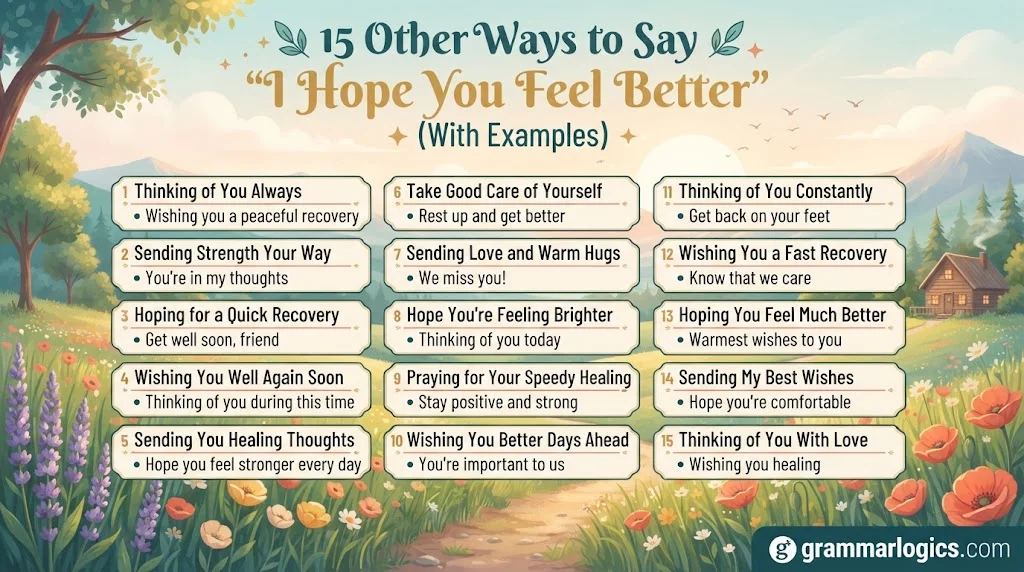
When someone is unwell, a few kind words can offer comfort and show that you genuinely care about their well-being and recovery.
Saying “I hope you feel better” is a warm and common way to express care, sympathy, and encouragement when someone is sick, tired, or going through a difficult time. However, using the same phrase repeatedly can sometimes feel predictable, especially in personal, professional, or thoughtful conversations. Choosing the right alternative expression can make your message sound more natural, sincere, and appropriate for the situation. Whether you are writing a message to a friend, sending a supportive text to a coworker, or responding to someone who is recovering, the right wording can communicate genuine support and compassion.
There are many situations where a simple message can make someone feel remembered and cared for. Instead of always saying “I hope you feel better,” you can choose expressions that match the person’s situation and your relationship with them. Some alternatives sound casual and friendly, while others are more polite, professional, or heartfelt. Understanding these different expressions can help you communicate with greater warmth and confidence. In this article, we will explore useful ways to say “I hope you feel better”, along with examples that show how each expression can be used naturally in everyday communication.
What Does “I Hope You Feel Better” Mean?
“I hope you feel better” is a kind expression of concern used when someone is unwell, uncomfortable, injured, or going through a difficult period. It communicates a sincere wish that the person’s condition improves soon. The phrase does not necessarily mean that you know exactly what the person is experiencing; instead, it shows that you recognize their difficulty and want things to improve for them.
In everyday English, “I hope you feel better” is usually friendly, polite, and supportive. It can be used with a close friend, family member, colleague, classmate, or acquaintance. Depending on the context, it may refer to physical illness, emotional difficulty, tiredness, or a temporary problem. Its flexibility is one reason the phrase is so common in personal and everyday communication.
Common Situations Where “I Hope You Feel Better” Is Used
“I hope you feel better” is especially common when someone tells you they are sick, injured, exhausted, or struggling. You might say it in person after hearing that a friend has a cold, send it in a text to a family member who is recovering, or include it in a short message to a colleague who has taken a sick day.
The phrase also works in written communication, including emails, text messages, cards, and social media messages. At work, it can be a considerate response when a colleague mentions being ill, although a slightly more polished expression may sometimes fit a professional email better. In personal relationships, you may prefer something more emotionally expressive when the person is dealing with a serious or stressful situation.
Choosing an alternative can make your message feel less routine and more specific. A warmer expression may show affection, while a professional expression can communicate concern without sounding overly personal.
Is It Professional or Polite to Say “I Hope You Feel Better”?

Yes. “I hope you feel better” is generally polite and appropriate, but its level of formality depends on the situation. It sounds natural in everyday conversation and friendly workplace communication. For example, a colleague can reasonably say it to someone who has mentioned being sick.
However, the phrase is fairly conversational and personal, so it may not always be the most polished choice for formal correspondence. In a business email, a client message, or communication with someone you do not know well, wording that expresses concern more formally may feel more appropriate.
It is also worth considering the person’s circumstances. If someone has a minor illness, the phrase may be perfectly sufficient. If they are dealing with a serious or emotionally difficult situation, a more thoughtful expression can communicate greater empathy and support.
Advantages and Disadvantages of Saying “I Hope You Feel Better”
Advantages
The biggest advantage is its simplicity. “I hope you feel better” is immediately understandable and does not require the speaker to know much about the situation. It is also warm without being excessively emotional, making it suitable for many relationships. The phrase can be used in conversation, texts, cards, and emails without sounding unusual.
Another benefit is its flexibility. It can acknowledge both physical discomfort and certain everyday emotional difficulties. Because it is familiar wording, it allows you to express concern quickly without making the conversation unnecessarily complicated.
Disadvantages
The main limitation is that the phrase can sometimes sound routine or generic, especially when used repeatedly. If someone is experiencing a serious illness or difficult personal situation, a more specific message may feel more sincere.
It can also be too general when you want to communicate stronger emotional support. In those situations, wording that emphasizes care, recovery, encouragement, or support may better match what you want to say.
Synonyms and Natural Alternatives for “I Hope You Feel Better”
- I hope you’re feeling better soon.
- Wishing you a speedy recovery.
- Take good care of yourself.
- I’m hoping things improve for you soon.
- Sending you my best wishes for a quick recovery.
- I hope you get some rest and feel better soon.
- Take all the time you need to recover.
- I’m thinking of you and hoping you feel better soon.
- Wishing you comfort and healing.
- I hope each day brings you a little more relief.
- Please take care and get plenty of rest.
- I’m wishing you strength as you recover.
- I hope you’re back on your feet soon.
- Sending warm thoughts your way.
- I’m here for you while you recover.
1. I Hope You’re Feeling Better Soon
Meaning
“I hope you’re feeling better soon” expresses a kind wish for improvement in someone’s condition. It is closely related to “I hope you feel better,” but the wording places a little more emphasis on the near future.
Definition
A friendly expression wishing someone a quick improvement in how they feel.
Detailed Explanation
This expression sounds natural when someone is already unwell and you want to acknowledge their current condition. The word “soon” makes the message forward-looking and gently optimistic. It works well without sounding overly formal or emotionally intense. Compared with the original phrase, it can feel slightly more conversational in a text or personal message.
Scenario Examples
Scenario: A friend tells you they have been sick for several days.
Example: “I’m sorry you’ve been feeling so rough. I hope you’re feeling better soon.”
Scenario: A coworker says they are recovering at home.
Example: “Take care, and I hope you’re feeling better soon.”
Best Use
This works especially well in text messages, casual conversations, friendly emails, and personal messages.
Tone
Tone: Warm, friendly, encouraging
The wording feels caring without becoming overly emotional.
2. Wishing You a Speedy Recovery
Meaning
“Wishing you a speedy recovery” expresses a sincere hope that someone recovers quickly from an illness, injury, or medical procedure.
Definition
A polite expression wishing someone a quick and successful recovery.
Detailed Explanation
This phrase focuses specifically on recovery, making it particularly suitable when you know the person has been ill or injured. It sounds more polished than everyday conversational wording and is common in cards, workplace messages, and written notes. It may feel slightly formal in a casual text to a very close friend. Because it centers on recovery, it is most appropriate when there is a clear health-related situation.
Scenario Examples
Scenario: A colleague is recovering after surgery.
Example: “I was sorry to hear about your surgery. Wishing you a speedy recovery.”
Scenario: A neighbor has injured their leg.
Example: “Take plenty of rest. Wishing you a speedy recovery.”
Best Use
Use it for workplace communication, cards, emails, recovery messages, and respectful personal notes.
Tone
Tone: Polite, respectful, supportive
Its polished wording makes it especially useful when you want to sound considerate without being overly familiar.
3. Take Good Care of Yourself
Meaning
“Take good care of yourself” encourages someone to look after their physical or emotional well-being while they are going through a difficult period.
Definition
A caring expression encouraging someone to rest, protect their well-being, and give themselves proper attention.
Detailed Explanation
Unlike a direct wish about feeling better, this expression focuses on what the person should do for themselves. It can sound especially thoughtful when someone is tired, sick, stressed, or recovering. It is broader than a health-specific message, so it can work even when you do not know exactly what is wrong. The phrase also avoids putting pressure on someone to recover quickly.
Scenario Examples
Scenario: A friend has been exhausted after a demanding week.
Example: “You’ve had a lot on your plate lately. Take good care of yourself.”
Scenario: A colleague is taking time away from work to recover.
Example: “Don’t worry about the project right now. Take good care of yourself.”
Best Use
It works well in personal messages, workplace conversations, texts, and supportive everyday communication.
Tone
Tone: Caring, gentle, thoughtful
It shows concern while giving the other person permission to prioritize their well-being.
4. I’m Hoping Things Improve for You Soon
Meaning
“I’m hoping things improve for you soon” expresses concern when someone is experiencing difficulty, discomfort, or an uncertain situation.
Definition
A supportive statement expressing hope that someone’s circumstances become better in the near future.
Detailed Explanation
This expression is broader than “I hope you feel better” because it does not specifically refer to physical health. It can therefore be useful when someone is dealing with stress, personal difficulties, or an emotionally challenging period. The wording is gentle and avoids making assumptions about what the person needs. It can feel more thoughtful when the situation involves more than simply being sick.
Scenario Examples
Scenario: A friend is dealing with a difficult personal situation.
Example: “I’m sorry you’re going through this. I’m hoping things improve for you soon.”
Scenario: A classmate has been under considerable stress.
Example: “You’ve been dealing with a lot lately. I’m hoping things improve for you soon.”
Best Use
Use it for personal communication, supportive conversations, texts, and situations where the difficulty is not strictly medical.
Tone
Tone: Empathetic, gentle, sincere
It communicates concern without assuming too much about the other person’s circumstances.
5. Sending You My Best Wishes for a Quick Recovery
Meaning
This expression communicates good wishes and encouragement to someone who is recovering from illness, injury, or treatment.
Definition
A respectful message expressing hope for someone’s quick and positive recovery.
Detailed Explanation
This is a more polished version of an everyday recovery message. “My best wishes” gives it a courteous and considerate quality, while “quick recovery” makes the purpose clear. It is particularly useful when you want to show concern but do not have a close personal relationship with the recipient. Compared with the original phrase, it sounds more suitable for formal or semi-formal written communication.
Scenario Examples
Scenario: You are writing to a business associate who has been ill.
Example: “I was sorry to hear that you’ve been unwell. Sending you my best wishes for a quick recovery.”
Scenario: A teacher is recovering from an illness.
Example: “Please accept my best wishes for a quick recovery.”
Best Use
This expression fits professional emails, cards, formal notes, and respectful personal communication.
Tone
Tone: Formal, respectful, warm
It balances professionalism with genuine concern.
6. I Hope You Get Some Rest and Feel Better Soon
Meaning
This expression combines a wish for recovery with encouragement to rest.
Definition
A caring message encouraging someone to rest properly while hoping their condition improves.
Detailed Explanation
This wording feels more personal because it recognizes that rest may be helpful when someone is unwell or exhausted. It is less generic than simply wishing someone well because it acknowledges a practical part of recovery. The expression works particularly well when you know the person has been overworking or has not been feeling well. It remains friendly and easygoing rather than formal.
Scenario Examples
Scenario: Your friend says they are staying home with a bad cold.
Example: “Stay cozy tonight. I hope you get some rest and feel better soon.”
Scenario: A coworker says they are feeling exhausted.
Example: “You’ve done enough for today. I hope you get some rest and feel better soon.”
Best Use
It is ideal for texts, casual conversations, friendly emails, and messages to people you know well.
Tone
Tone: Warm, caring, reassuring
The reference to rest makes the message feel practical as well as compassionate.
7. Take All the Time You Need to Recover
Meaning
“Take all the time you need to recover” tells someone that they do not need to rush their recovery.
Definition
An encouraging expression giving someone permission to prioritize recovery without feeling pressured to return immediately.
Detailed Explanation
This expression is different from “I hope you feel better” because it focuses on patience rather than the outcome. It can be especially meaningful when someone feels guilty about missing work, school, or social commitments. The phrase communicates understanding and reduces pressure. It is particularly appropriate when you have some relationship with the person and can reasonably reassure them that they do not need to hurry.
Scenario Examples
Scenario: An employee is worried about being away from work while recovering.
Example: “Please don’t worry about coming back too soon. Take all the time you need to recover.”
Scenario: A friend is recovering from an injury.
Example: “Focus on yourself for now. Take all the time you need to recover.”
Best Use
Use it in supportive workplace communication, personal messages, and conversations with someone facing a longer recovery.
Tone
Tone: Reassuring, compassionate, supportive
It helps remove the feeling that the person must recover according to someone else’s schedule.
8. I’m Thinking of You and Hoping You Feel Better Soon
Meaning
This message tells someone that they are in your thoughts while also expressing hope for their recovery.
Definition
A warm expression showing personal concern, emotional support, and hope for improvement.
Detailed Explanation
Adding “I’m thinking of you” makes this more personal than a simple recovery wish. It can be appropriate when someone is dealing with a difficult illness or a challenging period and you want them to know they are not forgotten. The phrase has a stronger emotional quality than a routine workplace message. It is best reserved for situations where a little personal warmth is appropriate.
Scenario Examples
Scenario: A close friend is recovering at home.
Example: “I’m thinking of you and hoping you feel better soon. Let me know if you need anything.”
Scenario: A relative is going through a difficult recovery.
Example: “Just wanted you to know I’m thinking of you and hoping you feel better soon.”
Best Use
This works especially well for family, close friends, cards, personal texts, and thoughtful messages.
Tone
Tone: Warm, affectionate, empathetic
The phrase emphasizes the relationship as well as the person’s recovery.
9. Wishing You Comfort and Healing
Meaning
“Wishing you comfort and healing” expresses a hope that someone experiences relief, peace, and recovery.
Definition
A thoughtful expression wishing someone physical or emotional comfort and gradual healing.
Detailed Explanation
This wording is more reflective and emotionally gentle than the everyday “I hope you feel better.” It can work when someone is facing an illness, injury, loss, or another difficult experience. “Healing” can refer to physical recovery as well as emotional recovery, so context matters. The expression has a more heartfelt quality and may feel especially appropriate in a card or carefully written message.
Scenario Examples
Scenario: Someone is going through a difficult recovery.
Example: “Thinking of you during this difficult time and wishing you comfort and healing.”
Scenario: You are writing a thoughtful card to someone who has been unwell.
Example: “With warm thoughts and wishes for comfort and healing.”
Best Use
It fits cards, personal notes, supportive messages, and emotionally sensitive situations.
Tone
Tone: Compassionate, heartfelt, gentle
Its language is softer and more reflective than ordinary conversational wording.
10. I Hope Each Day Brings You a Little More Relief
Meaning
This expression communicates hope that someone experiences gradual improvement and increasing comfort.
Definition
A thoughtful wish for steady relief from pain, discomfort, stress, or difficulty.
Detailed Explanation
This is especially useful when recovery may take time rather than happen immediately. Instead of suggesting that the person should quickly return to normal, it recognizes that improvement can happen gradually. The wording can feel more sensitive when someone is experiencing ongoing discomfort. It is more expressive than the original phrase and is therefore better suited to personal messages than quick workplace exchanges.
Scenario Examples
Scenario: A friend is recovering slowly from an illness.
Example: “I know recovery is taking time. I hope each day brings you a little more relief.”
Scenario: Someone is dealing with ongoing physical discomfort.
Example: “Thinking of you and hoping each day brings you a little more relief.”
Best Use
Use it in personal notes, thoughtful texts, cards, and situations involving gradual recovery.
Tone
Tone: Gentle, hopeful, compassionate
The expression acknowledges that healing may take time and avoids demanding a quick result.
11. Please Take Care and Get Plenty of Rest
Meaning
“Please take care and get plenty of rest” combines a polite expression of concern with practical encouragement.
Definition
A supportive message encouraging someone to look after themselves and allow time for rest.
Detailed Explanation
This phrase is useful when you want to sound caring without becoming highly emotional. It gives the recipient a simple, practical reminder to prioritize their well-being. The addition of “please” can make the message feel particularly considerate. It is somewhat more advice-oriented than “I hope you feel better,” so it should be used when that kind of encouragement feels appropriate.
Scenario Examples
Scenario: A coworker says they are going home because they are sick.
Example: “Thanks for letting me know. Please take care and get plenty of rest.”
Scenario: A friend has been feeling run-down.
Example: “Don’t push yourself too hard. Please take care and get plenty of rest.”
Best Use
It works well in workplace messages, texts, casual emails, and everyday conversations.
Tone
Tone: Polite, caring, practical
It expresses concern while also offering a simple piece of supportive advice.
12. I’m Wishing You Strength as You Recover
Meaning
“I’m wishing you strength as you recover” expresses support for someone who may be facing a difficult or demanding recovery.
Definition
A compassionate expression wishing someone emotional or physical strength during recovery.
Detailed Explanation
This phrase carries more emotional weight than a simple wish to feel better. It recognizes that recovery can require patience, resilience, and emotional energy. Because of that, it is particularly suitable for serious or challenging situations rather than minor everyday illnesses. The wording is respectful and supportive without making assumptions about how quickly the person will recover.
Scenario Examples
Scenario: A relative is going through a lengthy recovery.
Example: “I’m thinking of you and wishing you strength as you recover.”
Scenario: A friend is facing a demanding period after an injury.
Example: “Take things one day at a time. I’m wishing you strength as you recover.”
Best Use
Use it for serious personal situations, thoughtful cards, supportive messages, and longer recoveries.
Tone
Tone: Compassionate, sincere, encouraging
The focus on strength makes it more emotionally substantial than a routine well-wish.
13. I Hope You’re Back on Your Feet Soon
Meaning
“I hope you’re back on your feet soon” is an informal way of expressing hope that someone returns to normal health and activity.
Definition
A friendly expression wishing someone a quick return to their usual level of health or activity.
Detailed Explanation
The phrase “back on your feet” is an idiomatic expression associated with recovering from illness or injury. It has a noticeably casual and conversational character. It can sound cheerful and encouraging, but it may be less suitable when someone is facing a very serious or sensitive health situation. The expression is best when the relationship and circumstances allow for an upbeat tone.
Scenario Examples
Scenario: Your friend is recovering from a short illness.
Example: “Get plenty of sleep, and I hope you’re back on your feet soon!”
Scenario: A teammate is recovering from a minor injury.
Example: “We miss having you around. Hope you’re back on your feet soon.”
Best Use
This works best in casual conversation, texts, friendly messages, and informal social communication.
Tone
Tone: Casual, upbeat, encouraging
Its idiomatic wording gives it a lighter and more energetic feel.
14. Sending Warm Thoughts Your Way
Meaning
“Sending warm thoughts your way” communicates care, affection, and emotional support without directly referring to recovery.
Definition
A gentle expression showing that you are thinking kindly of someone during a difficult or uncertain time.
Detailed Explanation
This phrase is intentionally broad, which makes it useful when you do not want to make assumptions about the person’s condition. It can be appropriate for illness, emotional difficulty, or other challenging circumstances. Unlike “I hope you feel better,” it does not directly promise or predict improvement. Its strength comes from its emotional warmth and flexibility.
Scenario Examples
Scenario: You know someone is having a difficult week.
Example: “Just wanted to check in and send some warm thoughts your way.”
Scenario: A friend is dealing with a difficult personal situation.
Example: “I’m thinking about you and sending warm thoughts your way.”
Best Use
It fits personal notes, cards, social messages, and sensitive situations where gentle support is appropriate.
Tone
Tone: Warm, thoughtful, affectionate
It feels personal without requiring you to discuss details of the situation.
15. I’m Here for You While You Recover
Meaning
“I’m here for you while you recover” offers direct personal support during someone’s recovery.
Definition
A reassuring statement telling someone that you are available to support them during a difficult period.
Detailed Explanation
This expression goes beyond wishing someone well because it communicates your willingness to help or listen. It can therefore feel more meaningful when the person may need practical or emotional support. The phrase is personal and should be used when you genuinely have some ability or intention to be there for the person. It is not simply a synonym for “I hope you feel better”; it adds a clear promise of support.
Scenario Examples
Scenario: A close friend is recovering at home.
Example: “Don’t hesitate to call if you need anything. I’m here for you while you recover.”
Scenario: A family member is facing a long recovery.
Example: “Take things at your own pace. I’m here for you while you recover.”
Best Use
Use it with close friends, family members, partners, and people with whom you have a supportive relationship.
Tone
Tone: Personal, reassuring, compassionate
It is emotionally stronger because it focuses on your ongoing presence rather than simply expressing a wish.
FAQs
1. What are other ways to say “I hope you feel better”?
Some alternatives include “Get well soon,” “Wishing you a speedy recovery,” “Take care of yourself,” “I hope you’re feeling better soon,” and “Sending you my best wishes for a quick recovery.” The best expression depends on the situation, your relationship with the person, and the tone you want to convey.
2. Is “I hope you feel better” polite to say?
Yes, “I hope you feel better” is a polite, caring, and commonly used expression. It works well when someone is sick, recovering from an illness, feeling unwell, or going through a difficult time. It shows that you are thinking about their well-being and recovery.
3. How can I say “I hope you feel better” professionally?
In a professional setting, you can say “Wishing you a speedy recovery,” “I hope you make a quick recovery,” or “Wishing you good health and a smooth recovery.” These expressions sound respectful, supportive, and appropriate for coworkers, clients, managers, or other professional contacts.
4. What is a casual way to say “I hope you feel better”?
For friends, family members, or people you know well, you can use casual expressions such as “Get well soon,” “Take care,” “Hope you’re back on your feet soon,” or “Hope you’re feeling better soon.” These phrases sound friendly and natural in everyday conversations and text messages.
5. Can I say “I hope you feel better” in a text message?
Yes, “I hope you feel better” is perfectly suitable for a text message. You can make it warmer by adding a personal touch, such as “I hope you feel better soon. Take good care of yourself!” A short and sincere message can be a meaningful way to show support and concern.
Conclusion
Knowing different ways to say “I hope you feel better” can help you express care in a more natural and meaningful way. While the original phrase is kind and appropriate in many situations, choosing a different expression can make your message feel more personal. Whether you need a casual phrase for a friend, a thoughtful message for a family member, or a professional alternative for a coworker, there are plenty of options to choose from.
The most important thing is to match your words with the situation, relationship, and tone. A simple message of encouragement can provide comfort when someone is having a difficult day or recovering from an illness. By using the right alternative to “I hope you feel better,” you can communicate genuine kindness, compassion, and support while making your message sound warm and sincere.