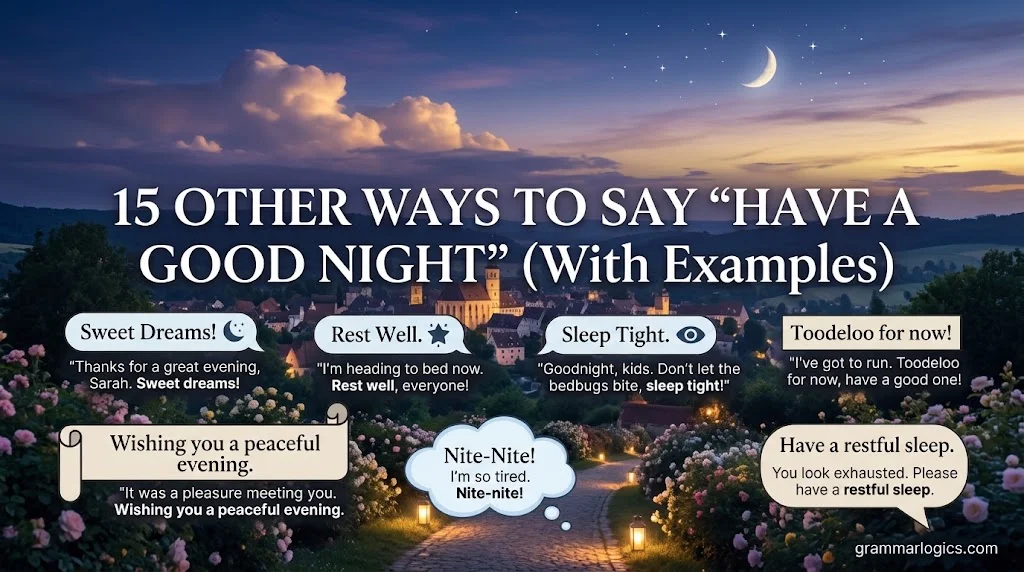
Discover 15 other ways to say “Have a Good Night” with examples. Learn sweet, friendly, and polite phrases for every occasion.
Wishing someone a good night is a simple way to show care, kindness, and affection. The right words can make a conversation feel warmer and leave a positive impression before bedtime. The phrase “Have a Good Night” is commonly used to wish someone a peaceful evening and restful sleep. However, using different expressions can make your messages feel more personal, thoughtful, and meaningful. Whether you are talking to a friend, a family member, a colleague, or someone special, choosing the right words can help you express your feelings naturally.
Learning alternative ways to say good night also improves your everyday English and helps you communicate with greater confidence in both casual conversations. In this guide, you will discover 15 other ways to say “Have a Good Night”, along with clear explanations and practical examples. These alternatives range from friendly and casual expressions to sweet, romantic, and polite wishes. You will learn when to use phrases such as “Sleep Well,” “Sweet Dreams,” and “Rest Easy” to make your conversations more engaging. Whether you are writing a text message, ending a phone call, or saying goodbye at the end of the day, these expressions will help you choose the most natural words for every situation.
What Does “Have a Good Night” Mean?
“Have a Good Night” is a polite and friendly expression used to wish someone a pleasant, peaceful, or enjoyable night. People commonly say it when ending a conversation in the evening, leaving a gathering, finishing work, or saying goodbye before going to bed. Depending on the situation, it can communicate kindness, goodwill, affection, or simple courtesy. Although it may sometimes be used as a general evening farewell, it is especially appropriate when someone is about to spend the night resting or relaxing.
The phrase is slightly different from “Good night,” which is a shorter and more conventional farewell. “Have a Good Night” focuses on wishing the other person a positive experience during the evening or nighttime. Its meaning can become more personal through context, such as when speaking to a close friend, family member, romantic partner, or colleague.
Common Situations Where “Have a Good Night” Is Used
This expression works in many everyday situations. Friends may use it when ending a late-night chat, while family members might say it before going to bed. Romantic partners can use it to show affection, particularly in a text message before sleeping. It is also suitable when leaving a restaurant, finishing a shift, ending a social event, or saying goodbye to coworkers in the evening.
In written communication, the phrase appears in text messages, emails, social media comments, and personal notes. For example, a colleague might write, “Have a good night, and I’ll see you tomorrow.” A partner might prefer something more affectionate, such as a message wishing them sweet dreams. Choosing an alternative helps you match the relationship, situation, and intended tone without making your message sound repetitive.
Is It Professional or Polite to Say “Have a Good Night”?
Yes, “Have a Good Night” is generally polite, friendly, and appropriate in professional and personal communication. It can be used with coworkers, customers, supervisors, teachers, and acquaintances when ending an interaction in the evening. In a workplace email, it may sound warm and courteous, especially when paired with a professional closing. However, a more formal message may simply use “Have a pleasant evening,” particularly when the conversation is ending before nighttime rest.
With friends and family, the phrase feels relaxed and considerate. With a romantic partner, its emotional meaning depends on the relationship and how it is delivered. If you want to express affection, offer reassurance, or encourage someone to rest, a more specific phrase may communicate your intention better. The best choice depends on whether you want to sound professional, caring, casual, or romantic.
Advantages and Disadvantages of Saying “Have a Good Night”
Advantages
“Have a Good Night” is easy to understand and widely appropriate. It expresses goodwill without requiring a long explanation, making it useful in spoken conversations and written messages. The phrase is also flexible enough for professional settings, casual friendships, and family communication. Because it is familiar, it rarely sounds confusing or overly emotional.
Disadvantages
The expression can feel general or routine when used repeatedly. It may not communicate deep affection, encouragement, or a specific wish for restful sleep as clearly as a more personal alternative. In addition, it may be less suitable when you want to emphasize peaceful sleep, sweet dreams, or a pleasant evening rather than a nighttime farewell. Choosing a more specific expression can help your message feel more thoughtful and appropriate to the relationship.
15 Alternatives to “Have a Good Night”
- Good Night
- Sleep Well
- Sweet Dreams
- Have a Restful Night
- Have a Peaceful Night
- Rest Well
- Sleep Tight
- Wishing You a Lovely Evening
- Enjoy Your Evening
- Have a Wonderful Night
- Take Care Tonight
- Get Some Good Rest
- Hope You Sleep Well
- Nighty Night
- Until Tomorrow
1. Good Night
Meaning
“Good Night” is a common farewell used when someone is leaving for the night or going to bed. It is a shorter alternative that communicates a simple, friendly wish for a pleasant night.
Definition
A conventional expression used to say goodbye in the evening or before sleep.
Detailed Explanation
“Good Night” is more concise than “Have a Good Night,” but both expressions are suitable for many of the same situations. It sounds natural in everyday conversation and does not require an elaborate message. Depending on the relationship, it can feel neutral, warm, or affectionate. It is particularly useful when you want to end a conversation simply and politely.
Scenario Examples
Scenario: You are ending a conversation with a coworker after work.
Example: “Thanks for your help today. Good night!”
Scenario: You are saying goodbye to a friend after an evening visit.
Example: “I had a great time. Good night, and text me tomorrow!”
Best Use
Use this phrase for everyday farewells, family conversations, work interactions, and messages sent before bed.
Tone
Tone: Simple, polite, friendly.
Its familiar wording makes it suitable for both casual and moderately formal situations.
2. Sleep Well
Meaning
“Sleep Well” expresses a wish that someone enjoys good, comfortable sleep. It focuses more directly on rest than on saying goodbye.
Definition
A short expression wishing someone a comfortable and refreshing sleep.
Detailed Explanation
This phrase is especially appropriate when the other person is about to go to bed. Unlike a general nighttime farewell, it emphasizes the quality of their sleep. It can communicate care without sounding overly emotional or romantic. It is a natural choice when someone has had a busy day and deserves some rest.
Scenario Examples
Scenario: Your friend says they are exhausted after a long day.
Example: “You’ve had such a busy day. Sleep well!”
Scenario: You are ending a late-night conversation with a family member.
Example: “I’ll let you get some rest now. Sleep well.”
Best Use
Use it in bedtime texts, family messages, friendly conversations, and thoughtful personal communication.
Tone
Tone: Caring, gentle, reassuring.
The expression shows consideration for someone’s rest without making assumptions about their feelings.
3. Sweet Dreams
Meaning
“Sweet Dreams” is a warm expression wishing someone pleasant dreams while sleeping. It often feels more affectionate than a standard nighttime farewell.
Definition
A friendly or affectionate wish for pleasant dreams during sleep.
Detailed Explanation
This expression focuses on dreams rather than the entire evening. It is common between romantic partners, family members, and close friends, especially in bedtime messages. Although it can be used playfully, it may sound too intimate for a formal workplace email or a distant acquaintance. Choose it when you want your message to feel tender, comforting, or loving.
Scenario Examples
Scenario: You are texting your partner before going to sleep.
Example: “I wish I could give you a hug right now. Sweet dreams, love.”
Scenario: A parent is saying goodnight to a child.
Example: “Your favorite blanket is ready. Sweet dreams!”
Best Use
Use this expression in romantic messages, family conversations, and affectionate bedtime texts.
Tone
Tone: Sweet, tender, affectionate.
Its emotional warmth makes it more personal than a neutral farewell.
4. Have a Restful Night
Meaning
“Have a Restful Night” wishes someone a night that allows them to relax and recover their energy.
Definition
A polite expression wishing someone a peaceful night of rest.
Detailed Explanation
This alternative emphasizes restoration and relaxation rather than simply ending a conversation. It is particularly thoughtful when someone has been working hard, feeling tired, or dealing with a demanding schedule. Compared with “Sweet Dreams,” it sounds less intimate and more measured. It can work well in professional communication when you want to express consideration without becoming too personal.
Scenario Examples
Scenario: A manager is signing off after a demanding workday.
Example: “Thank you for your hard work today. Have a restful night.”
Scenario: Your friend mentions feeling worn out.
Example: “Take it easy tonight and have a restful night.”
Best Use
Use it in workplace messages, supportive conversations, and thoughtful notes to someone who needs rest.
Tone
Tone: Considerate, calm, slightly formal.
The wording emphasizes well-being and recovery, making it useful in both personal and professional contexts.
5. Have a Peaceful Night
Meaning
“Have a Peaceful Night” expresses a wish for a calm, undisturbed night. It may emphasize emotional peace as much as physical rest.
Definition
A wish that someone experiences quiet, calm, and freedom from disturbance during the night.
Detailed Explanation
This expression can feel especially meaningful when someone is going through a stressful period. It communicates a desire for calm rather than merely a pleasant farewell. It is more reflective than “Good Night” and may carry a gentle, reassuring quality. However, it is not necessarily a reference to sleep; it can also mean hoping someone enjoys a quiet evening.
Scenario Examples
Scenario: Your friend has had a stressful day.
Example: “I hope things feel easier tomorrow. Have a peaceful night.”
Scenario: You are sending a thoughtful message to a relative.
Example: “Wishing you a peaceful night and a fresh start in the morning.”
Best Use
Use it in supportive messages, personal notes, and conversations where calm and reassurance matter.
Tone
Tone: Soothing, thoughtful, reassuring.
The phrase conveys a gentle wish for peace, making it especially appropriate in sensitive situations.
6. Rest Well
Meaning
“Rest Well” encourages someone to take the time they need to relax and recover. It is a concise expression of care.
Definition
A short wish that someone gets sufficient, comfortable rest.
Detailed Explanation
“Rest Well” can refer to sleeping or relaxing, so it is slightly broader than “Sleep Well.” It is particularly useful when someone is sick, tired, or recovering from a busy period. The phrase is direct but not harsh, and its brevity makes it suitable for quick messages. Unlike a romantic expression, it usually communicates practical concern rather than intimacy.
Scenario Examples
Scenario: A friend says they are going to bed early because they feel exhausted.
Example: “That sounds like a good idea. Rest well!”
Scenario: A family member is recovering after a demanding week.
Example: “Don’t worry about anything tonight. Just rest well.”
Best Use
Use it in supportive texts, everyday conversation, and messages to someone who needs a break.
Tone
Tone: Gentle, practical, caring.
Its simple wording conveys concern without sounding overly formal or emotional.
7. Sleep Tight
Meaning
“Sleep Tight” is an informal expression used to wish someone comfortable sleep. It often sounds playful, affectionate, or familiar.
Definition
A casual phrase meaning that someone should sleep comfortably and peacefully.
Detailed Explanation
This expression is often used with children, close friends, and romantic partners. It feels more playful than “Have a Restful Night,” so it may not suit a formal business message. Although its wording is distinctive, the meaning is straightforward in everyday English. It is a good option when you want a bedtime farewell to feel relaxed and affectionate.
Scenario Examples
Scenario: You are saying goodnight to your child.
Example: “Your story is finished, and the lights are off. Sleep tight!”
Scenario: You are texting a close friend after a late-night chat.
Example: “I’m heading to bed now. Sleep tight, and talk tomorrow!”
Best Use
Use it in informal bedtime messages, particularly with people you know well.
Tone
Tone: Playful, cozy, familiar.
The expression feels comfortable and friendly rather than formal or businesslike.
8. Wishing You a Lovely Evening
Meaning
“Wishing You a Lovely Evening” expresses a hope that someone enjoys a pleasant and enjoyable evening. It focuses on the hours before bedtime rather than sleep itself.
Definition
A courteous expression wishing someone a pleasant evening.
Detailed Explanation
This phrase is a useful alternative when you are saying goodbye earlier in the evening. Unlike “Sleep Well,” it does not assume the person is about to go to bed. Its wording sounds polished and thoughtful, making it appropriate for acquaintances, colleagues, and customer communication. If it is already late and the person is going to sleep, a bedtime-specific phrase may be more suitable.
Scenario Examples
Scenario: You are ending a customer conversation in the early evening.
Example: “Thank you for contacting us. Wishing you a lovely evening.”
Scenario: You are leaving a small social gathering.
Example: “It was wonderful seeing everyone. Wishing you a lovely evening!”
Best Use
Use it in polite professional messages, customer service, and evening farewells.
Tone
Tone: Courteous, polished, warm.
The expression communicates goodwill while maintaining a respectful level of formality.
9. Enjoy Your Evening
Meaning
“Enjoy Your Evening” encourages someone to make the most of the rest of their evening. It is about the experience they may have rather than the quality of their sleep.
Definition
A friendly wish that someone spends the evening pleasantly.
Detailed Explanation
This phrase is most natural when someone still has plans or time to relax before bed. It can be used after work, at the end of a meeting, or when leaving friends at a restaurant. Compared with “Have a Peaceful Night,” it sounds more upbeat and active. It is not a direct substitute when you specifically want to wish someone good sleep.
Scenario Examples
Scenario: You are leaving the office while a colleague is staying for an event.
Example: “I’m heading home now. Enjoy your evening!”
Scenario: A friend is going out for dinner.
Example: “Have fun at the restaurant. Enjoy your evening!”
Best Use
Use it for early-evening farewells, social occasions, and professional interactions when the person still has plans.
Tone
Tone: Cheerful, casual, courteous.
Its positive wording encourages an enjoyable evening without implying that bedtime is near.
10. Have a Wonderful Night
Meaning
“Have a Wonderful Night” is an enthusiastic wish for someone to enjoy a particularly pleasant night.
Definition
A warm expression wishing someone an especially enjoyable night.
Detailed Explanation
This phrase is more expressive than “Have a Good Night” because “wonderful” adds enthusiasm and positivity. It works well when someone is attending a special event, celebrating an occasion, or spending time with loved ones. It can also be used as a friendly farewell, although it may feel slightly exaggerated for an ordinary situation. The context determines whether it sounds sincere, festive, or overly enthusiastic.
Scenario Examples
Scenario: Your friend is going to a concert.
Example: “You’ve been looking forward to this all month. Have a wonderful night!”
Scenario: You are saying goodbye to guests after a celebration.
Example: “Thank you for coming. Have a wonderful night, everyone!”
Best Use
Use it in celebratory messages, friendly farewells, and occasions when you want to express extra enthusiasm.
Tone
Tone: Positive, enthusiastic, warm.
The stronger adjective adds excitement and makes the farewell feel more expressive.
11. Take Care Tonight
Meaning
“Take Care Tonight” expresses concern for someone’s well-being during the night. It can suggest that the person should look after themselves and stay comfortable or safe.
Definition
A caring expression encouraging someone to look after their well-being that night.
Detailed Explanation
This phrase combines a farewell with a gentle reminder to care for oneself. It is particularly useful when someone is traveling home late, feeling unwell, or facing a difficult situation. Unlike “Sweet Dreams,” it does not focus on pleasant dreams or sleep. It can also sound slightly unusual without context, so it works best when there is a genuine reason to express concern.
Scenario Examples
Scenario: Your friend is driving home late.
Example: “Message me when you get home. Take care tonight!”
Scenario: A colleague mentions feeling unwell before leaving work.
Example: “I hope you feel better soon. Take care tonight.”
Best Use
Use it in supportive personal messages, particularly when safety, comfort, or well-being is relevant.
Tone
Tone: Concerned, caring, protective.
The wording expresses personal consideration rather than a simple, routine farewell.
12. Get Some Good Rest
Meaning
“Get Some Good Rest” encourages someone to take time to relax and recover their energy.
Definition
An informal expression suggesting that someone should rest sufficiently and comfortably.
Detailed Explanation
This phrase is especially appropriate when someone has been busy, overworked, or physically tired. It sounds more conversational than “Have a Restful Night” and may include relaxation as well as sleep. The wording can communicate practical support without being overly emotional. In some situations, it can sound like gentle advice rather than a straightforward farewell.
Scenario Examples
Scenario: Your teammate has spent the whole day preparing a presentation.
Example: “You’ve done enough for today. Get some good rest before tomorrow.”
Scenario: Your sibling has returned home after a long journey.
Example: “Unpack in the morning. Get some good rest tonight.”
Best Use
Use it in casual conversations, supportive texts, and messages to people who have had a tiring day.
Tone
Tone: Practical, supportive, relaxed.
The phrase emphasizes recovery and gives the other person permission to slow down.
13. Hope You Sleep Well
Meaning
“Hope You Sleep Well” expresses the hope that someone enjoys comfortable, uninterrupted sleep. It feels personal without necessarily being romantic.
Definition
A friendly expression wishing someone a good night’s sleep.
Detailed Explanation
This phrase is slightly more conversational than “Sleep Well” because it presents the wish as a personal hope. It works naturally in text messages and informal conversations. It can also sound thoughtful when someone has mentioned trouble sleeping or feeling tired. The wording is not as formal as “I hope you have a restful night,” but it is suitable for most everyday relationships.
Scenario Examples
Scenario: You are ending a conversation with a friend who has an early start tomorrow.
Example: “You should get some sleep before your trip. Hope you sleep well!”
Scenario: You are messaging a family member before bed.
Example: “I’ll call you in the morning. Hope you sleep well.”
Best Use
Use it in friendly messages, family conversations, and casual bedtime texts.
Tone
Tone: Personal, friendly, considerate.
The expression feels sincere because it directly communicates a wish for the other person’s comfort.
14. Nighty Night
Meaning
“Nighty Night” is a playful, affectionate way to say goodnight. It is often associated with children or close relationships.
Definition
An informal and often sweet expression used when saying goodnight.
Detailed Explanation
This phrase sounds more playful than most other nighttime expressions. Parents may use it with children, while close friends or romantic partners might use it as a lighthearted farewell. It is not generally suitable for formal emails or professional conversations because its tone is deliberately informal. Choose it when the relationship allows a cute or cheerful style of communication.
Scenario Examples
Scenario: A parent is putting a young child to bed.
Example: “Your teddy is waiting beside your pillow. Nighty night!”
Scenario: You and your partner are exchanging playful messages.
Example: “I’m finally putting my phone away. Nighty night, you!”
Best Use
Use it in family bedtime routines, playful texts, and affectionate conversations with people you know well.
Tone
Tone: Cute, playful, affectionate.
Its informal wording creates a lighthearted feeling that would be out of place in many professional settings.
15. Until Tomorrow
Meaning
“Until Tomorrow” is a farewell that suggests you expect to see or speak to someone the next day. It emphasizes the next meeting rather than sleep.
Definition
A goodbye used when you expect to reconnect with someone tomorrow.
Detailed Explanation
This expression is useful when ending a conversation with a clear expectation of future contact. It can sound professional in a workplace setting or warm in a personal relationship. Unlike “Have a Good Night,” it does not directly wish someone a pleasant night, so the two phrases are not exact substitutes. Adding a short bedtime wish can make it warmer when needed.
Scenario Examples
Scenario: You are finishing a work conversation with a colleague you will see in the morning.
Example: “We’ll review the final draft at nine. Until tomorrow!”
Scenario: You are ending a video call with a friend who lives nearby.
Example: “I’ll see you at breakfast. Until tomorrow!”
Best Use
Use it in professional goodbyes, daily routines, and conversations where you expect to reconnect the next day.
Tone
Tone: Calm, confident, forward-looking.
The phrase creates a sense of continuity and is most natural when tomorrow’s contact is already understood.
FAQs
What is another way to say “Have a Good Night”?
Popular alternatives include “Good Night,” “Sleep Well,” “Sweet Dreams,” and “Have a Restful Night.” Choose “Sweet Dreams” for affection, “Sleep Well” for a simple bedtime wish, or “Have a Restful Night” for a more polished and considerate message.
What does “Have a Good Night” mean?
It means you are wishing someone a pleasant night. Depending on the context, it may express goodwill, friendliness, affection, or a hope that the person rests comfortably.
Is “Have a Good Night” professional?
Yes. It is generally polite and appropriate when ending an evening conversation with a colleague, customer, or business contact. “Wishing You a Lovely Evening” may sound more polished if the interaction ends earlier in the evening.
What is a more affectionate way to say “Have a Good Night”?
“Sweet Dreams” and “Sleep Tight” are affectionate alternatives. “Sweet Dreams” can sound tender or romantic, while “Sleep Tight” is often playful and familiar. The best choice depends on your relationship with the person.
Which alternative works best in formal communication?
“Wishing You a Lovely Evening” is a strong choice for polite professional communication when the evening is still underway. If the person is specifically going to bed, “Have a Restful Night” is a considerate option that remains relatively formal.
Conclusion
Choosing the right nighttime farewell can make an ordinary goodbye feel more thoughtful and personal. “Have a Good Night” remains a useful, polite expression, but alternatives such as “Sleep Well,” “Sweet Dreams,” and “Have a Restful Night” allow you to communicate different feelings and intentions.
Some phrases are affectionate and playful, while others are better suited to professional conversations or supportive messages. The key is to consider your relationship with the person, the time of day, and what you genuinely want to express. Rather than choosing a phrase simply because it sounds different, select wording that feels natural in the situation. A few sincere words can help someone feel appreciated, cared for, and ready to end the day on a positive note.