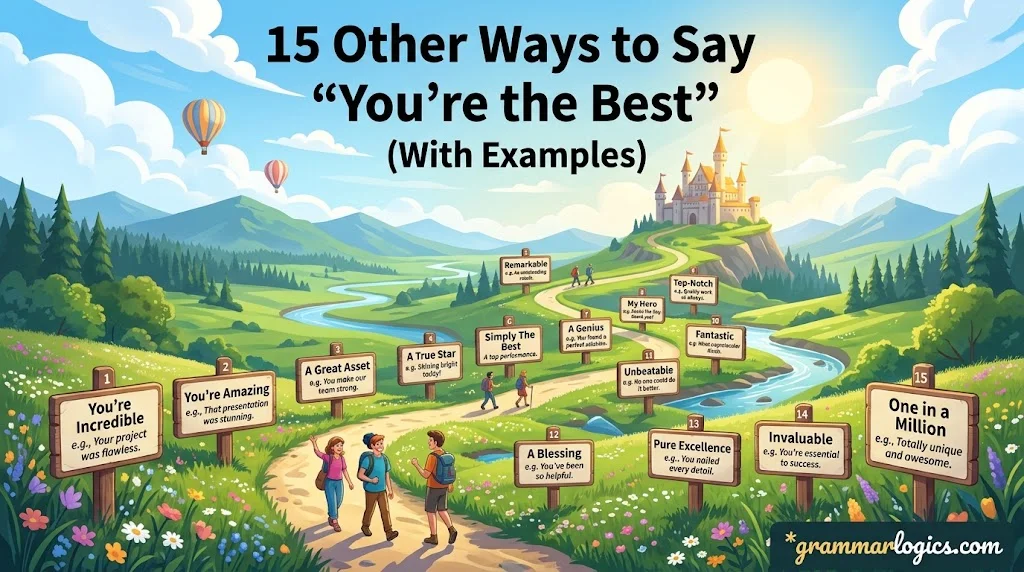
Discover 15 other ways to say “You’re the Best” with meaningful examples to express gratitude, appreciation, and admiration naturally.
“You’re the Best” is a heartfelt expression used to show appreciation, gratitude, and admiration for someone’s kindness, support, or achievements. Choosing the right words can make your message feel more personal and meaningful. When someone helps you, encourages you, or makes your day brighter, saying “You’re the Best” is a simple way to express gratitude. However, using different expressions can make your communication more natural, thoughtful, and memorable. Whether you are thanking a friend, appreciating a coworker, praising a family member, or sending a sweet message to someone special, the right words can strengthen your connection. Learning alternative phrases also helps you express your feelings more clearly and confidently in everyday conversations.
In this article, you will discover 15 other ways to say “You’re the Best” with clear meanings, practical examples, and helpful explanations. These alternatives will help you choose the perfect expression for different situations, from casual conversations with friends to professional messages at work. Some phrases sound warm and friendly, while others communicate deep appreciation, respect, or admiration. By exploring these expressions, you can make your compliments more genuine and avoid repeating the same words. Whether you are writing a thank-you note, sending a text message, or recognizing someone’s efforts, these alternatives will help you express sincere appreciation in a natural and memorable way.
What Does “You’re the Best” Mean?
“You’re the best” is a friendly expression used to praise someone, show appreciation, or express admiration. It tells another person that you think highly of them because of their actions, abilities, kindness, or support. For example, you might say it to a friend who helps you during a difficult time or to a coworker who makes a challenging project easier. The phrase often communicates gratitude and affection rather than making a literal comparison between everyone in the world. Depending on the situation, it can sound playful, enthusiastic, heartfelt, or professional. Its exact meaning comes from the relationship between the speakers and the reason for the compliment.
Common Situations Where “You’re the Best” Is Used
People use “You’re the best” in many everyday situations when they want to make someone feel appreciated. In personal conversations, it can thank a friend for helping with a problem or show affection toward a family member. In text messages and social media comments, it works well as a quick, positive response to a thoughtful gesture. At school, students may use it to thank a teacher for extra guidance, while colleagues may say it after receiving useful support at work.
The phrase can also fit customer communication when a person has provided excellent service. However, formal emails and professional messages sometimes benefit from more specific wording, such as acknowledging someone’s contribution or expressing sincere appreciation. Choosing a suitable alternative helps your compliment feel genuine, appropriate, and connected to the person’s actions.
Is It Professional or Polite to Say “You’re the Best”?
Yes, “You’re the best” is generally polite, positive, and friendly, but its suitability depends on the situation. It sounds natural when speaking with coworkers you know well, thanking a helpful colleague, or appreciating someone who has gone out of their way to assist you. In a relaxed workplace, the phrase can create a warm atmosphere and show genuine gratitude.
In formal business communication, however, it may sound slightly casual or overly familiar, especially when addressing a senior manager, client, or someone you do not know well. A phrase such as “I sincerely appreciate your support” may be more suitable in that context. The original expression is not inherently unprofessional; it simply has a conversational tone. Consider your relationship with the recipient, the purpose of the message, and the level of formality before choosing your words.
Advantages and Disadvantages of Saying “You’re the Best”
Advantages
The phrase “You’re the best” is short, memorable, and easy to understand. It communicates appreciation and admiration without requiring a long explanation. Its friendly tone makes it useful in conversations, text messages, thank-you notes, and informal workplace communication. It can also make a compliment feel spontaneous and personal, especially when someone has done something thoughtful or helpful.
Disadvantages
Because the expression is common, it may sometimes feel general or repetitive if you use it for every compliment. It does not always explain what makes a person special, so the recipient may not know whether you appreciate their kindness, talent, effort, or reliability. In formal settings, it can sound too casual. Choosing a more specific expression can make your appreciation clearer and help the other person understand exactly what you value about them.
15 Synonyms and Alternatives for “You’re the Best”
- You’re Amazing
- You’re Outstanding
- You’re Incredible
- You’re the Greatest
- You’re Exceptional
- You’re Fantastic
- You’re Awesome
- You’re a Star
- You’re Second to None
- You’re Top-Notch
- You’re a Lifesaver
- I Couldn’t Ask for Better
- You Really Shine
- You’re One of a Kind
- You’re Truly Remarkable
1. You’re Amazing
Meaning
“You’re amazing” expresses admiration, appreciation, or surprise at someone’s positive qualities or actions. It is useful when a person does something impressive, thoughtful, or unexpectedly helpful.
Definition
A compliment used to tell someone that their abilities, behavior, or achievements are highly impressive.
Detailed Explanation
This expression is a versatile alternative to “You’re the best” because it focuses on how impressive someone is. It can recognize talent, kindness, creativity, or effort without comparing the person directly with others. The phrase sounds enthusiastic but remains natural in everyday conversation. It works especially well when you want your appreciation to feel spontaneous and heartfelt.
Scenario Examples
Scenario: Your friend helps you prepare for an important interview.
Example: “You helped me practice every question. You’re amazing!”
Scenario: A colleague creates a creative solution to a difficult problem.
Example: “That idea saved us so much time. You’re amazing!”
Best Use
Use this phrase in friendly conversations, thank-you messages, personal relationships, and informal workplace communication. It suits a wide range of situations because it can express both admiration and gratitude.
Tone
Tone: Warm, enthusiastic, appreciative.
Its positive energy makes the compliment feel personal without sounding overly formal.
2. You’re Outstanding
Meaning
“You’re outstanding” means someone performs exceptionally well or demonstrates qualities that deserve special recognition. It is particularly useful when praising excellent work, strong performance, or impressive achievements.
Definition
A statement of praise for someone whose performance or qualities stand out positively.
Detailed Explanation
Unlike the casual expression “You’re the best,” this alternative sounds more polished and professional. It emphasizes the quality of someone’s work, decisions, or accomplishments. You might use it to recognize a colleague who consistently delivers excellent results or a student who completes an exceptional project. Although it is suitable for formal appreciation, it can sound less intimate than a personal compliment.
Scenario Examples
Scenario: A teammate delivers an excellent presentation.
Example: “Your presentation was clear, engaging, and well organized. You’re outstanding at explaining complex ideas.”
Scenario: A student completes an impressive research project.
Example: “Your work demonstrates excellent preparation and attention to detail. You’re outstanding.”
Best Use
Choose this phrase for professional praise, academic recognition, performance reviews, and formal appreciation messages.
Tone
Tone: Professional, respectful, admiring.
Its polished wording makes it appropriate when you want your praise to sound thoughtful and credible.
3. You’re Incredible
Meaning
“You’re incredible” communicates strong admiration for someone’s abilities, character, actions, or achievements. It often suggests that the person has done something especially impressive or meaningful.
Definition
A compliment describing someone or something as exceptionally impressive.
Detailed Explanation
This expression is often more emotionally intense than “You’re the best.” It highlights a person’s remarkable qualities or the impact of something they have done. You can use it to appreciate a friend’s generosity, celebrate a major accomplishment, or recognize someone’s determination. It works in both personal and casual professional settings, although the enthusiasm may feel excessive for a minor achievement.
Scenario Examples
Scenario: Your sister balances work and studies while helping your family.
Example: “You’ve handled so much this year and still supported everyone. You’re incredible.”
Scenario: A friend completes a challenging hiking trip.
Example: “You made it all the way to the summit! You’re incredible.”
Best Use
Use it for meaningful achievements, emotional encouragement, personal appreciation, and enthusiastic congratulations.
Tone
Tone: Enthusiastic, heartfelt, admiring.
Its strong emotional quality is especially effective when the person’s effort or achievement genuinely impresses you.
4. You’re the Greatest
Meaning
“You’re the greatest” is an enthusiastic way to express admiration, affection, or gratitude. It suggests that someone is especially wonderful in your eyes.
Definition
An informal compliment expressing exceptionally high praise for a person’s qualities or actions.
Detailed Explanation
This phrase is close in meaning to “You’re the best,” but it can sound more playful or dramatic. People often use it when a friend does them a favor or when they want to celebrate someone in an affectionate way. It does not necessarily mean the person is objectively superior to everyone else. The expression is most natural when the relationship allows a relaxed, enthusiastic style.
Scenario Examples
Scenario: Your friend brings you your favorite snack after a tiring day.
Example: “You remembered my favorite chocolate! You’re the greatest.”
Scenario: A family member helps you move into a new apartment.
Example: “I couldn’t have moved all these boxes without you. You’re the greatest!”
Best Use
Choose it for casual conversations, family interactions, friendly texts, and playful expressions of gratitude.
Tone
Tone: Affectionate, cheerful, informal.
The slightly exaggerated praise gives it a warm and friendly feeling.
5. You’re Exceptional
Meaning
“You’re exceptional” describes someone who demonstrates unusually high ability, quality, or character. It is particularly appropriate when you want to recognize something that goes beyond ordinary expectations.
Definition
A compliment indicating that a person’s qualities, performance, or achievements are unusually strong.
Detailed Explanation
This alternative sounds more formal and measured than “You’re the best.” Rather than simply expressing excitement, it communicates a considered judgment about someone’s abilities or conduct. It can recognize exceptional leadership, careful work, creativity, or dedication. Because the word carries significant praise, it is most convincing when you can identify a real quality that supports the compliment.
Scenario Examples
Scenario: A manager recognizes an employee’s thoughtful leadership.
Example: “You guided the team through a difficult transition with patience and clarity. You’re exceptional at leading people.”
Scenario: A music teacher praises a student’s performance.
Example: “Your interpretation showed remarkable control and expression. You’re an exceptional musician.”
Best Use
Use this expression in professional feedback, formal recommendations, academic recognition, and thoughtful personal praise.
Tone
Tone: Formal, respectful, appreciative.
Its measured wording makes the compliment sound deliberate rather than spontaneous.
6. You’re Fantastic
Meaning
“You’re fantastic” expresses enthusiastic approval or admiration. It can praise a person’s helpful actions, positive attitude, abilities, or successful performance.
Definition
A friendly compliment describing someone as extremely good or impressive.
Detailed Explanation
This phrase is upbeat and flexible, making it a natural substitute for “You’re the best” in many everyday situations. It communicates strong positivity without sounding as intense as some more dramatic compliments. You can use it to thank someone, celebrate good work, or recognize an enjoyable contribution. It is generally conversational, so a more specific expression may be better in formal business writing.
Scenario Examples
Scenario: A coworker volunteers to help you finish a presentation.
Example: “Thanks for staying late to help me. You’re fantastic!”
Scenario: Your friend organizes a memorable birthday gathering.
Example: “Everything was so thoughtful, and everyone had a wonderful time. You’re fantastic at bringing people together.”
Best Use
Choose it for casual appreciation, friendly workplace conversations, celebrations, and positive messages.
Tone
Tone: Cheerful, encouraging, friendly.
Its lively wording makes praise sound natural and easygoing.
7. You’re Awesome
Meaning
“You’re awesome” is an informal way to express admiration, excitement, or appreciation. It tells someone that you think their actions, qualities, or contribution are really good.
Definition
A casual compliment used to show strong approval or positive feelings toward someone.
Detailed Explanation
This expression has a relaxed, conversational style that works especially well between friends and people who know each other. It can acknowledge a small favor just as easily as a bigger achievement. Compared with “You’re the best,” it often sounds more playful and energetic. However, it may be too informal for a serious business letter or a formal appreciation note.
Scenario Examples
Scenario: Your friend shares useful notes before an exam.
Example: “These notes are exactly what I needed. You’re awesome!”
Scenario: A teammate fixes a small technical problem before a meeting.
Example: “The presentation is working perfectly now. You’re awesome!”
Best Use
Use it in text messages, casual chats, social media comments, and friendly conversations.
Tone
Tone: Casual, upbeat, enthusiastic.
Its informal style communicates positivity without requiring a serious or emotional conversation.
8. You’re a Star
Meaning
“You’re a star” means someone has done something particularly well or has been wonderfully helpful. It is often used to recognize a person’s contribution.
Definition
An affectionate compliment for someone who performs well, helps others, or makes a positive difference.
Detailed Explanation
This expression emphasizes the person’s contribution rather than suggesting they are superior in every way. It is common in friendly conversational English and can also sound natural in relaxed workplace settings. For example, you might call someone a star after they step in to help with a busy shift. It has a slightly playful quality and is generally less suitable for highly formal documents.
Scenario Examples
Scenario: A colleague helps organize a busy office event.
Example: “You handled the guest list and decorations so efficiently. You’re a star!”
Scenario: Your friend helps you prepare for a family celebration.
Example: “Thanks for taking care of the invitations. You’re a star.”
Best Use
Choose it for friendly thank-you messages, team appreciation, informal workplace communication, and everyday conversation.
Tone
Tone: Warm, complimentary, playful.
The expression celebrates a person’s helpful contribution in a lighthearted way.
9. You’re Second to None
Meaning
“You’re second to none” means that someone is exceptionally good and has no equal in the quality being discussed. It communicates very strong admiration.
Definition
An expression meaning that a person or their abilities are as good as anyone’s, with no one considered better.
Detailed Explanation
This phrase is stronger and more emphatic than “You’re the best” in many contexts. It presents a person as outstanding in a particular field or ability, rather than simply offering a friendly thank-you. Because it makes a bold comparison, it works best when you genuinely want to emphasize exceptional skill or quality. In everyday conversation, it may sound dramatic if used for a small favor.
Scenario Examples
Scenario: A coach praises an experienced athlete’s technique.
Example: “When it comes to precision and discipline, you’re second to none.”
Scenario: A client expresses strong satisfaction with a specialist’s work.
Example: “Your attention to detail is second to none. Thank you for such excellent work.”
Best Use
Use it for strong professional praise, recognition of specialized skills, sports, artistic achievement, and formal compliments.
Tone
Tone: Emphatic, confident, admiring.
Its comparative meaning gives the compliment a bold and decisive quality.
10. You’re Top-Notch
Meaning
“You’re top-notch” means that someone or their work is of very high quality. It is especially useful for recognizing competence, reliability, and excellent performance.
Definition
An informal expression describing someone or something as being of excellent quality.
Detailed Explanation
Unlike a broad compliment such as “You’re the best,” this phrase often focuses on the standard of someone’s work or service. It can describe a capable professional, a reliable team member, or someone who consistently performs well. The expression is positive and conversational, although it can also fit relaxed business discussions. For a formal report, a more precise description of the person’s performance may sound stronger.
Scenario Examples
Scenario: A customer appreciates a technician’s careful work.
Example: “The repair was completed quickly, and everything works perfectly. Your service is top-notch.”
Scenario: A colleague consistently prepares accurate reports.
Example: “Your reports are always clear and dependable. You’re a top-notch analyst.”
Best Use
Choose it for workplace compliments, customer feedback, service appreciation, and informal professional conversations.
Tone
Tone: Confident, positive, professional-casual.
Its emphasis on quality makes it particularly suitable for recognizing skill and reliability.
11. You’re a Lifesaver
Meaning
“You’re a lifesaver” is an expression of gratitude for someone who helps you out of a difficult, stressful, or inconvenient situation. It usually communicates relief rather than general admiration.
Definition
An informal phrase used to thank someone whose help makes a difficult situation much easier.
Detailed Explanation
This expression is not a universal synonym for “You’re the best.” It is most appropriate when someone provides timely or especially useful assistance. The phrase can be exaggerated in a friendly way; it does not necessarily mean that a person’s life was literally saved. Its strength comes from showing how much the help mattered to you. For a formal message, explain the assistance directly and thank the person for it.
Scenario Examples
Scenario: A classmate lends you the notes you missed during an absence.
Example: “I was worried about catching up before the test. You’re a lifesaver!”
Scenario: A coworker helps you recover an important file just before a deadline.
Example: “I thought I’d lost the final version. You’re a lifesaver—thank you!”
Best Use
Use it in informal thank-you messages, stressful work situations, school conversations, and personal communication when someone’s help has made a real difference.
Tone
Tone: Grateful, relieved, informal.
The phrase highlights the value of the help and the relief you feel afterward.
12. I Couldn’t Ask for Better
Meaning
“I couldn’t ask for better” means that someone has provided the kind of support, care, or quality you could reasonably hope for. It expresses deep satisfaction and appreciation.
Definition
A phrase used to say that a person or situation meets your needs so well that you would not want anything more.
Detailed Explanation
This expression is more reflective and personal than “You’re the best.” It often emphasizes how fortunate or satisfied you feel about someone’s ongoing support or contribution. You might use it to appreciate a dependable teammate, a caring partner, or a friend who consistently understands you. The phrase can sound heartfelt, but it is less suitable when you simply want to praise one isolated achievement.
Scenario Examples
Scenario: Your partner supports you while you prepare for a career change.
Example: “You’ve encouraged me through every step of this process. I couldn’t ask for better.”
Scenario: A project leader appreciates a dependable team member.
Example: “You’ve been reliable from planning to delivery. I couldn’t ask for a better teammate.”
Best Use
Choose it for close relationships, heartfelt appreciation, long-term teamwork, and personal messages. It is especially effective when praising consistent support rather than a single action.
Tone
Tone: Sincere, warm, appreciative.
Its wording communicates lasting satisfaction and genuine gratitude.
13. You Really Shine
Meaning
“You really shine” means that someone’s abilities, personality, or positive qualities are especially noticeable. It is often used to encourage someone or recognize a moment when they perform well.
Definition
An expression praising the way a person’s strengths or qualities become especially visible.
Detailed Explanation
This alternative focuses on a person’s strengths rather than declaring them the best overall. It is particularly useful when recognizing growth, creativity, confidence, or a natural ability. The expression can be encouraging because it draws attention to what the person does well. It is not a direct replacement in every thank-you situation, but it works beautifully when your goal is to celebrate someone’s potential or performance.
Scenario Examples
Scenario: A student confidently presents a project to the class.
Example: “You explained your ideas clearly and answered every question. You really shine when you speak in front of others.”
Scenario: A friend demonstrates creativity while decorating a room.
Example: “You have such a good eye for color and detail. You really shine in creative projects.”
Best Use
Use it for encouragement, educational feedback, personal development, creative achievements, and supportive conversations.
Tone
Tone: Encouraging, uplifting, sincere.
It recognizes a person’s strengths while helping them feel confident about their abilities.
14. You’re One of a Kind
Meaning
“You’re one of a kind” means that someone is unique or has qualities that make them different from everyone else. It can express affection, admiration, or appreciation for their individuality.
Definition
A compliment describing someone as unique, distinctive, or unlike anyone else.
Detailed Explanation
This expression emphasizes individuality rather than superiority. While “You’re the best” often praises someone’s quality or helpfulness, “You’re one of a kind” celebrates the special way a person thinks, behaves, or treats others. It can be affectionate and meaningful in close relationships. Depending on the situation and delivery, it can also sound playful or teasing, so context matters.
Scenario Examples
Scenario: Your friend always finds creative ways to cheer people up.
Example: “You somehow make everyone laugh, even on a difficult day. You’re one of a kind.”
Scenario: A family member gives you a thoughtful, handmade gift.
Example: “You remembered every little detail and made this yourself. You’re truly one of a kind.”
Best Use
Choose it for personal messages, close friendships, family relationships, affectionate compliments, and social media captions.
Tone
Tone: Affectionate, personal, admiring.
Its focus on uniqueness makes the compliment feel intimate and distinctive.
15. You’re Truly Remarkable
Meaning
“You’re truly remarkable” expresses deep respect and admiration for someone’s qualities, achievements, or character. It suggests that the person has done something worthy of special recognition.
Definition
A sincere compliment describing someone as unusually impressive or deserving of admiration.
Detailed Explanation
This phrase sounds more thoughtful and formal than “You’re the best.” The word “remarkable” often points to qualities that deserve attention, such as resilience, generosity, leadership, or outstanding effort. Adding “truly” makes the praise feel more deliberate and sincere. It works well when you want to recognize a meaningful achievement or a quality that has made a lasting impression.
Scenario Examples
Scenario: A colleague leads a demanding project while supporting the rest of the team.
Example: “Your patience and leadership helped everyone stay focused. You’re truly remarkable.”
Scenario: A friend continues helping others despite facing personal challenges.
Example: “The way you keep showing kindness to people is inspiring. You’re truly remarkable.”
Best Use
Use it for meaningful appreciation, formal recognition, heartfelt messages, professional praise, and significant achievements.
Tone
Tone: Respectful, sincere, deeply admiring.
Its deliberate wording makes it suitable for moments when a simple compliment does not fully express your appreciation.
FAQs
What is another way to say “You’re the Best”?
Some natural alternatives are “You’re amazing,” “You’re outstanding,” “You’re incredible,” and “You’re fantastic.” Choose one based on what you want to communicate. For example, “You’re a lifesaver” is ideal when someone helps you through a difficult situation, while “You’re exceptional” works well when praising outstanding professional performance.
What does “You’re the Best” mean?
“You’re the best” is a compliment that expresses admiration, gratitude, or appreciation. It tells someone that you value their actions, qualities, or support. The phrase is usually friendly and informal, and its exact meaning depends on the situation.
Is “You’re the Best” professional?
Yes, it can be appropriate in relaxed workplace conversations, especially when thanking a helpful coworker. However, it may sound too casual in a formal email or client communication. In those situations, consider saying “I sincerely appreciate your support” or “Your contribution has been invaluable.”
What is a more polite way to say “You’re the Best”?
A polite alternative is “I really appreciate your help” or “Thank you for your excellent work.” These expressions make your appreciation clear and specific. They are especially useful when speaking with a manager, client, teacher, or someone you do not know well.
Which alternative works best in formal communication?
“You’re outstanding,” “You’re exceptional,” and “Your work is truly remarkable” can suit formal praise when they accurately describe the person’s performance. For professional emails, specific wording such as “I appreciate your thoughtful contribution to this project” is often even more effective because it explains exactly what you value.
Conclusion
Choosing the right words can turn an ordinary compliment into a meaningful expression of appreciation. While “You’re the best” is friendly and easy to use, other phrases allow you to recognize a person’s talent, kindness, effort, individuality, or support more precisely. Expressions such as “You’re amazing” work well in everyday conversations, while “You’re outstanding” and “You’re exceptional” can be better suited to professional recognition. If someone has helped you through a difficult moment, “You’re a lifesaver” may communicate your gratitude more clearly.
Remember that similar expressions do not always carry the same meaning or emotional strength. Consider your relationship with the person and the situation before choosing your words. The most effective compliment is one that feels genuine, specific, and appropriate. A few thoughtful words can help someone feel truly valued.