Expressing your feelings can sometimes be difficult, especially when you want your words to sound romantic, meaningful, and sincere.
The phrase “I Want You” can communicate strong attraction, affection, or emotional desire, depending on the situation and the person you are speaking to. Finding the right words can make your message feel more personal and heartfelt. Whether you are expressing romantic interest, sharing deep feelings, or letting someone know how much you desire their presence, choosing a thoughtful expression can make a difference. Different situations call for different tones, from sweet and gentle to passionate and direct.
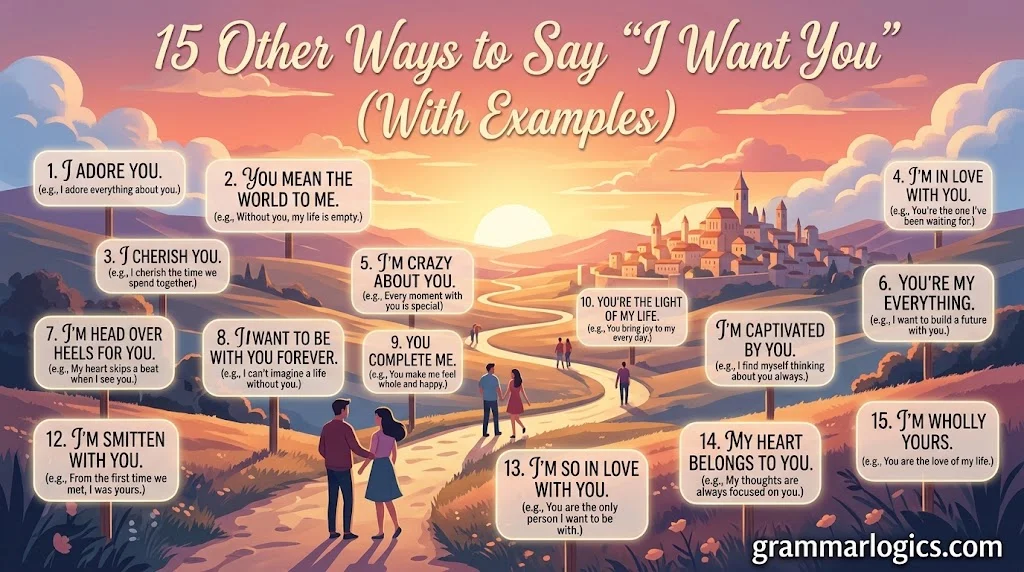
Exploring other ways to say “I Want You” can help you express your emotions more naturally and confidently. For example, you might want to sound romantic, affectionate, playful, or deeply emotional when speaking to someone special. Some expressions communicate physical attraction, while others emphasize emotional connection, closeness, and commitment. Having a variety of phrases allows you to choose words that match your feelings and the relationship you share. In this guide, you will discover 15 meaningful alternatives to help you communicate your desires with warmth, clarity, and sincerity.
What Does “I Want You” Mean?
The phrase “I Want You” expresses a strong feeling of desire, attraction, or interest toward another person. Depending on the situation, it can communicate romantic feelings, physical attraction, emotional closeness, or a sincere wish to have someone in your life. It is a direct expression that lets another person know they are important to you or that you feel drawn toward them.
In romantic relationships, this phrase can communicate passion, affection, and intimacy. Someone might say it to their partner to express attraction or a desire to spend time together. In a different context, it can simply mean wanting someone’s company, attention, or presence. Its exact meaning depends on the relationship, tone of voice, and circumstances. Because it is quite direct, some people prefer softer or more romantic expressions when sharing their feelings.
Common Situations Where “I Want You” Is Used
People use “I Want You” in different personal and romantic situations. It is especially common when someone wants to express attraction, communicate affection, or tell another person that they wish to be together.
Some common situations include:
- Romantic relationships: Partners may use the phrase to express attraction, passion, or a desire to feel closer.
- Text messages: Someone might send it in a private conversation to communicate romantic interest or affection.
- Personal conversations: It can express a sincere wish to spend time with someone special.
- Flirting: The phrase may communicate attraction when two people are getting to know each other.
- Emotional communication: Someone might use it to express that they miss another person and want their presence.
- Creative writing: Writers may use the expression in romantic stories, poems, and dialogue to communicate strong feelings.
People sometimes choose alternatives because they want their message to sound more affectionate, less direct, more emotionally meaningful, or more appropriate for their relationship.
Is It Professional or Polite to Say “I Want You”?
“I Want You” is generally a personal and informal expression, rather than a professional one. In a romantic relationship, it can sound confident, affectionate, and passionate when both people are comfortable with that kind of communication. However, its directness may make it feel too personal or forward in unfamiliar situations.
In professional communication, the phrase can easily be misunderstood because it often suggests personal or romantic desire. If you mean that you want someone’s help, involvement, or participation, it is better to explain your intention clearly. For example, “I’d like you to join our team” or “We would appreciate your support” communicates a professional request without creating confusion.
The phrase itself is not inherently impolite, but context, consent, familiarity, and tone matter. A softer expression may be more suitable when you are unsure how the other person will interpret your feelings.
Advantages and Disadvantages of Saying “I Want You”
Advantages
The phrase “I Want You” has several advantages when used in an appropriate relationship. It is short, clear, and emotionally direct, making it easy to communicate attraction or desire without using complicated language. It can also make a romantic conversation feel more personal because it openly expresses what someone feels.
Another benefit is its versatility. Depending on the situation, it can express a wish for physical closeness, romantic connection, or someone’s company. Its straightforward nature can prevent unnecessary confusion when both people understand the intended meaning.
Disadvantages
Although the expression can be meaningful, it may sometimes sound too direct or intense, particularly when people do not know each other well. Someone receiving the message might interpret it as physical desire rather than emotional affection.
It can also lack the specific warmth or tenderness that some romantic situations require. In professional or unfamiliar settings, the phrase may be inappropriate or misunderstood. Choosing a more thoughtful alternative can help communicate the intended feeling with greater sensitivity.
15 Synonyms and Alternatives for “I Want You”
Here are 15 natural expressions that communicate attraction, affection, longing, or a desire for someone’s presence. Some are close alternatives, while others express a particular kind of romantic feeling.
- I Desire You
- I’m Attracted to You
- I’m Drawn to You
- I Long for You
- I Want to Be With You
- I Wish You Were Here
- I Crave Your Presence
- I Yearn for You
- I Want You by My Side
- I Can’t Stop Thinking About You
- I Have Feelings for You
- I’m Interested in You
- I Miss You and Want You Close
- I’d Love to Have You in My Life
- I Want to Get Closer to You
1. I Desire You
Meaning
“I Desire You” expresses strong romantic or physical attraction toward another person. It communicates a feeling of wanting someone on a deeper or more passionate level.
Definition
To desire someone means to feel a strong attraction or longing for that person.
Detailed Explanation
This expression is more intense and passionate than the simple phrase “I Want You.” It often suggests romantic or physical attraction rather than an ordinary wish to spend time together. The wording can sound elegant and emotionally powerful, especially in romantic conversations. However, because of its intensity, it is best used when there is already mutual understanding and comfort.
Scenario Examples
Scenario 1: A person expresses strong attraction to their romantic partner.
Example: “I desire you more than words can explain.”
Scenario 2: Someone writes a passionate romantic message.
Example: “Every time I see you, I realize how much I desire you.”
Best Use
Use this expression in romantic conversations, love letters, intimate messages, and passionate writing. It is not generally suitable for professional communication or unfamiliar relationships.
Tone
Tone: Passionate, romantic, intense, and direct.
Its emotional strength makes it suitable for expressing powerful attraction.
2. I’m Attracted to You
Meaning
“I’m Attracted to You” means that you feel drawn toward someone because of their appearance, personality, behavior, or overall qualities.
Definition
To be attracted to someone means to experience romantic, physical, or personal interest in that individual.
Detailed Explanation
This expression is more measured than “I Want You” because it communicates attraction without necessarily suggesting a strong desire for intimacy. It can be useful when you want to express your feelings honestly but do not want to sound overly intense. Attraction may develop from someone’s personality, confidence, kindness, or appearance. Unlike the original phrase, it describes a feeling rather than directly expressing what you want.
Scenario Examples
Scenario 1: Someone tells a person they recently started dating about their feelings.
Example: “I want you to know that I’m genuinely attracted to you.”
Scenario 2: Two people discuss their growing connection.
Example: “I’ve enjoyed getting to know you, and I’m definitely attracted to you.”
Best Use
This expression works well in dating conversations, personal messages, honest discussions, and early romantic relationships.
Tone
Tone: Honest, confident, respectful, and conversational.
It communicates interest without placing too much pressure on the other person.
3. I’m Drawn to You
Meaning
“I’m Drawn to You” expresses a natural feeling of attraction or connection toward someone. It suggests that something about the person makes you want to be closer to them.
Definition
To be drawn to someone means to feel naturally attracted, interested, or emotionally connected to that person.
Detailed Explanation
This expression focuses more on emotional or personal attraction than direct physical desire. It can suggest that someone’s personality, energy, kindness, or presence makes them special to you. Compared with “I Want You,” it sounds softer and more thoughtful. It is particularly useful when your feelings are developing and you want to communicate interest without making an overly strong statement.
Scenario Examples
Scenario 1: Someone explains why they enjoy spending time with a particular person.
Example: “I don’t know exactly why, but I’m naturally drawn to you.”
Scenario 2: A person shares their growing romantic feelings.
Example: “There’s something about your personality that makes me feel drawn to you.”
Best Use
Use it in romantic conversations, heartfelt messages, dating situations, and personal discussions when you want to express a natural connection.
Tone
Tone: Gentle, thoughtful, romantic, and sincere.
Its softer wording makes it less direct than an expression of intense desire.
4. I Long for You
Meaning
“I Long for You” expresses a deep feeling of missing someone or strongly wishing to be with them.
Definition
To long for someone means to feel a strong emotional desire for their presence or closeness.
Detailed Explanation
This phrase communicates emotional yearning rather than simply expressing attraction. It often suggests that two people are separated or that someone deeply misses another person. It sounds more poetic and emotionally intense than everyday conversation. While “I Want You” can express immediate desire, this alternative emphasizes a continuing feeling of missing or wanting someone.
Scenario Examples
Scenario 1: Someone is separated from their partner because of distance.
Example: “Even though we’re miles apart, I still long for you every day.”
Scenario 2: A person writes a heartfelt message after a long separation.
Example: “I long for you and the comfort of having you beside me.”
Best Use
This expression is especially appropriate for love letters, romantic messages, poetry, long-distance relationships, and emotional writing.
Tone
Tone: Emotional, poetic, affectionate, and heartfelt.
It expresses a deeper sense of longing than casual romantic language.
5. I Want to Be With You
Meaning
“I Want to Be With You” communicates a desire to spend time with someone or share a romantic relationship with them.
Definition
It means wishing to be together with another person, either physically or romantically.
Detailed Explanation
This is a natural and straightforward alternative when the intended meaning involves companionship or a relationship. It is less suggestive than “I Want You” because it focuses on being together rather than desire alone. Depending on the situation, it can express a wish to spend an evening together, develop a relationship, or build a future as a couple. Its meaning is usually clear when supported by the surrounding conversation.
Scenario Examples
Scenario 1: Someone wants to make their romantic feelings clear.
Example: “I’ve thought about us, and I really want to be with you.”
Scenario 2: A person wants to spend quality time with their partner.
Example: “I don’t need anything special tonight. I just want to be with you.”
Best Use
Use this expression in romantic relationships, personal conversations, dating messages, and discussions about commitment.
Tone
Tone: Loving, sincere, gentle, and straightforward.
It places greater emphasis on togetherness and emotional connection.
6. I Wish You Were Here
Meaning
“I Wish You Were Here” expresses a desire for someone’s presence, especially when that person is somewhere else.
Definition
It means wishing that another person could be physically present with you.
Detailed Explanation
This expression is particularly useful when you miss someone and want them nearby. Unlike “I Want You,” it focuses on someone’s presence rather than directly expressing attraction. It can communicate affection, loneliness, or a desire to share a special moment. It is also a gentle way to let someone know that their company would make an experience more meaningful.
Scenario Examples
Scenario 1: Someone is traveling without their partner.
Example: “The sunset is beautiful tonight. I wish you were here to see it with me.”
Scenario 2: A person spends an important day away from someone they love.
Example: “It’s not the same celebrating without you. I wish you were here.”
Best Use
This phrase works best in romantic texts, long-distance relationships, travel messages, and personal conversations.
Tone
Tone: Warm, affectionate, nostalgic, and gentle.
It communicates missing someone’s presence without sounding overly demanding.
7. I Crave Your Presence
Meaning
“I Crave Your Presence” expresses a powerful desire to have someone nearby. It suggests that their company provides comfort, happiness, or emotional satisfaction.
Definition
To crave someone’s presence means to strongly wish for their company or closeness.
Detailed Explanation
This expression is more emotionally intense than an ordinary statement about missing someone. It highlights how much a person’s presence means to you. Unlike “I Want You,” which can suggest romantic or physical attraction, this phrase focuses on companionship and emotional closeness. It is not a routine everyday expression, so it works better in heartfelt messages or expressive writing than casual conversation.
Scenario Examples
Scenario 1: Someone misses spending everyday moments with their partner.
Example: “After such a long week, I realize how much I crave your presence.”
Scenario 2: A person expresses emotional closeness in a private message.
Example: “Your company brings me peace, and I often crave your presence.”
Best Use
Use this expression in deep personal messages, romantic writing, emotional conversations, and meaningful relationships.
Tone
Tone: Intense, affectionate, emotional, and intimate.
The word “crave” adds considerable emotional strength to the message.
8. I Yearn for You
Meaning
“I Yearn for You” communicates a deep and lasting desire to be close to someone. It often expresses romantic longing or a strong emotional attachment.
Definition
To yearn for someone means to feel a powerful and continuing wish to see, have, or be close to that person.
Detailed Explanation
This expression is similar to “I Long for You,” but it often sounds more literary and emotionally expressive. It communicates a desire that may continue over time, particularly when two people cannot be together. The wording is more poetic than conversational, making it suitable for thoughtful romantic messages. It is not necessarily a statement of physical attraction; the emphasis is on deep emotional longing.
Scenario Examples
Scenario 1: Someone writes to a partner who lives far away.
Example: “Every day apart reminds me how deeply I yearn for you.”
Scenario 2: A person writes a romantic note.
Example: “My heart still yearns for you, even when we’re apart.”
Best Use
This expression is ideal for poetry, romantic letters, emotional messages, and long-distance relationships.
Tone
Tone: Poetic, heartfelt, longing, and deeply romantic.
It conveys a lasting emotional feeling rather than a simple request for attention.
9. I Want You by My Side
Meaning
“I Want You by My Side” expresses a desire to have someone close and share life’s experiences with them.
Definition
It means wanting another person to remain near you, support you, or be part of your life.
Detailed Explanation
This expression emphasizes companionship, support, and togetherness. It can communicate romantic affection, but it may also suggest that someone plays an important role in your everyday life. Compared with “I Want You,” it sounds more reassuring and relationship-focused. It is especially meaningful when you want to express that someone’s presence matters beyond a moment of attraction.
Scenario Examples
Scenario 1: Someone talks about building a future with their partner.
Example: “Whatever the future brings, I want you by my side.”
Scenario 2: A person appreciates their partner’s emotional support.
Example: “You’ve made so many difficult days easier, and I want you by my side.”
Best Use
Use this phrase in romantic conversations, commitment messages, anniversary notes, and discussions about the future.
Tone
Tone: Supportive, loving, committed, and reassuring.
It emphasizes partnership and lasting closeness.
10. I Can’t Stop Thinking About You
Meaning
“I Can’t Stop Thinking About You” communicates that someone is frequently on your mind, often because of romantic attraction or growing affection.
Definition
It means repeatedly thinking about someone because they have made a strong impression on you.
Detailed Explanation
This expression focuses on thoughts and attention rather than directly stating desire. It can communicate that you are interested in someone, miss them, or feel excited about your growing connection. It is softer and less demanding than “I Want You,” making it useful when you want to express attraction in a playful or affectionate way. However, the strength of the message depends on your relationship and the surrounding conversation.
Scenario Examples
Scenario 1: Someone sends a romantic text after a memorable date.
Example: “I had such a wonderful time with you. I can’t stop thinking about you.”
Scenario 2: A person wants to tell their partner they are on their mind.
Example: “Even during my busiest days, I can’t stop thinking about you.”
Best Use
This expression is suitable for flirting, dating messages, romantic texts, and affectionate conversations.
Tone
Tone: Flirtatious, romantic, enthusiastic, and affectionate.
It shows interest through the attention you give someone.
11. I Have Feelings for You
Meaning
“I Have Feelings for You” means that you have developed romantic affection or emotional interest in someone.
Definition
It is an expression used to communicate that someone matters to you romantically or emotionally.
Detailed Explanation
This phrase is more emotionally revealing than a simple statement of attraction. It suggests that your interest may involve affection, care, or the possibility of a relationship. Unlike “I Want You,” it does not necessarily communicate physical desire. Instead, it focuses on your feelings and gives the other person room to understand your intentions. It is especially useful when you want to be honest about your emotions without making an overly intense declaration.
Scenario Examples
Scenario 1: Someone decides to confess their feelings to a close friend.
Example: “We’ve become close over time, and I think I have feelings for you.”
Scenario 2: A person wants to discuss a developing relationship.
Example: “I don’t want to hide it anymore. I have genuine feelings for you.”
Best Use
Use this expression in heartfelt conversations, early romantic relationships, personal messages, and emotional discussions.
Tone
Tone: Sincere, vulnerable, gentle, and honest.
It communicates emotional interest rather than strong physical desire.
12. I’m Interested in You
Meaning
“I’m Interested in You” communicates that you would like to know someone better or explore the possibility of a romantic connection.
Definition
It means having curiosity, attraction, or a personal interest in another person.
Detailed Explanation
This expression is more reserved than “I Want You” because it does not immediately suggest intense attraction or intimacy. It can be particularly helpful when two people are just beginning to get to know each other. It communicates openness while leaving room for the relationship to develop naturally. The phrase can also describe non-romantic interest, so adding context can make your intentions clearer.
Scenario Examples
Scenario 1: Someone wants to express romantic interest after meeting a new person.
Example: “I’ve enjoyed our conversations, and I’m interested in you.”
Scenario 2: A person wants to ask someone on a date.
Example: “I think we have a good connection, and I’d be interested in getting to know you better.”
Best Use
This phrase works well in dating conversations, early romantic interactions, respectful messages, and situations where feelings are still developing.
Tone
Tone: Respectful, calm, confident, and conversational.
It communicates interest without putting unnecessary pressure on the other person.
13. I Miss You and Want You Close
Meaning
“I Miss You and Want You Close” expresses both the feeling of missing someone and the desire to have them physically or emotionally nearby.
Definition
It means feeling someone’s absence and wishing to restore closeness with them.
Detailed Explanation
This expression combines two related emotions: missing someone and wanting their presence. It is more specific than “I Want You” because it explains why you want the person close. It can communicate affection, loneliness, or a wish to reconnect after time apart. Unlike a purely passionate statement, it often emphasizes emotional comfort and the value of being together.
Scenario Examples
Scenario 1: Someone sends a message to their partner during a period of separation.
Example: “I miss you and want you close. I can’t wait until we’re together again.”
Scenario 2: A person misses their partner after a busy week.
Example: “It’s been a long week without you. I miss you and want you close tonight.”
Best Use
Use this phrase in long-distance relationships, romantic texts, affectionate messages, and conversations about missing someone.
Tone
Tone: Tender, emotional, loving, and affectionate.
It combines longing with a clear wish for closeness.
14. I’d Love to Have You in My Life
Meaning
“I’d Love to Have You in My Life” communicates that someone’s presence would bring happiness and meaning to your life.
Definition
It means wanting someone to become or remain an important part of your personal life.
Detailed Explanation
This expression is more thoughtful and relationship-focused than “I Want You.” It suggests that you value someone for who they are and would like to develop a meaningful connection with them. It does not necessarily communicate immediate romantic or physical desire. Instead, it can express affection, appreciation, and an interest in a lasting relationship. Its gentle wording makes it especially useful when discussing serious feelings or future possibilities.
Scenario Examples
Scenario 1: Someone wants to express serious romantic interest.
Example: “You’ve brought so much happiness into my life, and I’d love to have you in my life for a long time.”
Scenario 2: A person tells someone how much they value their connection.
Example: “Getting to know you has meant a lot to me. I’d love to have you in my life.”
Best Use
This expression is suitable for serious romantic conversations, meaningful personal messages, relationship discussions, and heartfelt letters.
Tone
Tone: Warm, sincere, appreciative, and committed.
It communicates that you value the person, not just the feeling of attraction.
15. I Want to Get Closer to You
Meaning
“I Want to Get Closer to You” expresses a desire to develop a stronger personal, emotional, or romantic connection with someone.
Definition
It means wanting to build greater familiarity, trust, affection, or intimacy with another person.
Detailed Explanation
This expression focuses on developing a connection rather than expressing an already established desire. It is less intense than “I Want You” and can be particularly appropriate when a relationship is still growing. It suggests that you want to understand the other person better and create opportunities for meaningful interaction. Depending on the context, getting closer can mean emotional openness, greater companionship, or romantic intimacy.
Scenario Examples
Scenario 1: Someone wants to develop a relationship with a person they recently met.
Example: “I enjoy spending time with you, and I want to get closer to you.”
Scenario 2: Two people discuss strengthening their relationship.
Example: “I think we understand each other well, and I’d like us to get closer.”
Best Use
Use this phrase in dating conversations, developing relationships, personal discussions, and messages about emotional connection.
Tone
Tone: Gentle, respectful, sincere, and hopeful.
It expresses an intention to build closeness gradually rather than demanding immediate affection.
FAQs
1. What does “I Want You” mean?
“I Want You” expresses a strong feeling of attraction, affection, or desire toward another person. Depending on the context, it can communicate romantic interest, emotional closeness, or physical attraction.
2. What is another romantic way to say “I Want You”?
You can say “I Long for You,” “I Desire You,” “I Need You,” or “I Can’t Stop Thinking About You.” These expressions communicate romantic feelings with different levels of passion and affection.
3. How can I say “I Want You” in a sweet way?
You can use sweet expressions such as “I Wish You Were Here,” “I Want to Be with You,” or “You Mean So Much to Me.” These phrases sound gentle, loving, and heartfelt.
4. Is “I Want You” appropriate to use in a relationship?
Yes, “I Want You” is appropriate in a romantic relationship when both people are comfortable expressing their feelings openly. It can communicate attraction, passion, and emotional desire. However, the meaning depends on your tone and the situation.
5. How can I express “I Want You” without sounding too direct?
You can choose softer expressions such as “I Love Being Around You,” “I Miss Your Presence,” or “I Wish I Could Be with You.” These alternatives communicate affection and interest without sounding overly intense or demanding.
Conclusion
Finding the right words to express your feelings can make your communication more meaningful and personal. While “I Want You” is a direct way to show attraction and desire, using different expressions can help you communicate your emotions with greater warmth, romance, and sincerity. Whether you want to sound sweet, passionate, affectionate, or deeply emotional, choosing the right phrase allows you to express yourself naturally.
These 15 other ways to say “I Want You” give you plenty of options for different situations and relationships. From “I Long for You” to “I Want to Be with You,” each expression carries its own meaning and emotional tone. Choose the words that best match your feelings, respect the other person’s comfort, and make your message more genuine and heartfelt.
Latest Posts:
- 15 Other Ways to Say “Poop” (With Examples)
- 15 Other Ways to Say “Finally” (With Examples)
- 15 Other Ways to Say “I Love You Too” (With Examples)
- 15 Other Ways to Say “Best” (With Examples)
- 15 Other Ways to Say “Agree” (With Examples)