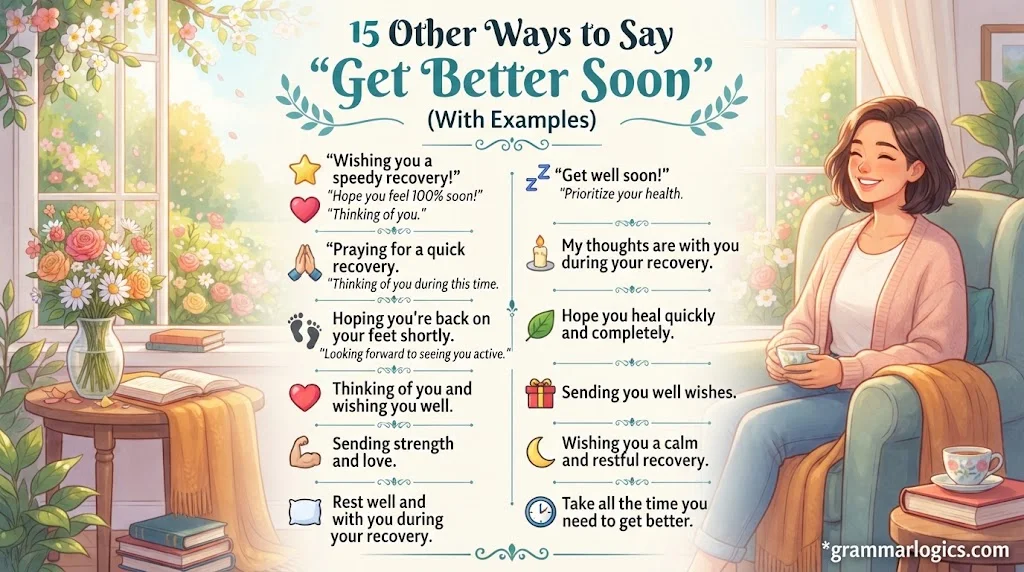
“Get Better Soon” is a thoughtful expression used to show care, support, and good wishes for someone who is feeling unwell.
When someone is sick or recovering, the right words can bring comfort, encouragement, and a smile. Although “Get Better Soon” is a common phrase, there are many other ways to express the same feeling in a more personal and meaningful way. Whether you are writing a message to a friend, sending a thoughtful text to a family member, or comforting a coworker, choosing the right words can make your message feel more genuine. From simple expressions like “Feel Better Soon” to warmer messages like “Wishing You a Speedy Recovery,” each alternative offers a different way to show kindness and concern.
In this article, we will explore 15 other ways to say “Get Better Soon” with clear explanations and practical examples. These alternatives will help you find the perfect words for different situations, whether you want to sound friendly, professional, caring, or encouraging. You will discover phrases suitable for text messages, greeting cards, emails, and everyday conversations. Learning these expressions can also improve your English vocabulary and communication skills. By the end, you will have plenty of thoughtful ways to wish someone well and remind them that you care about their recovery and well-being.
What Does “Get Better Soon” Mean?
“Get Better Soon” is a caring expression used to wish someone a quick recovery from an illness, injury, or period of poor health. It communicates concern for the person’s well-being and hope that they will feel healthier in the near future. People commonly use it in conversations, text messages, greeting cards, emails, and social media comments when someone is sick or recovering. Although the phrase is friendly and widely understood, it does not guarantee that recovery will happen quickly. Instead, it expresses a positive wish for healing and comfort. Depending on the relationship, it can sound casual, affectionate, supportive, or politely professional.
Common Situations Where “Get Better Soon” Is Used
People use this expression whenever they want to show support for someone who is unwell. Friends might send it in a text message to encourage someone with a cold, while family members may use warmer words when a loved one is recovering from surgery. Colleagues can include a brief recovery wish in a workplace email, and students may send one to a classmate who is absent because of illness. It also works in greeting cards and online messages. Choosing a different expression can make the message more personal, comforting, or appropriate for the person’s circumstances, especially when the illness is serious or the relationship calls for extra sensitivity.
Is It Professional or Polite to Say “Get Better Soon”?
Yes, “Get Better Soon” is polite and generally appropriate in everyday and professional communication. It sounds friendly, direct, and encouraging, making it suitable for messages to coworkers, classmates, friends, and acquaintances. In a formal email, however, a slightly more complete expression, such as “Wishing you a speedy recovery,” may sound more polished. When communicating with someone who has a serious illness, it can be thoughtful to use gentler wording that does not place pressure on them to recover quickly. The best choice depends on your relationship with the recipient, the seriousness of their condition, and whether the message is personal or professional.
Advantages and Disadvantages of Saying “Get Better Soon”
Advantages
- Clear meaning: Most English speakers immediately understand the message.
- Friendly tone: It communicates care without requiring a long explanation.
- Versatility: It works in texts, cards, conversations, and many workplace messages.
- Easy to personalize: You can add the person’s name or a supportive sentence.
Disadvantages
- Can sound generic: The phrase may feel less personal when used alone.
- May feel too direct: Someone facing a serious or long-term illness might prefer gentler wording.
- Limited emotional detail: It expresses a recovery wish but does not specifically communicate comfort, patience, or ongoing support.
- Less polished in some formal settings: A more complete expression may suit professional correspondence better.
15 Alternatives to “Get Better Soon”
- Wishing You a Speedy Recovery
- Hope You Feel Better Soon
- Get Well Soon
- Wishing You a Quick Recovery
- Take Care and Rest Well
- Sending Healing Thoughts Your Way
- I Hope You Recover Quickly
- Wishing You Strength and Healing
- Hope You’re Back on Your Feet Soon
- Sending You Lots of Love and Healing
- May You Feel Better Each Day
- Take All the Time You Need to Heal
- Thinking of You and Wishing You Well
- Here’s to a Smooth Recovery
- I Hope You Feel Like Yourself Again Soon
1. Wishing You a Speedy Recovery
Meaning
“Wishing You a Speedy Recovery” expresses the hope that someone will recover from an illness or injury quickly. It is a thoughtful alternative when you want your message to sound caring and slightly more formal than “Get Better Soon.”
Definition
A polite expression that communicates sincere wishes for a person’s quick return to good health.
Detailed Explanation
This phrase is especially useful when you want to express concern without sounding overly casual. It works well in professional emails, greeting cards, and messages to acquaintances. The word “speedy” emphasizes a quick recovery, while “wishing you” makes the sentence sound courteous. For someone with a serious or long-term condition, consider adding a gentle sentence that acknowledges their circumstances without creating pressure.
Scenario Examples
Scenario: A colleague is recovering at home after surgery.
Example: “Wishing you a speedy recovery. We look forward to seeing you when you’re ready to return.”
Scenario: A neighbor has been unwell.
Example: “Wishing you a speedy recovery and hoping each day brings a little more comfort.”
Scenario: You are writing a get-well card.
Example: “Wishing you a speedy recovery and brighter, healthier days ahead.”
Best Use
Use this expression in workplace emails, greeting cards, formal messages, and conversations with acquaintances. It is a particularly good choice when you want to sound respectful without losing warmth.
Tone
Tone: Polite, thoughtful, professional.
Its courteous wording makes it suitable for people you know personally as well as those you interact with professionally.
2. Hope You Feel Better Soon
Meaning
“Hope You Feel Better Soon” expresses a friendly wish that someone will soon feel healthier or more comfortable. It is a natural, conversational way to show concern.
Definition
A casual expression of hope that an unwell person will experience relief and improved well-being soon.
Detailed Explanation
This phrase sounds relaxed and personal, making it ideal for everyday communication. Unlike wording that emphasizes recovery itself, it focuses on how the person feels. That distinction makes it especially suitable for someone dealing with a headache, fever, cold, or general discomfort. It is less formal than “Wishing You a Speedy Recovery,” but it feels natural in most friendly situations.
Scenario Examples
Scenario: Your friend tells you they have a bad cold.
Example: “Sorry you’re feeling rough. Hope you feel better soon!”
Scenario: A classmate misses a lesson because of illness.
Example: “Hope you feel better soon. I’ll share today’s notes with you.”
Scenario: Your partner has a headache.
Example: “Hope you feel better soon, love. Let me know if you need anything.”
Best Use
Choose this expression for text messages, conversations with friends, family messages, and informal workplace chats. It is especially effective when you want to sound supportive without making the message overly serious.
Tone
Tone: Friendly, casual, caring.
Its simple wording makes the message feel natural and sincere.
3. Get Well Soon
Meaning
“Get Well Soon” is a familiar expression used to wish someone a return to good health. It is very close in meaning to “Get Better Soon” and is one of the most recognizable get-well wishes in English.
Definition
A short, friendly message expressing the hope that someone will recover from illness or injury.
Detailed Explanation
This phrase is concise, easy to understand, and appropriate for many everyday situations. It can be written on a card, sent in a message, or spoken directly to someone who is sick. Although it is similar to the original expression, “get well” places more emphasis on returning to health rather than simply feeling better. Because it is so common, adding the person’s name or a personal sentence can make it feel more thoughtful.
Scenario Examples
Scenario: You are sending flowers to a sick relative.
Example: “Get well soon, Aunt Sara! Sending you a big hug.”
Scenario: Your friend is recovering from an injury.
Example: “Get well soon! Take things slowly and give yourself time to recover.”
Scenario: A coworker is absent because of illness.
Example: “Get well soon, and don’t worry about the meeting notes. I’ll send them over.”
Best Use
Use this phrase in greeting cards, texts, social media comments, personal conversations, and friendly professional messages. It works particularly well when you want a short, familiar expression.
Tone
Tone: Warm, simple, encouraging.
Its familiar wording communicates care without requiring a lengthy explanation.
4. Wishing You a Quick Recovery
Meaning
“Wishing You a Quick Recovery” communicates hope that someone will recover from illness or injury without unnecessary delay. It is similar to “Wishing You a Speedy Recovery,” but the emphasis is on the recovery process.
Definition
A courteous expression wishing someone a short and uncomplicated recovery period.
Detailed Explanation
This phrase sounds polished and works well in written communication. It is appropriate when addressing a colleague, client, teacher, or acquaintance who is unwell. The word “recovery” focuses on the process of becoming healthy again, making the expression useful for injuries and medical procedures as well as common illnesses. However, if the person’s condition is serious, a more open-ended message may feel more considerate than emphasizing speed.
Scenario Examples
Scenario: A client informs you that they will miss a meeting due to illness.
Example: “Thank you for letting us know. Wishing you a quick recovery.”
Scenario: Your friend has sprained an ankle.
Example: “Wishing you a quick recovery and hoping you’re back to your usual activities when you’re ready.”
Scenario: You are writing to a teacher who is absent.
Example: “Wishing you a quick recovery and sending my best wishes.”
Best Use
This expression is suitable for professional emails, formal cards, workplace communication, and respectful personal messages.
Tone
Tone: Respectful, polished, considerate.
Its complete wording makes it a good choice when a simple casual phrase feels insufficiently formal.
5. Take Care and Rest Well
Meaning
“Take Care and Rest Well” encourages someone to look after themselves and allow their body time to recover. Rather than focusing only on the outcome, it emphasizes comfort, rest, and self-care.
Definition
A supportive expression encouraging someone to care for themselves and get adequate rest while unwell.
Detailed Explanation
This phrase is useful when you want to offer gentle advice alongside your well wishes. It communicates concern without demanding a fast recovery. The wording can feel especially thoughtful when someone has been working too hard or needs time away from their usual responsibilities. Unlike a direct recovery wish, it gives the recipient a practical reminder to prioritize their well-being, while leaving medical decisions to them and their healthcare professionals.
Scenario Examples
Scenario: Your friend has been working while sick.
Example: “Take care and rest well. The work can wait until you’re feeling up to it.”
Scenario: A family member is recovering at home.
Example: “Take care and rest well, Dad. Call me if you need anything.”
Scenario: A teammate is taking sick leave.
Example: “Take care and rest well. We’ll manage things here while you’re away.”
Best Use
Choose this expression for personal messages, supportive texts, family conversations, and friendly workplace communication. It is especially useful when encouraging someone not to rush back into their routine.
Tone
Tone: Gentle, nurturing, reassuring.
The focus on rest and care makes the message feel supportive rather than demanding.
6. Sending Healing Thoughts Your Way
Meaning
“Sending Healing Thoughts Your Way” communicates emotional support and the hope that someone experiences healing and comfort. It is more reflective and expressive than a straightforward recovery wish.
Definition
A compassionate expression offering encouraging thoughts and emotional support to someone facing illness or recovery.
Detailed Explanation
This phrase is suitable when you want your message to feel heartfelt without giving medical advice. It can acknowledge that recovery may involve emotional challenges as well as physical discomfort. The word “healing” may suggest a broader process than simply feeling better, while “thoughts” communicates care from a distance. It does not necessarily imply a religious belief, although some people may interpret it as spiritual depending on their background and the surrounding message.
Scenario Examples
Scenario: An acquaintance is recovering after a difficult medical procedure.
Example: “Sending healing thoughts your way and hoping you have plenty of support around you.”
Scenario: A friend is going through a challenging period of illness.
Example: “You’ve been on my mind. Sending healing thoughts your way.”
Scenario: You want to post a supportive comment online.
Example: “Sending healing thoughts your way and wishing you comfort through this difficult time.”
Best Use
Use this expression in thoughtful personal messages, social media comments, supportive cards, and messages to people facing challenging health situations.
Tone
Tone: Compassionate, heartfelt, reflective.
Its emotional emphasis makes it especially suitable when a short, casual wish might feel too impersonal.
7. I Hope You Recover Quickly
Meaning
“I Hope You Recover Quickly” directly expresses your wish that someone will regain their health soon. It is clear, sincere, and slightly more complete than a short phrase like “Get Well Soon.”
Definition
A direct statement expressing hope for someone’s prompt return to good health.
Detailed Explanation
This expression works in both spoken and written English. Beginning with “I hope” makes the wish feel personal because you are directly expressing your concern. It is suitable for acquaintances, friends, colleagues, and relatives, although the surrounding message can make it warmer or more formal. As with other phrases that emphasize speed, it is worth considering whether the recipient may need an extended recovery period.
Scenario Examples
Scenario: A coworker tells you they are recovering from the flu.
Example: “I’m sorry you’ve been unwell. I hope you recover quickly.”
Scenario: A friend has hurt their arm.
Example: “I hope you recover quickly and can get back to the activities you enjoy.”
Scenario: You are replying to a relative’s update.
Example: “Thanks for letting me know. I hope you recover quickly, and please keep me posted.”
Best Use
This phrase works well in everyday conversation, emails, text messages, and friendly professional correspondence. Use it when you want a complete sentence that clearly communicates your good wishes.
Tone
Tone: Sincere, direct, considerate.
Its straightforward wording makes your concern easy to understand.
8. Wishing You Strength and Healing
Meaning
“Wishing You Strength and Healing” expresses hope that someone will find the strength to face their circumstances and experience healing over time. It is especially meaningful when recovery may be difficult or emotionally demanding.
Definition
A compassionate message wishing someone resilience, comfort, and progress toward healing.
Detailed Explanation
Unlike expressions that focus mainly on a quick recovery, this phrase recognizes that healing can take time. “Strength” communicates encouragement, while “healing” acknowledges the process of getting better. It can be appropriate for someone recovering from a major illness, an injury, or a demanding medical experience. Because it carries emotional weight, it may sound more serious than an everyday get-well message, so it is best used when the circumstances call for extra sensitivity.
Scenario Examples
Scenario: A friend is facing a long recovery.
Example: “Wishing you strength and healing as you take things one day at a time.”
Scenario: A relative is going through a challenging health experience.
Example: “You are in my thoughts. Wishing you strength and healing in the days ahead.”
Scenario: You are writing a supportive card.
Example: “May you find comfort in the people around you. Wishing you strength and healing.”
Best Use
Choose this expression for heartfelt cards, personal messages, and situations involving a challenging or extended recovery. It is less suited to lighthearted situations where a short, casual phrase would feel more natural.
Tone
Tone: Compassionate, encouraging, heartfelt.
Its emphasis on resilience makes it appropriate when the person needs more than a simple wish for a quick recovery.
9. Hope You’re Back on Your Feet Soon
Meaning
“Hope You’re Back on Your Feet Soon” is an informal expression that wishes someone a return to health, energy, or normal activities. It often suggests recovering enough to resume everyday life.
Definition
A casual expression hoping someone will regain their strength and usual ability to carry out daily activities.
Detailed Explanation
The phrase “back on your feet” is an idiom, so it should not always be interpreted literally. It is often used when someone is temporarily unable to follow their normal routine because of illness or injury. Its conversational tone makes it a natural choice for friends and familiar coworkers. However, because it can suggest returning to normal activities, it may not be the best choice for someone whose recovery is uncertain or who cannot easily resume their usual routine.
Scenario Examples
Scenario: Your friend has been stuck at home with a cold.
Example: “Hope you’re back on your feet soon! We’ve missed hanging out.”
Scenario: A teammate is recovering from a minor injury.
Example: “Hope you’re back on your feet soon, but don’t rush it.”
Scenario: A family member has been feeling exhausted.
Example: “Hope you’re back on your feet soon and feeling more like yourself.”
Best Use
Use this expression in casual conversations, texts to friends, and friendly messages to coworkers. It is most natural when the illness or injury is temporary and a return to normal activities is a reasonable hope.
Tone
Tone: Casual, upbeat, encouraging.
The familiar idiom gives the message an easygoing feel, especially among people who know one another well.
10. Sending You Lots of Love and Healing
Meaning
“Sending You Lots of Love and Healing” expresses affection while wishing someone comfort and recovery. It places emotional connection at the center of the message.
Definition
A warm expression offering love, emotional support, and good wishes for healing.
Detailed Explanation
This phrase is more affectionate than a standard get-well wish. It works particularly well when communicating with a close friend, partner, or family member who appreciates openly expressed feelings. The word “love” can make the message deeply personal, so it may not suit professional relationships or people you barely know. “Healing” also allows the message to acknowledge a gradual process rather than suggesting that recovery must happen immediately.
Scenario Examples
Scenario: Your sibling is recovering at home.
Example: “Sending you lots of love and healing. I wish I could be there to help.”
Scenario: Your close friend is having a difficult time with their health.
Example: “Sending you lots of love and healing, my friend. I’m here whenever you need me.”
Scenario: Your partner is feeling unwell.
Example: “Sending you lots of love and healing. Get plenty of rest, sweetheart.”
Best Use
Choose this phrase for messages to loved ones, affectionate cards, personal notes, and supportive messages to close friends. For workplace communication, a less intimate expression is generally more suitable.
Tone
Tone: Affectionate, loving, comforting.
Its emphasis on closeness makes the message feel personal rather than merely polite.
11. May You Feel Better Each Day
Meaning
“May You Feel Better Each Day” expresses the hope that someone’s condition will gradually improve. It focuses on steady progress rather than a rapid recovery.
Definition
A gentle wish for day-by-day improvement in comfort and well-being.
Detailed Explanation
This expression can feel reassuring when a person needs time to recover. The word “may” gives it a gentle, wish-like quality, while “each day” recognizes that improvement may happen gradually. It is useful when you do not want to put pressure on someone to recover immediately. Although it is suitable for cards and personal messages, it sounds slightly more thoughtful and formal than everyday wording such as “Hope you feel better soon.”
Scenario Examples
Scenario: A friend is recovering from a persistent illness.
Example: “May you feel better each day and find more comfort as you recover.”
Scenario: A relative is resting after a medical procedure.
Example: “Thinking of you and hoping you feel better each day.”
Scenario: You are sending a get-well card.
Example: “May you feel better each day and enjoy a little more energy as time goes on.”
Best Use
This phrase works well in get-well cards, personal letters, supportive messages, and communication with someone whose recovery may take time.
Tone
Tone: Gentle, hopeful, reassuring.
Its emphasis on gradual improvement makes it a considerate choice when an immediate recovery is not realistic.
12. Take All the Time You Need to Heal
Meaning
“Take All the Time You Need to Heal” reassures someone that they do not have to rush their recovery. It emphasizes patience and respect for their individual needs.
Definition
A supportive expression encouraging someone to recover at their own pace without feeling pressured.
Detailed Explanation
This phrase is particularly valuable when a person may feel obligated to return to work, school, or other responsibilities before they are ready. Instead of wishing for a fast recovery, it communicates that their well-being matters more than a deadline. It can also offer emotional reassurance during a difficult period. Because it directly addresses pressure and expectations, it is often more meaningful than a generic get-well wish, especially when accompanied by practical offers of help.
Scenario Examples
Scenario: Your colleague feels guilty about taking sick leave.
Example: “Take all the time you need to heal. We’ll handle your responsibilities while you rest.”
Scenario: A close friend is recovering from a difficult illness.
Example: “Please don’t feel you have to rush back to normal. Take all the time you need to heal.”
Scenario: Your family member is recovering from an injury.
Example: “Focus on yourself for now. Take all the time you need to heal.”
Best Use
Use this expression in supportive workplace messages, close relationships, personal conversations, and situations where recovery time may be uncertain. It is especially helpful when someone needs reassurance that they are not letting others down.
Tone
Tone: Patient, reassuring, empathetic.
The phrase prioritizes the person’s well-being over speed, making it a thoughtful alternative for sensitive situations.
13. Thinking of You and Wishing You Well
Meaning
“Thinking of You and Wishing You Well” communicates that someone is in your thoughts and that you hope things improve for them. It offers support without focusing exclusively on the medical aspects of recovery.
Definition
A considerate expression showing concern, goodwill, and emotional support for another person.
Detailed Explanation
This phrase is useful when you want to acknowledge someone’s difficult circumstances without making assumptions about their condition. It can be especially appropriate when you do not know how serious the illness is or how long recovery might take. Unlike a direct request to get better quickly, it places no obvious emphasis on timing. It also works for people you are not extremely close to, since it expresses care without sounding overly intimate.
Scenario Examples
Scenario: An acquaintance has been away from work due to illness.
Example: “Thinking of you and wishing you well. I hope you’re getting the support you need.”
Scenario: Your former teacher is recovering at home.
Example: “Thinking of you and wishing you well during your recovery.”
Scenario: You want to send a brief note to someone you know socially.
Example: “Just wanted you to know I’m thinking of you and wishing you well.”
Best Use
Choose this expression for cards, emails, messages to acquaintances, and situations where a gentle, general expression of care is appropriate.
Tone
Tone: Respectful, thoughtful, supportive.
Its flexible wording conveys goodwill without assuming how the recipient should feel or when they should recover.
14. Here’s to a Smooth Recovery
Meaning
“Here’s to a Smooth Recovery” expresses hope that someone’s recovery will progress comfortably and without major complications. It sounds positive and slightly celebratory.
Definition
A friendly wish for a comfortable and uncomplicated recovery process.
Detailed Explanation
This expression focuses on how recovery progresses rather than simply how soon someone gets better. It can sound natural after a procedure or during the early stages of recovery, particularly when the recipient is expected to improve over time. The opening “Here’s to” gives it a toast-like or celebratory quality, so it may feel more upbeat than a serious get-well message. In sensitive circumstances, a quieter expression may better match the person’s feelings.
Scenario Examples
Scenario: Your friend has completed a planned procedure.
Example: “Glad everything is over. Here’s to a smooth recovery and plenty of rest!”
Scenario: A coworker is beginning rehabilitation after an injury.
Example: “Here’s to a smooth recovery. I hope everything goes well with your rehabilitation.”
Scenario: You are writing a cheerful note to a family member.
Example: “Here’s to a smooth recovery and a comfortable few weeks ahead.”
Best Use
Use this expression in friendly messages, recovery cards, and conversations following planned medical procedures or injuries. It is most appropriate when an optimistic, upbeat tone fits the circumstances.
Tone
Tone: Positive, encouraging, optimistic.
Its slightly celebratory wording communicates confidence and goodwill without being overly formal.
15. I Hope You Feel Like Yourself Again Soon
Meaning
“I Hope You Feel Like Yourself Again Soon” expresses the hope that someone will regain their usual comfort, energy, and sense of well-being. It recognizes that illness can affect more than physical health.
Definition
A caring expression wishing someone a return to their usual physical and emotional well-being.
Detailed Explanation
This phrase feels personal because it recognizes that being unwell can disrupt a person’s normal life. Rather than focusing only on the medical process, it acknowledges the familiar feeling of being healthy and comfortable again. It is especially appropriate for someone whose illness has left them tired, uncomfortable, or unlike their usual self. The wording is warm and empathetic, although it is best reserved for people whose circumstances you know well enough to make such a personal observation.
Scenario Examples
Scenario: Your close friend has been feeling exhausted for several days.
Example: “I hope you feel like yourself again soon. Be gentle with yourself while you recover.”
Scenario: Your partner has been unwell and missing their usual activities.
Example: “I hope you feel like yourself again soon, love. I’m here if you need anything.”
Scenario: A family member is recovering from an illness.
Example: “We’re all thinking of you and hoping you feel like yourself again soon.”
Best Use
Choose this expression for messages to close friends, partners, relatives, and people whose usual energy or personality you know well. It is especially suitable when you want to acknowledge the personal impact of being unwell.
Tone
Tone: Warm, empathetic, personal.
Its focus on the person’s overall well-being makes it a thoughtful choice when a simple recovery wish feels too general.
FAQs
1. What is another way to say “Get Better Soon”?
You can say “Feel Better Soon,” “Wishing You a Speedy Recovery,” “Hope You Recover Quickly,” or “Take Care and Get Well Soon.” These expressions show care and encourage someone who is feeling unwell.
2. How do you say “Get Better Soon” in a caring way?
You can say, “I hope you feel better soon,” “Sending you lots of love and healing wishes,” or “Wishing you a smooth and speedy recovery.” These phrases sound warm, thoughtful, and supportive.
3. What is a professional way to say “Get Better Soon”?
Professional alternatives include “Wishing You a Speedy Recovery,” “I Hope You Recover Soon,” and “Best Wishes for a Full Recovery.” These expressions are suitable for coworkers, managers, clients, and professional emails.
4. How can I say “Get Better Soon” in a text message?
You can write, “Hey, I hope you feel better soon! Take good care of yourself,” or “Sending positive thoughts your way. Get well soon!” These messages are friendly, natural, and easy to send.
5. What is a short and sweet way to wish someone a speedy recovery?
Short options include “Feel better soon,” “Get well quickly,” “Rest and recover,” and “Sending healing thoughts.” These simple phrases communicate kindness and encouragement without requiring a lengthy message.
Conclusion
Finding the right words to wish someone well can make a meaningful difference when they are sick or going through recovery. While “Get Better Soon” is a common and thoughtful expression, alternatives such as “Feel Better Soon,” “Wishing You a Speedy Recovery,” and “Sending Healing Thoughts” can make your message more personal and sincere. The best phrase depends on your relationship with the person and the situation in which you are communicating.
You can choose a friendly expression for a close friend, a comforting message for a family member, or a professional wish for a coworker. By learning these 15 other ways to say “Get Better Soon,” you can express kindness, offer encouragement, and show genuine concern. Sometimes, a few heartfelt words are all someone needs to feel supported and remembered.