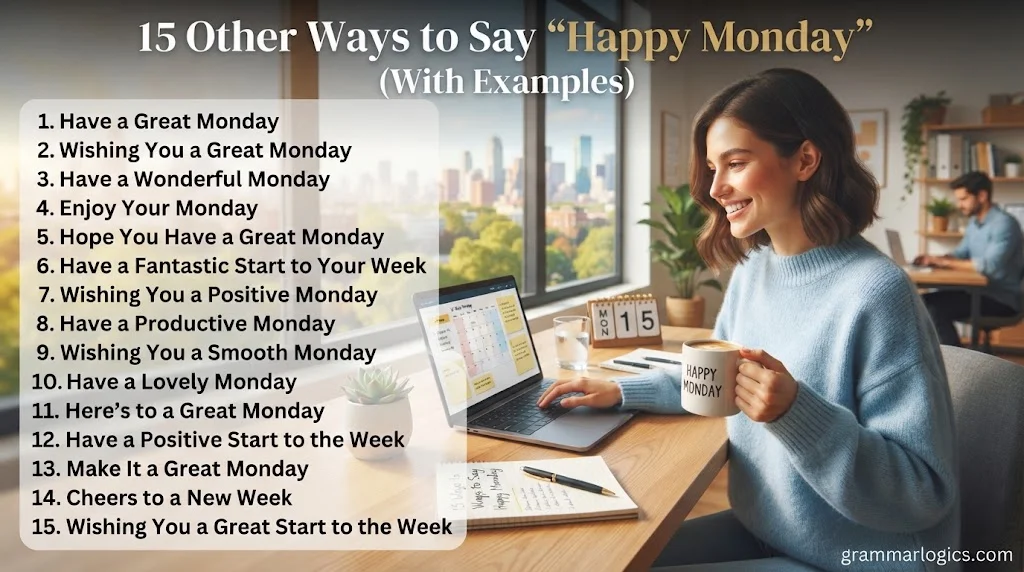
Starting a Monday with positive energy can set the tone for a productive, cheerful, and motivating week ahead.
Saying “Happy Monday” is a simple way to share positivity, encouragement, and good wishes at the beginning of a new week. Whether you are greeting a coworker, friend, family member, or someone special, choosing different expressions can make your message feel more natural, warm, and engaging. From professional greetings to casual and friendly phrases, there are plenty of ways to welcome Monday with enthusiasm. Learning these alternatives can help you communicate more creatively while keeping your conversations fresh and meaningful.
Finding other ways to say “Happy Monday” can make your weekly greetings more interesting and appropriate for different situations. A cheerful Monday message can help create a positive atmosphere, especially in workplaces, group chats, social media posts, and personal conversations. Instead of repeating the same phrase every week, you can use expressions that sound motivating, friendly, upbeat, or professional, depending on your audience. Whether you want to encourage someone to have a productive week, brighten their morning, or simply spread good vibes, the right Monday greeting can make a small but memorable difference. These alternatives also give you more flexibility when expressing enthusiasm and kindness.
What Does “Happy Monday” Mean?
“Happy Monday” is a friendly greeting used to wish someone a pleasant, positive, or enjoyable Monday. It is commonly shared at the beginning of the work or school week to express good wishes and create an upbeat mood. The phrase does not necessarily mean that Monday itself is a special or exciting day; rather, it communicates a hope that the person has a good experience throughout the day. In everyday English, “Happy Monday” can work as a simple greeting, a cheerful text message, a social media caption, or a friendly workplace message. Its tone is generally positive, casual, and encouraging.
Common Situations Where “Happy Monday” Is Used
People often use “Happy Monday” in everyday greetings, especially on Monday mornings. You might send it to a friend in a text message, write it in a group chat, or use it as a social media caption. It is also common in workplace communication when colleagues want to begin the week with a friendly attitude.
The expression can also be useful in personal communication, including messages to family members or someone you care about. In professional settings, it is generally acceptable when the workplace culture is relaxed and friendly. However, if you are writing a formal business email or communicating with someone you do not know well, a more polished expression such as “Wishing you a great start to the week” may sound more appropriate.
People may also choose an alternative when they want to communicate something more specific. For example, “Have a productive Monday” focuses on achievement, while “Wishing you a smooth Monday” suggests an easy, stress-free day.
Is It Professional or Polite to Say “Happy Monday”?
Yes, “Happy Monday” is polite and friendly, but its level of professionalism depends on the situation. It sounds most natural in casual or friendly professional communication, such as messages between coworkers, team chats, newsletters, or informal emails. It can make communication feel warmer without being overly personal.
However, “Happy Monday” is not particularly formal. In a highly formal business setting, client communication, or an official letter, expressions such as “Wishing you a pleasant start to the week” may be more suitable. The original phrase is best understood as a cheerful greeting rather than formal business language. Its simplicity is part of its appeal, especially when the goal is to make someone feel welcomed or encouraged at the beginning of the week.
Advantages and Disadvantages of Saying “Happy Monday”
Advantages
“Happy Monday” is short, positive, easy to understand, and widely recognizable. It can instantly create a friendly tone and works well in spoken and written communication. Because it is brief, it is particularly useful for texts, social media posts, team chats, and quick workplace greetings. It also carries a gentle sense of encouragement without requiring a long message.
Disadvantages
The main limitation is that “Happy Monday” can sound somewhat routine or generic when used frequently. It does not explain what kind of Monday you are wishing someone to have. If you want to sound more personal, professional, motivational, or thoughtful, another expression may communicate your intention more clearly. For example, someone facing a busy workday may appreciate “Wishing you a smooth Monday” more than a standard greeting.
15 Synonyms and Alternatives for “Happy Monday”
- Have a Great Monday
- Wishing You a Great Monday
- Have a Wonderful Monday
- Enjoy Your Monday
- Hope You Have a Great Monday
- Have a Fantastic Start to Your Week
- Wishing You a Positive Monday
- Have a Productive Monday
- Wishing You a Smooth Monday
- Have a Lovely Monday
- Here’s to a Great Monday
- Have a Positive Start to the Week
- Make It a Great Monday
- Cheers to a New Week
- Wishing You a Great Start to the Week
1. Have a Great Monday
Meaning
“Have a great Monday” is a warm and straightforward way to wish someone a good and enjoyable Monday. It keeps the positive feeling of “Happy Monday” while sounding slightly more conversational.
Definition
A friendly expression used to wish someone a pleasant, successful, or enjoyable Monday.
Detailed Explanation
This phrase is very close in meaning to “Happy Monday,” but it sounds more like a direct personal wish. It can suggest that you hope the person’s day goes well, whether they are working, studying, relaxing, or handling errands. The wording is natural and versatile, making it suitable for many everyday situations. It is especially useful when you want a simple greeting without sounding overly enthusiastic.
Scenario Examples
Scenario: You are ending a Monday morning conversation with a coworker.
Example: “Thanks for your help with the report. Have a great Monday!”
Scenario: You are texting a friend before they leave for work.
Example: “Hope your meeting goes well. Have a great Monday!”
Best Use
Best for casual conversations, workplace messages, texts, and friendly emails.
Tone
Tone: Friendly, warm, casual
It feels positive without sounding overly formal or emotional.
2. Wishing You a Great Monday
Meaning
“Wishing you a great Monday” expresses a sincere hope that someone has a pleasant and successful day.
Definition
A courteous phrase used to communicate good wishes for someone’s Monday.
Detailed Explanation
Compared with “Have a great Monday,” this expression feels slightly more thoughtful and polished. It works particularly well in written communication because “wishing you” gives the message a gentle, considerate quality. It can be used with friends, colleagues, customers, or acquaintances. The phrase is positive without becoming overly familiar.
Scenario Examples
Scenario: You are writing a friendly email to a colleague.
Example: “Thanks for sending those details. Wishing you a great Monday!”
Scenario: You are posting a positive Monday message online.
Example: “Wishing you a great Monday filled with good energy and small wins.”
Best Use
Best for emails, social media, workplace communication, and friendly written messages.
Tone
Tone: Warm, polite, thoughtful
The wording feels slightly more polished than a simple “Happy Monday.”
3. Have a Wonderful Monday
Meaning
“Have a wonderful Monday” wishes someone an especially pleasant and enjoyable day.
Definition
A warm expression used to wish someone a very good Monday.
Detailed Explanation
“Wonderful” adds more enthusiasm than “great,” so this alternative can feel a little more cheerful and affectionate. It is useful when you want your greeting to sound genuinely enthusiastic rather than routine. Although it is still casual, it can also fit polite professional communication when the workplace relationship is friendly. The expression works best when you want to add a little extra positivity.
Scenario Examples
Scenario: You are messaging a family member on Monday morning.
Example: “Good morning! Have a wonderful Monday and take some time for yourself.”
Scenario: You are signing off a friendly customer email.
Example: “Thank you for getting in touch. Have a wonderful Monday!”
Best Use
Best for personal messages, friendly emails, customer communication, and social media.
Tone
Tone: Cheerful, warm, positive
“Wonderful” gives the message a more enthusiastic feeling.
4. Enjoy Your Monday
Meaning
“Enjoy your Monday” encourages someone to make the most of their day and experience it positively.
Definition
A friendly expression encouraging someone to have an enjoyable Monday.
Detailed Explanation
This phrase focuses more on enjoyment than simply wishing someone happiness. It can sound natural when someone has plans, a relaxed schedule, or something pleasant happening during the day. It may be less suitable when the person is facing a stressful or demanding situation because “enjoy” assumes there is something enjoyable about the day. Used in the right context, it feels personal and upbeat.
Scenario Examples
Scenario: Your friend has Monday off and plans to visit a favorite place.
Example: “Enjoy your Monday off! You definitely deserve the break.”
Scenario: You are ending a conversation with someone who is starting a relaxed workday.
Example: “Everything looks good from my side. Enjoy your Monday!”
Best Use
Best for casual conversations, personal messages, relaxed workplace communication, and days off.
Tone
Tone: Casual, cheerful, relaxed
The word “enjoy” makes the greeting feel light and positive.
5. Hope You Have a Great Monday
Meaning
“Hope you have a great Monday” expresses a friendly hope that someone experiences a pleasant and successful day.
Definition
A conversational expression used to communicate good wishes for someone’s Monday.
Detailed Explanation
This phrase sounds especially natural in everyday speech and texting. The word “hope” makes the message feel slightly more personal because it expresses your positive intention for the other person’s day. It is less direct than “Have a great Monday,” which can make it feel softer and more conversational. It is suitable for people you know reasonably well.
Scenario Examples
Scenario: You are texting a friend before they start work.
Example: “Hope you have a great Monday. Don’t let the busy schedule stress you out.”
Scenario: You are sending a message to a colleague after the weekend.
Example: “Welcome back! Hope you have a great Monday.”
Best Use
Best for texting, casual emails, friends, coworkers, and everyday conversation.
Tone
Tone: Friendly, caring, conversational
It sounds natural because it feels like a genuine personal wish.
6. Have a Fantastic Start to Your Week
Meaning
“Have a fantastic start to your week” wishes someone an especially positive beginning to the new week.
Definition
An enthusiastic expression wishing someone a strong and enjoyable beginning to the week.
Detailed Explanation
This alternative shifts the focus from Monday alone to the beginning of the entire week. It can therefore feel more encouraging and forward-looking than “Happy Monday.” “Fantastic” adds enthusiasm, making it useful for motivational messages or positive workplace communication. It is a good choice when you want to encourage someone beyond a single day.
Scenario Examples
Scenario: A team leader sends a Monday morning message.
Example: “Good morning, everyone! Have a fantastic start to your week.”
Scenario: You are encouraging a friend who has several goals to work on.
Example: “New week, new opportunities. Have a fantastic start to your week!”
Best Use
Best for team messages, motivational posts, workplace communication, and friendly greetings.
Tone
Tone: Energetic, encouraging, upbeat
The phrase creates a more motivational feeling than the simple “Happy Monday.”
7. Wishing You a Positive Monday
Meaning
“Wishing you a positive Monday” expresses the hope that someone has a good, encouraging, and productive-feeling day.
Definition
A thoughtful phrase wishing someone a Monday filled with positive experiences and energy.
Detailed Explanation
This expression emphasizes positivity rather than simple happiness. It can be useful when you know someone has an important day ahead and want to encourage them. The phrase feels slightly more intentional than “Happy Monday,” while remaining easy to understand. It is particularly effective in messages where emotional encouragement matters.
Scenario Examples
Scenario: Your friend has an important presentation on Monday.
Example: “Wishing you a positive Monday. I’m sure your presentation will go well.”
Scenario: You are sending encouragement to a colleague.
Example: “Wishing you a positive Monday and a productive week ahead.”
Best Use
Best for encouraging messages, workplace communication, personal texts, and social media.
Tone
Tone: Encouraging, thoughtful, positive
The word “positive” gives the greeting a supportive quality.
8. Have a Productive Monday
Meaning
“Have a productive Monday” wishes someone a day in which they can accomplish useful tasks and make meaningful progress.
Definition
A practical expression wishing someone a successful and efficient Monday.
Detailed Explanation
Unlike “Happy Monday,” this expression focuses on achievement and progress rather than enjoyment. It is especially appropriate when speaking to someone about work, school, projects, or goals. It may sound less suitable for a personal situation where emotional warmth is the main purpose. In professional environments, however, it can be a useful and natural Monday greeting.
Scenario Examples
Scenario: You are sending a message to your project team.
Example: “Good morning, team. Have a productive Monday, and let’s make progress on our priorities.”
Scenario: Your friend is preparing for exams.
Example: “Good luck with your study session. Have a productive Monday!”
Best Use
Best for workplaces, schools, project teams, study messages, and goal-oriented communication.
Tone
Tone: Professional, motivating, practical
It emphasizes progress and accomplishment rather than celebration.
9. Wishing You a Smooth Monday
Meaning
“Wishing you a smooth Monday” expresses the hope that someone’s day will be easy, manageable, and free from unnecessary problems.
Definition
A considerate expression wishing someone a stress-free and uncomplicated Monday.
Detailed Explanation
This phrase is different from “Happy Monday” because it acknowledges that Mondays can sometimes be busy or stressful. Instead of simply wishing for happiness, it wishes for things to go smoothly. That makes it particularly thoughtful when someone has a demanding schedule, travel plans, deadlines, or appointments. It can sound caring without becoming overly emotional.
Scenario Examples
Scenario: Your coworker has several meetings scheduled.
Example: “You have a packed calendar today. Wishing you a smooth Monday!”
Scenario: A friend is traveling for work.
Example: “Safe travels, and wishing you a smooth Monday once you arrive.”
Best Use
Best for workplace messages, personal texts, busy schedules, travel situations, and supportive communication.
Tone
Tone: Caring, considerate, calm
The phrase recognizes possible challenges and offers a thoughtful wish.
10. Have a Lovely Monday
Meaning
“Have a lovely Monday” is a gentle way to wish someone a pleasant and enjoyable day.
Definition
A warm expression wishing someone a pleasant, peaceful, or enjoyable Monday.
Detailed Explanation
The word “lovely” gives this greeting a softer and more personable feeling. It is common in friendly British English but is also easily understood by English speakers elsewhere. Compared with “Happy Monday,” it can sound a little more elegant and gentle. It works particularly well when you want your message to feel warm without being overly enthusiastic.
Scenario Examples
Scenario: You are ending a friendly email.
Example: “Thanks again for your help. Have a lovely Monday!”
Scenario: You are sending a morning message to someone close to you.
Example: “Good morning! Have a lovely Monday and remember to take a break.”
Best Use
Best for friendly emails, personal messages, polite conversations, and everyday greetings.
Tone
Tone: Warm, gentle, friendly
“Lovely” creates a softer emotional tone than “great” or “fantastic.”
11. Here’s to a Great Monday
Meaning
“Here’s to a great Monday” is an upbeat expression that celebrates the possibility of having a good beginning to the week.
Definition
A cheerful phrase expressing optimism about a positive Monday ahead.
Detailed Explanation
This expression has a slightly celebratory quality. It is less like a traditional greeting and more like an optimistic toast or encouragement. It works well when you want to create energy around the start of a new week. Because of its enthusiastic style, it may feel more natural in social posts, team chats, or messages among people who already have a friendly relationship.
Scenario Examples
Scenario: A group of coworkers begins a new project on Monday.
Example: “The new project starts today—here’s to a great Monday and an even better week!”
Scenario: You are sharing a positive social media message.
Example: “Fresh week, fresh mindset. Here’s to a great Monday!”
Best Use
Best for social media, group chats, team messages, and motivational communication.
Tone
Tone: Upbeat, optimistic, celebratory
The phrase adds a sense of shared enthusiasm about the week ahead.
12. Have a Positive Start to the Week
Meaning
“Have a positive start to the week” wishes someone a good and encouraging beginning to their new week.
Definition
A thoughtful expression wishing someone a successful and positive beginning to the week.
Detailed Explanation
This alternative broadens the focus beyond Monday and emphasizes the overall direction of the week. It sounds more polished than “Happy Monday” while remaining friendly and approachable. It can work particularly well when you are not sure whether the person has a busy or relaxed Monday. The phrase is also useful when you want your message to feel encouraging without sounding overly enthusiastic.
Scenario Examples
Scenario: You are sending a Monday morning message to a colleague.
Example: “Good morning! Have a positive start to the week, and I’ll see you in the meeting.”
Scenario: You are encouraging a student.
Example: “Take things one step at a time and have a positive start to the week.”
Best Use
Best for workplace communication, school messages, emails, and encouraging notes.
Tone
Tone: Positive, thoughtful, professional
It feels encouraging while maintaining a polished quality.
13. Make It a Great Monday
Meaning
“Make it a great Monday” encourages someone to take an active approach to having a good day.
Definition
A motivational expression encouraging someone to create a positive Monday through their attitude or actions.
Detailed Explanation
Unlike “Happy Monday,” this phrase is more active and motivational. Instead of simply wishing someone happiness, it encourages them to influence how their day unfolds. It can be especially effective when someone needs encouragement at the beginning of a busy week. The wording feels energetic and confident, making it a good choice for motivational communication.
Scenario Examples
Scenario: A manager sends an encouraging message to the team.
Example: “Let’s focus on what matters and make it a great Monday.”
Scenario: You are encouraging a friend before a busy day.
Example: “You’ve got this. Make it a great Monday!”
Best Use
Best for motivational messages, workplace chats, social media, and personal encouragement.
Tone
Tone: Motivational, confident, energetic
The phrase encourages personal responsibility and positive action.
14. Cheers to a New Week
Meaning
“Cheers to a new week” celebrates the beginning of a fresh week with an optimistic attitude.
Definition
A cheerful expression used to welcome a new week and its possibilities.
Detailed Explanation
This expression does not focus specifically on Monday, but it works naturally as a Monday greeting because Monday often represents the start of a new week. It has a more celebratory and informal feeling than “Happy Monday.” The phrase is particularly effective when you want to emphasize a fresh start rather than simply wish someone a pleasant day. It can also work well as a social media caption.
Scenario Examples
Scenario: You are sharing a Monday morning post.
Example: “New goals, fresh energy, and a clean slate. Cheers to a new week!”
Scenario: You are chatting with friends after the weekend.
Example: “The weekend went by quickly. Cheers to a new week!”
Best Use
Best for social media, casual conversations, group chats, and motivational posts.
Tone
Tone: Casual, optimistic, celebratory
It creates a feeling of fresh beginnings and shared positivity.
15. Wishing You a Great Start to the Week
Meaning
“Wishing you a great start to the week” is a polished way to wish someone a positive beginning to their week.
Definition
A courteous expression offering good wishes for the beginning of someone’s week.
Detailed Explanation
This is one of the more versatile and professional alternatives to “Happy Monday.” It avoids sounding too casual while still feeling warm and human. Because it focuses on the start of the week rather than Monday itself, it can also be useful when writing to someone in a professional setting. It is especially appropriate when you want your message to sound considerate without being overly familiar.
Scenario Examples
Scenario: You are emailing a business contact on Monday morning.
Example: “Thank you for the update. Wishing you a great start to the week.”
Scenario: You are sending a polite message to a colleague.
Example: “I hope everything is going well. Wishing you a great start to the week!”
Best Use
Best for professional emails, business communication, colleagues, customers, and polite written messages.
Tone
Tone: Professional, courteous, warm
Its polished wording makes it especially useful when friendly professionalism is important.
FAQs
1. What are other ways to say “Happy Monday”?
Some alternatives include “Have a great Monday,” “Wishing you a wonderful Monday,” “Happy start to the week,” “Have a productive Monday,” and “Enjoy your Monday.”
2. How can I say “Happy Monday” professionally?
For a professional setting, you can say “Wishing you a productive Monday,” “Have a great start to the week,” or “I hope you have a successful Monday.”
3. What is a casual way to say “Happy Monday”?
Casual options include “Have a good Monday,” “Cheers to a new week,” “Monday vibes!” and “Hope you have an awesome Monday!”
4. Can I use these Monday greetings in a text message?
Yes. These expressions work well in text messages, emails, social media posts, workplace chats, and everyday conversations.
5. Why should I use alternatives to “Happy Monday”?
Using different expressions makes your communication feel more creative, natural, friendly, and engaging while helping you avoid repetitive greetings.
Conclusion
There are many other ways to say “Happy Monday” depending on your relationship, situation, and desired tone. Whether you want to sound professional, friendly, cheerful, or motivational, choosing the right expression can make your Monday greetings more meaningful.
From simple wishes like “Have a great Monday” to encouraging phrases like “Have a productive week,” these alternatives help you start conversations with positive energy and warmth. Use the expression that best matches your audience, and make every Monday greeting a little more memorable.