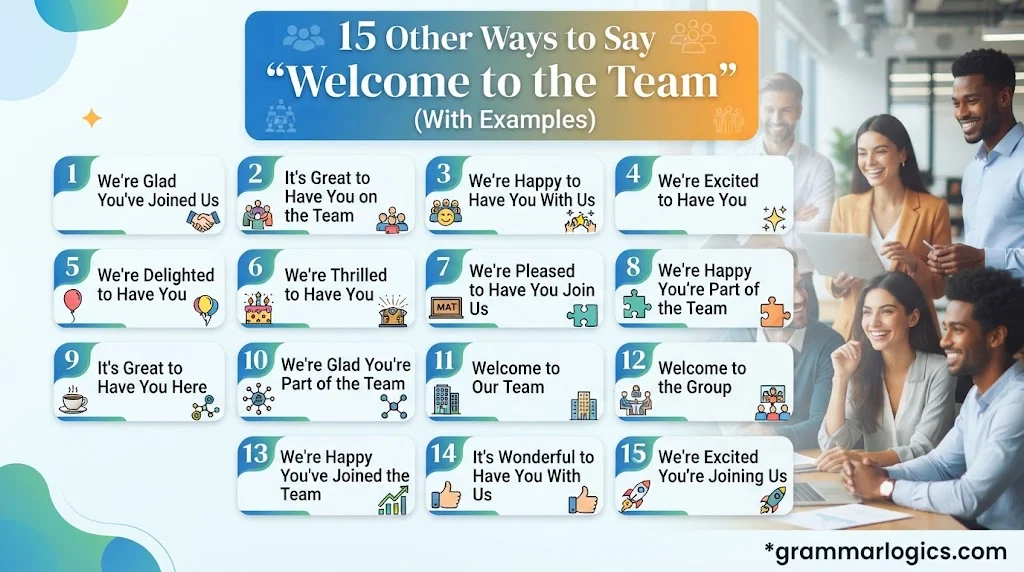
Starting a new job can feel exciting and overwhelming, so choosing the right words to say “Welcome to the Team” can make newcomers feel valued.
Finding the right ways to say “Welcome to the Team” can help create a warm, positive, and supportive first impression for a new employee. While the phrase is friendly and professional, using different expressions can make your message feel more personal and genuine. Whether you are welcoming a colleague through an email, team chat, meeting, or workplace announcement, the right words can help someone feel comfortable and appreciated. From casual phrases to professional alternatives, these expressions make it easier to welcome new team members while building stronger workplace relationships from the beginning.
In this guide, you will discover 15 other ways to say “Welcome to the Team”, along with practical examples for different workplace situations. Some alternatives are ideal for a professional environment, while others work better for friendly messages, emails, or casual conversations with colleagues. Learning these expressions can help you communicate naturally without repeating the same phrase every time someone joins your team. Whether you are a manager, coworker, or team leader, these welcome messages will help you make new employees feel included, respected, and excited about becoming part of the team.
What Does “Welcome to the Team” Mean?
“Welcome to the Team” is a friendly expression used when someone joins a group of people working, learning, or participating together. It communicates that the new member is now part of the group and is generally intended to make them feel accepted. In a workplace, it may be said to a new employee during their first day or included in an introductory email. The phrase can also be used for sports teams, school groups, volunteer organizations, clubs, projects, and online communities.
The expression carries a sense of inclusion and goodwill. It does not necessarily express strong emotion; its exact feeling depends on the speaker, relationship, and setting. A manager might use it in a professional onboarding message, while a coworker might say it casually in a chat. Because it is broad and adaptable, “Welcome to the Team” works in many situations where someone has newly become part of a group.
Common Situations Where “Welcome to the Team” Is Used
“Welcome to the Team” is especially common when someone starts a new role or becomes part of an established group. At work, a manager may use it in an email, team meeting, company announcement, or private message. Coworkers may also use it when introducing a new colleague to everyone else.
The phrase is not limited to employment. It can work for a new member of a sports team, student organization, volunteer group, project team, or community. For example, someone joining a school committee may receive a warm welcome from existing members. A volunteer organization may use the phrase when introducing a new participant.
People sometimes choose an alternative because the original expression can feel standard or expected in workplace communication. A different phrase can make the message sound more personal, enthusiastic, formal, or relaxed. The best wording depends on whether you are welcoming someone as a colleague, friend, student, volunteer, or fellow group member.
Is It Professional or Polite to Say “Welcome to the Team”?
Yes, “Welcome to the Team” is generally professional, polite, and friendly. It is especially suitable for workplace communication because it is positive without being overly emotional. A manager can use it in an email to a new employee, while coworkers can use it in a team chat or introduction.
The phrase is also flexible enough for less formal settings. Saying it to a new sports teammate or volunteer can sound warm and natural. In a highly formal message, however, you may prefer wording that emphasizes appreciation, congratulations, or the person’s new role. In a very casual relationship, a shorter and more personal expression may feel more natural. The important point is that context determines tone.
Advantages and Disadvantages of Saying “Welcome to the Team”
Advantages
The biggest advantage of “Welcome to the Team” is its clarity. The person immediately understands that they are being welcomed as a new member of the group. The phrase is also positive without requiring a complicated explanation.
It is versatile enough for professional and casual situations. It can appear in an email, spoken conversation, team announcement, text message, or social media post. It also creates a sense of belonging, which can be especially useful when someone is entering an unfamiliar environment.
Another benefit is its neutral warmth. It sounds friendly without being too personal or emotional, making it a dependable choice when you do not yet know the new member well.
Disadvantages
Because the phrase is so common, it can sometimes sound formulaic. In a workplace where new employees frequently join, using exactly the same wording may make every welcome message feel similar.
It can also be too general when you want to communicate a specific feeling. If you are genuinely excited about someone’s arrival, a warmer expression may convey more enthusiasm. Similarly, if you are writing a formal announcement, wording focused on the person’s appointment or contribution may provide more useful context.
The phrase also does not explain why the person is valued. A personalized message can often make a stronger impression by acknowledging the person’s role or expressing genuine appreciation for their arrival.
Synonyms for “Welcome to the Team”
- We’re Glad You’ve Joined Us
- It’s Great to Have You on the Team
- We’re Happy to Have You With Us
- We’re Excited to Have You
- We’re Delighted to Have You
- We’re Thrilled to Have You
- We’re Pleased to Have You Join Us
- We’re Happy You’re Part of the Team
- It’s Great to Have You Here
- We’re Glad You’re Part of the Team
- Welcome to Our Team
- Welcome to the Group
- We’re Happy You’ve Joined the Team
- It’s Wonderful to Have You With Us
- We’re Excited You’re Joining Us
1. We’re Glad You’ve Joined Us
Meaning
“We’re Glad You’ve Joined Us” expresses happiness and appreciation about someone’s decision or opportunity to become part of a group. It feels slightly more personal than “Welcome to the Team” because it focuses on the speaker’s positive reaction to the person’s arrival.
Definition
Definition: A warm expression used to say that you are pleased someone has become part of your group.
Detailed Explanation
This wording has a friendly, sincere quality that works particularly well when you want the new member to feel personally appreciated. The word “glad” communicates genuine happiness without sounding excessively enthusiastic. It can be used in professional communication while still feeling human and approachable. It is especially useful when the speaker wants to emphasize the person’s arrival rather than simply announce their membership.
Scenario Examples
Scenario: A manager introduces a new employee during a team meeting.
Example: “We’re glad you’ve joined us, Maya. We’re looking forward to working with you.”
Scenario: A volunteer coordinator sends a welcome message.
Example: “We’re glad you’ve joined us and hope you enjoy getting involved with the community.”
Scenario: A project leader welcomes a new contributor in a group chat.
Example: “We’re glad you’ve joined us, Daniel. Feel free to ask questions as you get settled.”
Best Use
This expression works well in workplace communication, volunteer groups, team introductions, and personal messages. It is particularly effective when you want a welcome to sound sincere rather than ceremonial.
Tone
Tone: Warm, friendly, professional
The wording is positive and personal while remaining appropriate for most workplace settings.
2. It’s Great to Have You on the Team
Meaning
“It’s Great to Have You on the Team” tells someone that their presence is valued and appreciated. It directly recognizes them as a member of the team.
Definition
Definition: A friendly expression showing that you are pleased someone has become part of the team.
Detailed Explanation
This phrase is slightly more enthusiastic than a simple “Welcome to the Team.” The word “great” adds positive energy without making the message overly emotional. The phrase works naturally when speaking directly to a new coworker or team member. It can also suggest that the speaker expects the new person to make a valuable contribution.
Scenario Examples
Scenario: A department manager sends a welcome email.
Example: “It’s great to have you on the team, and we’re excited to see what you’ll bring to the department.”
Scenario: A coworker meets a new teammate on their first day.
Example: “It’s great to have you on the team. Let me know if you need help finding anything.”
Scenario: A sports coach addresses a new player.
Example: “It’s great to have you on the team this season.”
Best Use
Use this expression for work emails, team meetings, onboarding messages, sports groups, and friendly professional conversations.
Tone
Tone: Warm, upbeat, professional
It feels enthusiastic while still being natural enough for everyday workplace communication.
3. We’re Happy to Have You With Us
Meaning
“We’re Happy to Have You With Us” communicates that the group is pleased about the person’s presence. It emphasizes belonging rather than simply announcing that the person has joined.
Definition
Definition: A warm statement expressing collective happiness that someone is now part of a group.
Detailed Explanation
The use of “we’re” makes the message feel collective, as though the whole group is welcoming the newcomer. “With us” is also slightly broader than “on the team,” so the phrase can fit situations where the group is not strictly a work team. It can sound particularly welcoming in community, educational, volunteer, and social settings. In professional communication, it adds warmth without becoming too informal.
Scenario Examples
Scenario: A nonprofit welcomes a new volunteer.
Example: “We’re happy to have you with us, and we appreciate you giving your time to the project.”
Scenario: A teacher welcomes a new student to a class activity.
Example: “We’re happy to have you with us for the rest of the semester.”
Scenario: A company team welcomes a new colleague.
Example: “We’re happy to have you with us, and we hope your first week goes smoothly.”
Best Use
This expression fits community groups, schools, volunteer organizations, workplaces, and friendly introductions.
Tone
Tone: Warm, inclusive, welcoming
Its collective wording makes the new person feel like they are already being accepted by the group.
4. We’re Excited to Have You
Meaning
“We’re Excited to Have You” expresses strong enthusiasm about someone’s arrival. It tells the person that their presence is something the group is genuinely looking forward to.
Definition
Definition: An enthusiastic expression showing that a group is very pleased about someone’s arrival or participation.
Detailed Explanation
This is a stronger expression than a neutral welcome because “excited” communicates noticeable enthusiasm. It is useful when the person is joining an important project, starting an anticipated role, or bringing skills the group is looking forward to. In a very formal environment, it may feel slightly more conversational than restrained corporate wording. It works especially well when the speaker wants the new member to feel highly anticipated.
Scenario Examples
Scenario: A startup welcomes a new designer.
Example: “We’re excited to have you and can’t wait to see your ideas for the new project.”
Scenario: A team leader welcomes someone who will lead an upcoming initiative.
Example: “We’re excited to have you and look forward to working together.”
Scenario: A community group introduces a new organizer.
Example: “We’re excited to have you helping us with this year’s events.”
Best Use
Use it for enthusiastic workplace messages, project introductions, community groups, and situations where the person’s arrival has been anticipated.
Tone
Tone: Enthusiastic, warm, upbeat
The word “excited” gives this expression noticeably more energy than a standard welcome.
5. We’re Delighted to Have You
Meaning
“We’re Delighted to Have You” expresses strong pleasure and sincere appreciation about someone’s arrival or membership.
Definition
Definition: A polite and warm statement showing that someone is very welcome and valued.
Detailed Explanation
“Delighted” is more formal and polished than “glad” or “happy.” It can therefore add a refined quality to a professional or ceremonial welcome. The phrase communicates genuine pleasure while avoiding overly casual language. It is useful when you want a welcome to sound especially courteous and thoughtful.
Scenario Examples
Scenario: A senior manager welcomes a new department member.
Example: “We’re delighted to have you join the department and look forward to your contributions.”
Scenario: An organization welcomes a new committee member.
Example: “We’re delighted to have you with us as we begin this year’s work.”
Scenario: A professional association introduces a new member.
Example: “We’re delighted to have you as part of our growing community.”
Best Use
This expression is well suited to professional emails, formal introductions, organizations, committees, and polished written communication.
Tone
Tone: Polished, warm, professional
“Delighted” gives the message a courteous and slightly formal character.
6. We’re Thrilled to Have You
Meaning
“We’re Thrilled to Have You” communicates very strong excitement and happiness about someone’s arrival.
Definition
Definition: An enthusiastic expression used to show that someone is extremely welcome and appreciated.
Detailed Explanation
“Thrilled” is emotionally stronger than “glad,” “happy,” or “pleased.” It is best used when the speaker genuinely wants to express a high level of enthusiasm. In a workplace, it can work well when someone has been eagerly anticipated or has an especially important role. Because of its intensity, it may sound excessive in a highly restrained or formal message.
Scenario Examples
Scenario: A creative agency welcomes a new specialist.
Example: “We’re thrilled to have you and are excited to begin working together.”
Scenario: A sports club announces a new member.
Example: “We’re thrilled to have you with us for the upcoming season.”
Scenario: A project team welcomes an experienced contributor.
Example: “We’re thrilled to have you joining the project at this stage.”
Best Use
Use it for enthusiastic announcements, team introductions, creative workplaces, sports groups, and celebratory welcomes.
Tone
Tone: Highly enthusiastic, warm, celebratory
The word “thrilled” signals a particularly strong positive reaction.
7. We’re Pleased to Have You Join Us
Meaning
“We’re Pleased to Have You Join Us” communicates that the group is satisfied and happy about the person’s arrival. It has a more formal quality than many everyday welcome expressions.
Definition
Definition: A courteous expression indicating that someone’s participation or membership is warmly received.
Detailed Explanation
The word “pleased” creates a measured and professional tone. It is useful when a message needs to sound respectful without becoming overly emotional. This expression can work particularly well in official introductions, organizational announcements, and professional correspondence. Compared with “thrilled,” it is more restrained and suitable for settings where enthusiasm should remain polished.
Scenario Examples
Scenario: A company announces a new executive.
Example: “We’re pleased to have you join us as our new operations director.”
Scenario: A professional organization welcomes a new member.
Example: “We’re pleased to have you join us and look forward to your participation.”
Scenario: A formal project announcement introduces a new contributor.
Example: “We’re pleased to have you join us as we move into the next phase of the project.”
Best Use
This phrase is ideal for formal workplace communication, professional organizations, official announcements, and business correspondence.
Tone
Tone: Professional, courteous, formal
Its restrained wording makes it appropriate when a polished welcome is more suitable than casual enthusiasm.
8. We’re Happy You’re Part of the Team
Meaning
“We’re Happy You’re Part of the Team” emphasizes belonging. Instead of focusing only on the person’s arrival, it highlights the fact that they are now an accepted member of the group.
Definition
Definition: A warm expression showing appreciation that someone belongs to the team.
Detailed Explanation
This wording can feel particularly reassuring to someone who is new to an unfamiliar environment. The phrase “part of the team” directly reinforces inclusion and membership. It is slightly more personal than a standard greeting because it communicates that the person’s presence matters. It works well when the goal is to help a newcomer feel comfortable and accepted.
Scenario Examples
Scenario: A manager speaks to a new employee after their first week.
Example: “We’re happy you’re part of the team, and I hope you’re settling in well.”
Scenario: A sports captain welcomes a new player.
Example: “We’re happy you’re part of the team. You’ll fit in quickly.”
Scenario: A project group adds a new member.
Example: “We’re happy you’re part of the team and look forward to working together.”
Best Use
Use it in team conversations, workplace messages, sports groups, project teams, and supportive personal communication.
Tone
Tone: Inclusive, reassuring, friendly
The emphasis on belonging makes it especially suitable for helping someone feel accepted.
9. It’s Great to Have You Here
Meaning
“It’s Great to Have You Here” expresses pleasure about someone’s presence. It is broader than a workplace-specific welcome and can fit many different settings.
Definition
Definition: A friendly statement showing that someone’s presence is appreciated.
Detailed Explanation
This phrase is useful when the context already makes the person’s new role or membership clear. Because it says “here” rather than referring directly to a team, it can feel more conversational and immediate. It works well when speaking to someone face-to-face or writing a friendly message. However, it is less specific than wording that explicitly identifies the person as a team member.
Scenario Examples
Scenario: A coworker greets a new employee at the office.
Example: “It’s great to have you here. How has your first morning been?”
Scenario: A host welcomes a new participant to a workshop.
Example: “It’s great to have you here, and I hope you enjoy the session.”
Scenario: A friend joins a group activity.
Example: “It’s great to have you here. We were hoping you’d make it.”
Best Use
This expression works best in spoken conversation, casual workplace settings, workshops, gatherings, and friendly messages.
Tone
Tone: Friendly, conversational, warm
It feels natural and personal because it focuses on the person’s immediate presence.
10. We’re Glad You’re Part of the Team
Meaning
“We’re Glad You’re Part of the Team” communicates appreciation, inclusion, and happiness about someone’s membership.
Definition
Definition: A warm statement expressing that the group is pleased someone is now a member of the team.
Detailed Explanation
This expression puts more emphasis on belonging than on the moment of joining. “Glad” keeps the message relaxed and sincere, while “part of the team” clearly identifies the person’s place within the group. It can be especially effective after someone has already started their role and you want to reinforce that they are valued. The phrase is friendly enough for everyday conversation but appropriate for most professional teams.
Scenario Examples
Scenario: A manager checks in with a new employee.
Example: “We’re glad you’re part of the team. Let me know how your first few weeks are going.”
Scenario: A department posts an internal welcome message.
Example: “We’re glad you’re part of the team and look forward to everything we’ll accomplish together.”
Scenario: A team captain welcomes a new member after their first practice.
Example: “We’re glad you’re part of the team. It’s been great getting to know you.”
Best Use
It works well for workplaces, sports teams, project groups, and ongoing team relationships.
Tone
Tone: Warm, supportive, inclusive
The expression emphasizes that the newcomer is genuinely regarded as part of the group.
11. Welcome to Our Team
Meaning
“Welcome to Our Team” is a close variation of the original phrase that makes the message feel slightly more personal and group-oriented.
Definition
Definition: A friendly greeting used to welcome someone as a new member of a particular team.
Detailed Explanation
The word “our” can create a stronger sense of shared identity than the more general “the.” It suggests that the speaker and the newcomer now belong to the same group. The phrase remains simple, clear, and professional, so it does not require a major change in tone. It is useful when you want familiar wording with a slightly more personal feel.
Scenario Examples
Scenario: A manager welcomes a new hire by email.
Example: “Welcome to our team, Priya. We’re pleased to have you with us.”
Scenario: A small business introduces a new employee.
Example: “Welcome to our team! We’re looking forward to working with you.”
Scenario: A school project group adds a student.
Example: “Welcome to our team, Alex. We’re happy to have you working with us.”
Best Use
Use it for work emails, team chats, introductions, school projects, clubs, and small-group communication.
Tone
Tone: Friendly, professional, inclusive
The possessive “our” makes the welcome feel connected and personal.
12. Welcome to the Group
Meaning
“Welcome to the Group” welcomes someone who has become part of a broader group rather than necessarily a formal team.
Definition
Definition: A greeting used to acknowledge someone’s new membership in a group or community.
Detailed Explanation
This expression is useful when “team” would be too specific. It can apply to study groups, online communities, clubs, discussion groups, social organizations, and other collectives. It does not necessarily suggest that members are working toward a shared professional goal. Because of that distinction, it should be used when the person is genuinely joining a group rather than simply starting a job.
Scenario Examples
Scenario: A student joins a study group.
Example: “Welcome to the group! We usually meet every Thursday afternoon.”
Scenario: A community organizer adds a new participant.
Example: “Welcome to the group. We’re glad you decided to get involved.”
Scenario: An online community welcomes a new member.
Example: “Welcome to the group! Feel free to introduce yourself.”
Best Use
This expression fits clubs, study groups, online communities, social groups, hobby groups, and informal organizations.
Tone
Tone: Casual, friendly, inclusive
It sounds relaxed and works particularly well when the group is social or community-based.
13. We’re Happy You’ve Joined the Team
Meaning
“We’re Happy You’ve Joined the Team” expresses happiness about the person’s decision or action of joining.
Definition
Definition: A warm statement showing that the group is pleased someone has become a team member.
Detailed Explanation
This phrase focuses on the completed act of joining, which makes it particularly natural when someone has just accepted a position or officially started. It is more specific than simply saying that the person is welcome. The wording remains friendly while being appropriate for professional communication. It can also sound encouraging when someone has made a meaningful transition into a new role.
Scenario Examples
Scenario: A company announces a new employee.
Example: “We’re happy you’ve joined the team and look forward to working with you.”
Scenario: A project manager sends a private message after onboarding.
Example: “We’re happy you’ve joined the team. Please reach out if anything is unclear.”
Scenario: A club welcomes a new committee member.
Example: “We’re happy you’ve joined the team and are excited to have your perspective.”
Best Use
This expression works well in onboarding emails, team announcements, professional messages, clubs, and project communication.
Tone
Tone: Warm, positive, professional
It combines a clear reference to joining with a friendly expression of appreciation.
14. It’s Wonderful to Have You With Us
Meaning
“It’s Wonderful to Have You With Us” expresses strong warmth and appreciation for someone’s presence.
Definition
Definition: A warm and enthusiastic statement showing that someone is especially welcome and valued.
Detailed Explanation
“Wonderful” gives this expression a more affectionate and enthusiastic quality than “great.” It can make a welcome feel more personal, particularly when the relationship is friendly or the occasion is meaningful. In a highly formal workplace, it may sound more expressive than necessary, but it can work beautifully in warm organizational or community communication. The phrase is most effective when genuine enthusiasm is appropriate.
Scenario Examples
Scenario: A community organization welcomes a new volunteer.
Example: “It’s wonderful to have you with us. Your help will make a real difference to the event.”
Scenario: A mentor welcomes a new participant.
Example: “It’s wonderful to have you with us as we begin the program.”
Scenario: A friendly team welcomes a new colleague.
Example: “It’s wonderful to have you with us. We’re looking forward to getting to know you.”
Best Use
Use it for friendly workplaces, community organizations, volunteer groups, mentoring programs, and meaningful personal welcomes.
Tone
Tone: Warm, enthusiastic, personable
The word “wonderful” adds emotional warmth and makes the message feel more heartfelt.
15. We’re Excited You’re Joining Us
Meaning
“We’re Excited You’re Joining Us” expresses enthusiasm about someone’s upcoming or very recent arrival.
Definition
Definition: An enthusiastic statement showing that a group is looking forward to having someone become part of it.
Detailed Explanation
This expression is especially useful when the person has accepted an invitation, position, or opportunity but has not necessarily started yet. The use of “joining” creates a forward-looking feeling, whereas “joined” describes something already completed. It is therefore a useful choice for pre-start emails, announcements, and messages sent before someone’s first day. The tone is energetic and positive without requiring overly formal language.
Scenario Examples
Scenario: A company sends a message before a new employee’s first day.
Example: “We’re excited you’re joining us next Monday. We’ll see you at the welcome session.”
Scenario: A project leader contacts a new contributor before work begins.
Example: “We’re excited you’re joining us for this project and look forward to collaborating with you.”
Scenario: A community group confirms a new volunteer’s participation.
Example: “We’re excited you’re joining us for the upcoming event.”
Best Use
This expression is ideal for pre-onboarding emails, announcements, project invitations, volunteer coordination, and messages about an upcoming start.
Tone
Tone: Enthusiastic, friendly, forward-looking
It communicates anticipation, making it especially suitable when the person’s participation is about to begin.
FAQs
1. What are other ways to say “Welcome to the Team”?
Some alternatives include “We’re glad to have you,” “Welcome aboard,” “Happy to have you with us,” “Great to have you on the team,” and “We’re excited to have you join us.” The best choice depends on whether your workplace communication is formal, friendly, or casual.
2. How do you professionally say “Welcome to the Team”?
In a professional setting, you can say “Welcome to the team. We’re pleased to have you with us,” or “We’re delighted to welcome you to the team.” These expressions sound warm, respectful, and appropriate for emails, meetings, and workplace announcements.
3. What is a friendly way to welcome a new team member?
A friendly option is “Great to have you with us!” You can also say “We’re so happy you’re here,” “Welcome aboard,” or “It’s great to have you on the team.” These phrases create a welcoming and positive atmosphere.
4. How can I welcome a new employee in a message?
Keep your message warm, encouraging, and personal. You could say, “Welcome to the team! We’re excited to have you with us and look forward to working together.” Adding a positive note about their new role can make the message more meaningful.
5. Why should you use different ways to say “Welcome to the Team”?
Using different welcome expressions helps your communication sound more natural and personal. It also allows you to choose wording that matches the situation, whether you are writing a professional email, sending a casual message, or welcoming someone during a team meeting.
Conclusion
Knowing different ways to say “Welcome to the Team” can make workplace communication warmer, more engaging, and more meaningful. Instead of relying on the same phrase every time, you can choose an expression that matches your relationship with the new colleague and the tone of the situation. Whether you prefer a professional welcome, a friendly greeting, or a casual message, the right words can help new team members feel comfortable, valued, and included from their very first day.
A thoughtful welcome message is a simple way to create a positive first impression and encourage stronger team connections. The expressions shared in this guide give you plenty of options for emails, meetings, announcements, and everyday conversations. Choose the phrase that feels most natural for your workplace, personalize it when possible, and make every new team member feel genuinely welcomed and ready to contribute.