Missing someone is a natural feeling that deserves meaningful words and heartfelt expression. Sometimes, saying “you miss someone” does not fully express the emotions you feel.
Whether you are talking to a loved one, sending a romantic text, or reconnecting with an old friend, choosing the right words and expressions can make your message more personal and touching. Different phrases can communicate affection, longing, loneliness, or nostalgia in a natural way. They can also help you express your feelings without repeating the same words. The right expression makes it easier to show someone how much their presence means to you.
In this article, we will explore 15 other ways to say “you miss someone” with clear meanings, definitions, and practical examples. You will discover natural alternatives for romantic messages, friendly conversations, personal texts, and everyday communication. Whether you want to tell someone you wish they were nearby, express how much you miss your time together, or share your excitement about meeting again, these phrases will help you communicate more effectively. Each alternative has its own tone and meaning, making it easier to choose the right words for different relationships and situations.
What Does “You Miss Someone” Mean?
The phrase “you miss someone” means that you feel someone’s absence because you care about them, enjoy their company, or have an emotional connection with them. It describes the feeling of wanting someone to be near you when they are away, unavailable, or no longer part of your daily life. This feeling can involve sadness, affection, loneliness, nostalgia, or a desire to spend time together again. For example, when you miss a friend who has moved to another city, you may remember your conversations and wish you could meet again. Similarly, missing a partner or family member can express love and emotional attachment. The phrase is commonly used in everyday conversations, romantic relationships, friendships, and personal messages.
Common Situations Where “You Miss Someone” Is Used
People use this expression in different situations when they want to communicate that another person is important to them.
- Text messages: When someone wants to tell a friend, partner, or family member that they wish they were together.
- Romantic relationships: When couples are separated by distance, work, travel, or other circumstances.
- Friendships: When someone misses spending time with an old friend or wants to reconnect.
- Family communication: When relatives live far away and cannot meet regularly.
- Social media: When sharing memories, photographs, or emotional messages about someone who is absent.
- Personal conversations: When expressing loneliness or explaining why someone else’s presence matters.
People sometimes choose different expressions because a simple statement may not communicate the full depth of their feelings. A warmer phrase can show affection, while a more emotional expression can communicate longing or sadness.
Is It Professional or Polite to Say “You Miss Someone”?
The expression “you miss someone” is natural, polite, and emotionally appropriate in most everyday situations. It is generally considered casual and conversational rather than formal business language. It works well when talking with friends, family members, romantic partners, or colleagues with whom you have a friendly relationship. In professional communication, however, the wording should depend on your relationship with the other person. For example, telling a former colleague that you miss working with them can sound friendly and respectful. If you are writing a formal message, expressions such as “I look forward to seeing you again” may sound more appropriate. The important thing is to consider the relationship, situation, and emotional message you want to communicate.
Advantages and Disadvantages of Saying “You Miss Someone”
Advantages
Using this expression has several benefits. It communicates emotional attachment in simple, understandable language. It allows people to express affection without needing complicated words or explanations. The phrase is also flexible because it can describe feelings toward friends, family members, partners, and other important people. Additionally, it can help strengthen relationships by reminding someone that their presence is valued.
Disadvantages
Although the expression is useful, it may sometimes feel too general when someone wants to communicate deeper emotions. It does not always explain whether the feeling comes from loneliness, affection, nostalgia, or a desire to meet again. Repeating the same phrase in every personal message can also make communication feel less expressive. In some professional situations, it may sound overly personal or emotional. Choosing a more specific expression can help communicate the intended feeling more clearly.
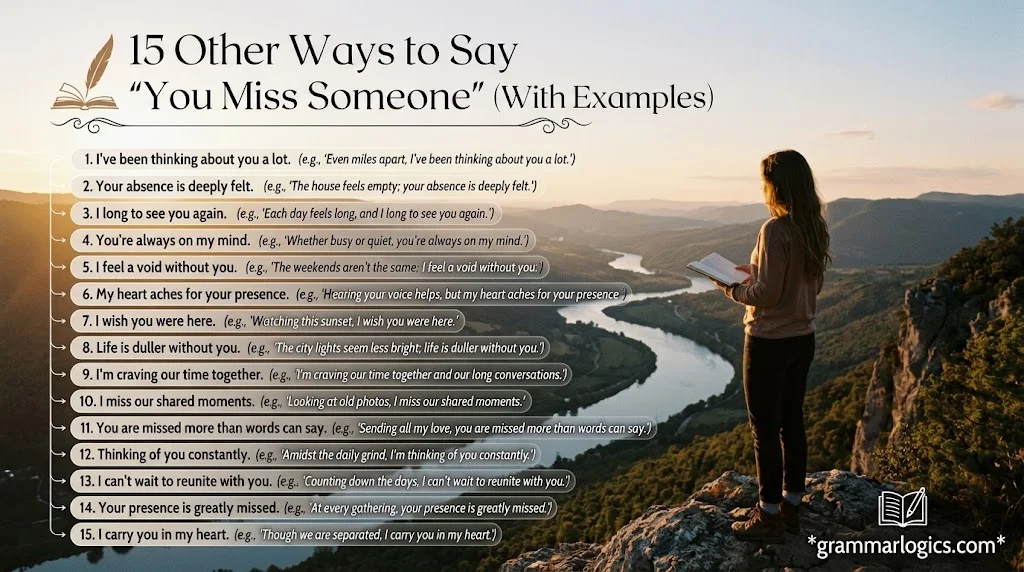
15 Other Ways to Say “You Miss Someone”
- I wish you were here.
- I’ve been thinking about you.
- I feel your absence.
- I long to see you.
- I can’t wait to see you again.
- I’m counting the days until we meet.
- I miss having you around.
- Things aren’t the same without you.
- I’ve been missing your company.
- I yearn to be with you.
- I wish we could be together.
- I’m feeling the distance between us.
- You’ve been on my mind.
- I’m looking forward to being with you.
- I miss our time together.
1. I Wish You Were Here
Meaning
“I wish you were here” expresses the feeling of wanting someone to be physically present with you. It communicates affection and a desire to share a particular moment with someone who is currently away.
Definition
A heartfelt expression used to tell someone that you would enjoy their presence and wish they could be with you.
Detailed Explanation
This expression feels personal and warm because it focuses on the person’s absence in the present moment. Unlike a general statement about missing someone, it suggests that something happening around you would be better if they were there. It is particularly meaningful when you are enjoying an experience, celebrating an occasion, or spending time somewhere special. The wording is natural in both romantic and friendly relationships.
Scenario Examples
Scenario 1: You are enjoying a beautiful holiday and thinking about your partner.
Example: “The beach is beautiful today. I wish you were here to enjoy it with me.”
Scenario 2: You are attending a family gathering without your sibling.
Example: “Everyone is having a great time. I wish you were here with us.”
Scenario 3: You are spending a quiet evening away from your best friend.
Example: “This movie would be much more fun with you. I wish you were here.”
Best Use
Use this expression in personal messages, romantic conversations, holiday updates, and friendly texts when you want someone to know that their presence would make a moment more meaningful.
Tone
Tone: Warm, affectionate, personal, and gentle.
It communicates emotional closeness without sounding overly dramatic.
2. I’ve Been Thinking About You
Meaning
“I’ve been thinking about you” means that someone has been in your thoughts recently. It can suggest that you care about them, remember them, or wish you could spend time together.
Definition
A friendly or affectionate expression used to tell someone that they have occupied your thoughts.
Detailed Explanation
This phrase is softer and less direct than saying that you miss someone. It does not necessarily mean that you feel lonely or want to meet immediately, but it can communicate emotional interest. It is useful when you want to reconnect without putting too much pressure on the other person. Depending on your relationship, it can sound caring, romantic, supportive, or simply friendly.
Scenario Examples
Scenario 1: You remember an old friend while looking through photographs.
Example: “I found our old school pictures today, and I’ve been thinking about you.”
Scenario 2: Your partner has been travelling for work.
Example: “I’ve been thinking about you all day. I hope everything is going well.”
Scenario 3: You want to check on someone you have not spoken to recently.
Example: “You’ve crossed my mind a few times this week, so I wanted to see how you’re doing.”
Best Use
This expression works especially well in friendly texts, thoughtful check-in messages, romantic communication, and conversations with people you have not contacted recently.
Tone
Tone: Thoughtful, gentle, caring, and conversational.
It expresses interest without making the message feel too emotional or demanding.
3. I Feel Your Absence
Meaning
“I feel your absence” communicates that someone’s presence is noticeably missing from your life. It suggests that their absence has an emotional effect on you.
Definition
An emotional expression describing the noticeable impact of someone not being present.
Detailed Explanation
This expression is more reflective and emotionally serious than ordinary conversational alternatives. It suggests that someone played an important role in your everyday life, and their absence has changed how things feel. It can communicate sadness, loneliness, or a strong sense of attachment. Unlike casual expressions, it often sounds more appropriate in heartfelt messages, letters, or reflective writing.
Scenario Examples
Scenario 1: Your close friend has moved to another country.
Example: “Since you moved away, I really feel your absence during our weekend gatherings.”
Scenario 2: A family member cannot attend an important celebration.
Example: “The whole family is together today, but we can all feel your absence.”
Scenario 3: You are writing a meaningful message to someone you care about.
Example: “Your kindness made such a difference in my life, and I feel your absence every day.”
Best Use
Choose this expression for heartfelt messages, personal letters, emotional conversations, and reflective writing when someone’s absence has a noticeable impact.
Tone
Tone: Deep, emotional, sincere, and reflective.
It is more serious than casual texting language and communicates a stronger emotional feeling.
4. I Long to See You
Meaning
“I long to see you” expresses a strong desire to meet someone again. It communicates emotional longing and the wish to be reunited with a person who is far away.
Definition
A heartfelt expression meaning that you deeply want to see someone.
Detailed Explanation
The word long gives this expression a stronger emotional quality than simply saying that you miss someone. It often suggests that the separation has lasted for some time or that meeting again is especially important to you. The phrase can sound romantic, poetic, or deeply affectionate depending on the relationship. It is less common in casual everyday conversation than simpler expressions, but it works beautifully in emotional messages and creative writing.
Scenario Examples
Scenario 1: Your partner is living in another country.
Example: “Every day feels a little longer when we’re apart. I long to see you.”
Scenario 2: You are writing a letter to a close family member.
Example: “It has been months since our last visit, and I long to see you again.”
Scenario 3: You are expressing affection in a romantic message.
Example: “I think about our next meeting often because I long to see you.”
Best Use
Use this phrase in romantic messages, heartfelt letters, personal writing, and emotional conversations when you want to communicate a strong desire to meet again.
Tone
Tone: Romantic, emotional, sincere, and slightly poetic.
Its wording creates a deeper sense of longing than ordinary conversational expressions.
5. I Can’t Wait to See You Again
Meaning
“I can’t wait to see you again” expresses excitement and anticipation about meeting someone in the future.
Definition
A positive expression used to communicate that you are eagerly looking forward to seeing someone.
Detailed Explanation
This phrase focuses more on the happiness of an upcoming reunion than on the sadness of separation. It is particularly useful when you already have plans to meet or expect to see the person soon. Compared with saying that you miss someone, it sounds more optimistic and enthusiastic. It can be used with friends, relatives, romantic partners, and even professional contacts.
Scenario Examples
Scenario 1: You have arranged a weekend visit with your best friend.
Example: “I’m so excited about Saturday. I can’t wait to see you again!”
Scenario 2: Your partner is returning from a business trip.
Example: “Only two more days until you’re home. I can’t wait to see you again.”
Scenario 3: You have met a relative after a long time and are planning another visit.
Example: “It was wonderful catching up with you. I can’t wait to see you again.”
Best Use
This expression is ideal for friendly messages, reunion plans, romantic conversations, travel updates, and professional messages when you want to sound positive about meeting again.
Tone
Tone: Excited, friendly, warm, and optimistic.
It emphasizes anticipation rather than sadness.
6. I’m Counting the Days Until We Meet
Meaning
“I’m counting the days until we meet” means that you are eagerly waiting for a planned meeting with someone.
Definition
An affectionate expression describing excitement and anticipation while waiting for a future meeting.
Detailed Explanation
This phrase suggests that you are looking forward to a specific date or occasion when you will see someone again. It is more expressive than a simple statement about missing someone because it highlights how much you anticipate the reunion. It works particularly well when two people are separated by distance or have not met for a long time. The expression can feel romantic, but it is also natural between close friends and family members.
Scenario Examples
Scenario 1: Your partner is coming home after several weeks away.
Example: “Your flight is next Friday, and I’m counting the days until we meet.”
Scenario 2: Your childhood friend is visiting during the holidays.
Example: “It’s been ages since we last met. I’m counting the days until we meet again.”
Scenario 3: You are looking forward to a family reunion.
Example: “The whole family is excited about December. We’re counting the days until we meet.”
Best Use
Use this expression in long-distance relationships, reunion messages, holiday conversations, and personal texts when a future meeting is already expected.
Tone
Tone: Enthusiastic, affectionate, hopeful, and warm.
It communicates excitement about a future moment rather than focusing only on present loneliness.
7. I Miss Having You Around
Meaning
“I miss having you around” means that you miss someone’s regular presence and the everyday moments you used to share.
Definition
A casual expression describing how much you miss having someone nearby or involved in your daily life.
Detailed Explanation
This phrase focuses on everyday companionship rather than only wanting to see someone once. It suggests that you enjoyed their conversations, jokes, support, or simple presence. It is particularly natural when a friend, family member, or colleague has moved away or changed their routine. Compared with more emotional alternatives, it sounds relaxed and familiar.
Scenario Examples
Scenario 1: Your roommate has moved into a new apartment.
Example: “The house feels so quiet now. I miss having you around.”
Scenario 2: Your close friend has started studying in another city.
Example: “Lunch breaks aren’t the same anymore. I miss having you around.”
Scenario 3: A family member has gone away for work.
Example: “We all miss having you around at home, especially during dinner.”
Best Use
This expression works best in casual conversations, friendship messages, family communication, and familiar workplace relationships.
Tone
Tone: Casual, affectionate, friendly, and nostalgic.
It communicates that someone’s everyday presence made life more enjoyable.
8. Things Aren’t the Same Without You
Meaning
“Things aren’t the same without you” means that life, an activity, or a familiar situation feels different when someone is not present.
Definition
An emotional expression describing how someone’s absence changes the atmosphere or experience of a particular situation.
Detailed Explanation
This phrase emphasizes the difference a person makes in your surroundings. It can suggest that their humor, personality, energy, or companionship is missing. Unlike a direct statement about longing, it focuses on how their absence affects the experience of others. It is especially suitable for close relationships and shared activities where the person played an important role.
Scenario Examples
Scenario 1: Your best friend has moved away from your hometown.
Example: “Our weekend gatherings aren’t the same anymore. Things aren’t the same without you.”
Scenario 2: A colleague has transferred to another office.
Example: “The team meetings feel different now. Things aren’t the same without you.”
Scenario 3: Your sibling is away during a family holiday.
Example: “Christmas feels quieter this year. Things aren’t the same without you.”
Best Use
Use this expression in family messages, friendship conversations, farewell notes, and personal writing when you want to explain how someone’s absence changes a shared experience.
Tone
Tone: Nostalgic, affectionate, emotional, and sincere.
It highlights the person’s importance rather than simply expressing a desire to meet.
9. I’ve Been Missing Your Company
Meaning
“I’ve been missing your company” means that you miss spending time with someone and enjoying their conversation or companionship.
Definition
A polite and friendly expression used to communicate that you have missed someone’s presence and companionship.
Detailed Explanation
This expression places emphasis on the enjoyable time you spend with another person. It is slightly more polished than saying that you miss having someone around, making it suitable for friendly and respectful conversations. It can be used with friends, relatives, and former colleagues with whom you share a positive relationship. The wording does not necessarily suggest romantic feelings, so it is useful when you want to express appreciation without creating the wrong impression.
Scenario Examples
Scenario 1: You have not met an old friend for several months.
Example: “It’s been too long since we caught up. I’ve been missing your company.”
Scenario 2: A former colleague visits your office.
Example: “It’s lovely to see you again. We’ve been missing your company at work.”
Scenario 3: You are messaging a friend who has been busy.
Example: “We should arrange dinner soon. I’ve been missing your company.”
Best Use
This expression is suitable for friendly conversations, personal messages, social invitations, and polite communication with people you know well.
Tone
Tone: Friendly, respectful, warm, and conversational.
It expresses appreciation for someone’s companionship without sounding overly romantic.
10. I Yearn to Be With You
Meaning
“I yearn to be with you” expresses a deep emotional desire to be close to someone.
Definition
A strong and often romantic expression describing an intense longing to be with another person.
Detailed Explanation
The word yearn communicates a powerful desire that goes beyond ordinary missing. It often suggests emotional closeness, romantic attachment, or a deep wish to overcome separation. This phrase is more intense and literary than everyday expressions, so it may sound dramatic in a casual conversation. It is most effective when you genuinely want to communicate deep feelings rather than make a simple check-in.
Scenario Examples
Scenario 1: You are writing a heartfelt letter to your long-distance partner.
Example: “No matter how far apart we are, I yearn to be with you.”
Scenario 2: You are expressing romantic feelings in a personal message.
Example: “Every moment apart reminds me how much I yearn to be with you.”
Scenario 3: You are writing a romantic passage in a story.
Example: “She watched the evening sky and yearned to be with the person she loved.”
Best Use
Choose this expression for romantic letters, emotional writing, poetry, and deeply personal messages.
Tone
Tone: Intense, romantic, passionate, and poetic.
It carries considerably more emotional weight than a casual expression of missing someone.
11. I Wish We Could Be Together
Meaning
“I wish we could be together” communicates a desire to share the same place or spend time with someone when circumstances prevent it.
Definition
An affectionate expression describing the wish to be physically together despite separation or other obstacles.
Detailed Explanation
This phrase focuses on the situation that keeps two people apart. It can communicate sadness about distance, conflicting schedules, travel, or other circumstances that prevent a meeting. Unlike a simple expression of missing someone, it suggests that being together is what you would prefer at that moment. It is especially natural in romantic relationships, although it can also be used with close family members and friends.
Scenario Examples
Scenario 1: You and your partner live in different countries.
Example: “I know the distance is difficult, but I wish we could be together tonight.”
Scenario 2: Your best friend cannot attend an important event.
Example: “I wish we could be together to celebrate your birthday.”
Scenario 3: You are spending a holiday away from your family.
Example: “The holidays would feel much better if we could all be together.”
Best Use
Use this expression in long-distance relationships, family conversations, holiday messages, and personal communication when circumstances prevent you from being together.
Tone
Tone: Tender, emotional, affectionate, and hopeful.
It communicates a shared desire for closeness and togetherness.
12. I’m Feeling the Distance Between Us
Meaning
“I’m feeling the distance between us” means that physical separation is affecting your emotional connection or making you wish you were closer.
Definition
An emotional expression describing how being physically far apart can affect a relationship or sense of closeness.
Detailed Explanation
This expression is particularly useful when distance itself is an important part of the situation. It can refer to geographical separation in a long-distance relationship or the emotional difficulty of being unable to spend time together. The phrase is more reflective than casual statements about missing someone. It should be used thoughtfully because it can sometimes suggest that separation is creating emotional strain.
Scenario Examples
Scenario 1: Your partner has been working abroad for several months.
Example: “Some days are harder than others, and I’m really feeling the distance between us.”
Scenario 2: You and an old friend have moved to different cities.
Example: “We should plan a visit soon. I’m starting to feel the distance between us.”
Scenario 3: You are talking honestly with someone about a long-distance relationship.
Example: “I know we’re both busy, but lately I’ve been feeling the distance between us.”
Best Use
This phrase works best in long-distance relationships, meaningful personal conversations, and emotional messages when physical or emotional separation is affecting your connection.
Tone
Tone: Reflective, vulnerable, serious, and emotional.
It communicates the impact of separation rather than simply expressing affection.
13. You’ve Been on My Mind
Meaning
“You’ve been on my mind” means that you have been thinking about someone repeatedly or recently.
Definition
A gentle expression used to tell someone that you have been thinking about them.
Detailed Explanation
This phrase is a subtle way to communicate that someone is important to you. It can suggest that you miss them, remember something you shared, or simply want to reconnect. However, it does not always mean that you are longing for their physical presence. Its meaning depends on the surrounding message and the relationship between the speakers. It is particularly useful when you want to express care without sounding too emotional.
Scenario Examples
Scenario 1: You remember an old friend after seeing something that reminds you of them.
Example: “I passed our old coffee shop today, and you’ve been on my mind.”
Scenario 2: You want to send a thoughtful message to a family member.
Example: “You’ve been on my mind lately. I hope you’re feeling happy and healthy.”
Scenario 3: You want to reconnect with someone you have not spoken to recently.
Example: “You’ve been on my mind, and I thought it would be nice to catch up.”
Best Use
Use this expression in friendly messages, personal check-ins, romantic communication, and thoughtful conversations when you want to show someone that you remember and care about them.
Tone
Tone: Gentle, thoughtful, caring, and slightly affectionate.
It is subtle enough for many relationships and does not automatically imply romantic interest.
14. I’m Looking Forward to Being With You
Meaning
“I’m looking forward to being with you” expresses excitement about spending time together in the future.
Definition
A positive expression communicating anticipation and happiness about being in someone’s company.
Detailed Explanation
This phrase focuses on future companionship rather than the emotional difficulty of separation. It suggests that you value the time you will spend together and are excited about the upcoming opportunity. It is more relaxed than an intense romantic expression and can suit both personal and affectionate situations. Depending on the context, it may refer to meeting someone, enjoying an event together, or simply spending quality time.
Scenario Examples
Scenario 1: Your partner is returning home after a work trip.
Example: “I hope your journey goes smoothly. I’m looking forward to being with you again.”
Scenario 2: You have planned a family holiday.
Example: “It’s going to be wonderful having everyone together. I’m looking forward to being with you all.”
Scenario 3: You are arranging a weekend with a close friend.
Example: “It’s been a busy month, so I’m really looking forward to being with you this weekend.”
Best Use
This expression is suitable for personal messages, family plans, romantic communication, and friendly conversations when you want to express positive anticipation.
Tone
Tone: Warm, optimistic, affectionate, and reassuring.
It emphasizes the happiness of future companionship.
15. I Miss Our Time Together
Meaning
“I miss our time together” expresses nostalgia for the moments and experiences you previously shared with someone.
Definition
A heartfelt expression describing how much you miss the activities, memories, and experiences you enjoyed together.
Detailed Explanation
This phrase focuses on shared memories rather than only someone’s physical absence. It suggests that you value the conversations, activities, laughter, and experiences that made your time together special. It can be especially meaningful when a friendship or relationship has changed because of distance, responsibilities, or different life circumstances. Compared with a simple expression of missing someone, it adds a nostalgic feeling and highlights the importance of shared experiences.
Scenario Examples
Scenario 1: You and your childhood friend used to spend every weekend together.
Example: “I still remember our weekend adventures. I miss our time together.”
Scenario 2: Your sibling has moved away for university.
Example: “The house feels different now. I really miss our time together.”
Scenario 3: You are writing to someone you used to work with.
Example: “Those lunch breaks were always fun. I miss our time together at the office.”
Best Use
This expression is ideal for nostalgic messages, friendship conversations, family communication, and personal letters when you want to remember meaningful experiences.
Tone
Tone: Nostalgic, sincere, affectionate, and sentimental.
It emphasizes the value of shared memories and the experiences you wish you could enjoy again.
FAQs
1. What is another way to say “You Miss Someone”?
There are several natural alternatives, depending on the feeling you want to express. You can say “I wish you were here,” “I’ve been thinking about you,” “I miss having you around,” or “I can’t wait to see you again.” Each expression communicates a slightly different emotion. Some focus on affection, while others emphasize anticipation, companionship, or emotional longing. Choose the wording that best matches your relationship and situation.
2. What does “You Miss Someone” mean?
The phrase means that you feel someone’s absence and wish you could spend time with them. It usually communicates affection, emotional attachment, loneliness, or nostalgia. People commonly use it when a friend, partner, or family member is far away or unavailable. It can also describe missing someone because you remember the enjoyable experiences you previously shared.
3. Is “You Miss Someone” professional?
The expression is generally casual and conversational, rather than formal business language. However, it can be appropriate in friendly workplace relationships. For example, telling a former colleague that you miss working with them is natural and polite. In formal professional communication, a phrase such as “I look forward to seeing you again” may be more suitable because it sounds respectful and less emotionally personal.
4. What is a more romantic way to say you miss someone?
A romantic way to express this feeling is “I long to see you,” “I wish we could be together,” or “I yearn to be with you.” These expressions communicate deeper affection and emotional longing. You can also say “I wish you were here” when you want something simple, sincere, and intimate. The best choice depends on how strongly you want to express your feelings.
5. Which alternative works best in formal communication?
For professional or formal communication, “I’m looking forward to seeing you again” is generally a suitable choice. It communicates positive anticipation without sounding overly emotional. You can use it in professional emails, meeting follow-ups, and messages to colleagues or business contacts. If you have a friendly relationship with the person, “I’ve missed your company” can also work, depending on the context.
Conclusion
Expressing that you miss someone is about more than simply describing their absence. The right words can communicate love, affection, longing, appreciation, and emotional connection in a meaningful way. While “you miss someone” is a natural everyday expression, alternatives such as “I wish you were here,” “I’ve been thinking about you,” and “I miss our time together” can make your message feel more personal and heartfelt. Each expression carries a slightly different meaning, so choosing the right one can help you communicate your feelings more clearly.
Whether you are writing to a romantic partner, reconnecting with an old friend, or sending a thoughtful message to a family member, consider the relationship and situation before choosing your words. Some expressions sound more romantic, while others feel friendly, gentle, or nostalgic. Explore these 15 alternatives and choose the phrase that best reflects what you genuinely want to say. Remember, sincere words can make people feel valued, loved, and remembered, even when they are far away.
Latest Posts:
- 15 Other Ways to Say “Poop” (With Examples)
- 15 Other Ways to Say “Finally” (With Examples)
- 15 Other Ways to Say “I Love You Too” (With Examples)
- 15 Other Ways to Say “Best” (With Examples)
- 15 Other Ways to Say “Agree” (With Examples)